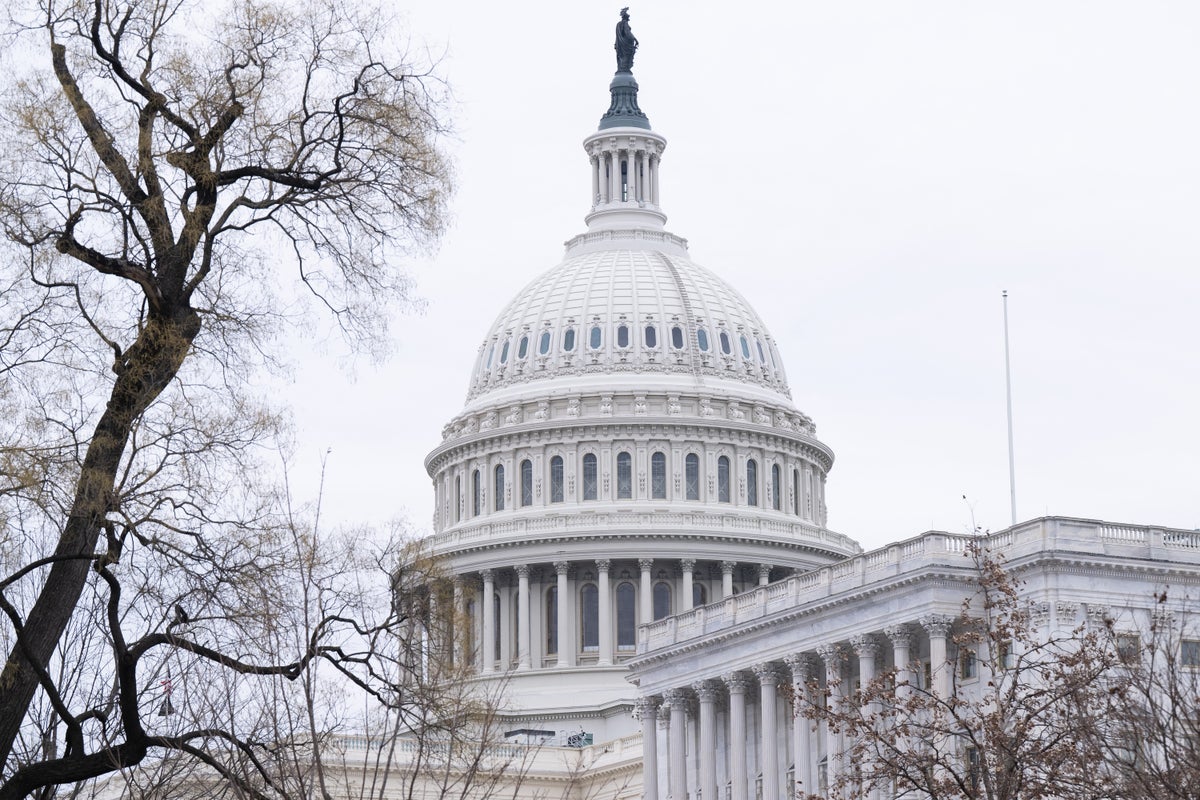
Congressional appropriators released a bipartisan three-bill minibus that largely rejects the Trump administration’s proposed deep cuts to federal science funding, preserving near-term funding for NASA and DOE programs while trimming some items. Key allocations include NASA at $24.4 billion with $7.25 billion for science missions (a 1.1% decline versus a proposed 47% cut), DOE nondefense at $16.78 billion with $8.4 billion for the Office of Science (≈2% increase) and a reduced ARPA-E budget of $350 million (≈24% cut); the Mars Sample Return mission would be canceled. The package — excluding NIH, CDC and FDA — must pass House and Senate votes before a Jan. 30 deadline to avoid a government shutdown, leaving implementation and execution risks if the administration resists congressional funding priorities.
Market structure: The congressional minibus materially reduces downside risk to government R&D beneficiaries versus the administration’s proposals—NASA science funding only -1.1% (to $7.25B) while DOE Office of Science +~2% to $8.4B, and ARPA‑E cut ~24%. Direct winners: large aerospace primes and satellite/optics suppliers (NOC, LMT, MAXR, TDY) and industrial electrification/grid-equipment names (ETN, NEE). Direct losers: early‑stage cleantech/ARPA‑E‑dependent microcaps and firms that had pipeline exposure to the $10B Mars Sample Return program.
Risk assessment: Near-term tail risk is a Jan 30 government‑shutdown failure (market-implied probability range 20–40%), which would delay obligations and create 1–3 month revenue timing hits for contractors and labs. Medium/long risk: executive branch historically disregarding appropriations (reallocations, delayed obligations)—realized spending could be 5–20% below enacted levels in 2026; watch OMB apportionments and lawsuit outcomes. Catalysts: House vote this week, Senate passage, OMB allotment notices within 30–60 days, DOE/NSA contract awards in next 3–9 months.
Trade implications: Favor cash/option exposure to established primes and instrumentation suppliers with 6–18 month horizons (expect contract wins and stable backlog; target 3–7% revenue tailwind for winners). Underweight/trim small caps whose business cases depend on ARPA‑E funding; use short-dated hedges into Jan 30. Use relative-value: long large-cap, short small-cap cleantech to capture funding‑concentration re‑allocation.
Contrarian view: The market underestimates reallocation upside from the cancelled Mars mission—roughly $10B could be redirected to other planetary, astrophysics, and observatory programs (optics/detector vendors are asymmetric beneficiaries). Conversely, enacted appropriations are not guaranteed to flow—position sizing should favor liquid large-caps and option-based asymmetric payoffs rather than concentrated equity bets.
AI-powered research, real-time alerts, and portfolio analytics for institutional investors.
Request DemoOverall Sentiment
mildly positive
Sentiment Score
0.25
