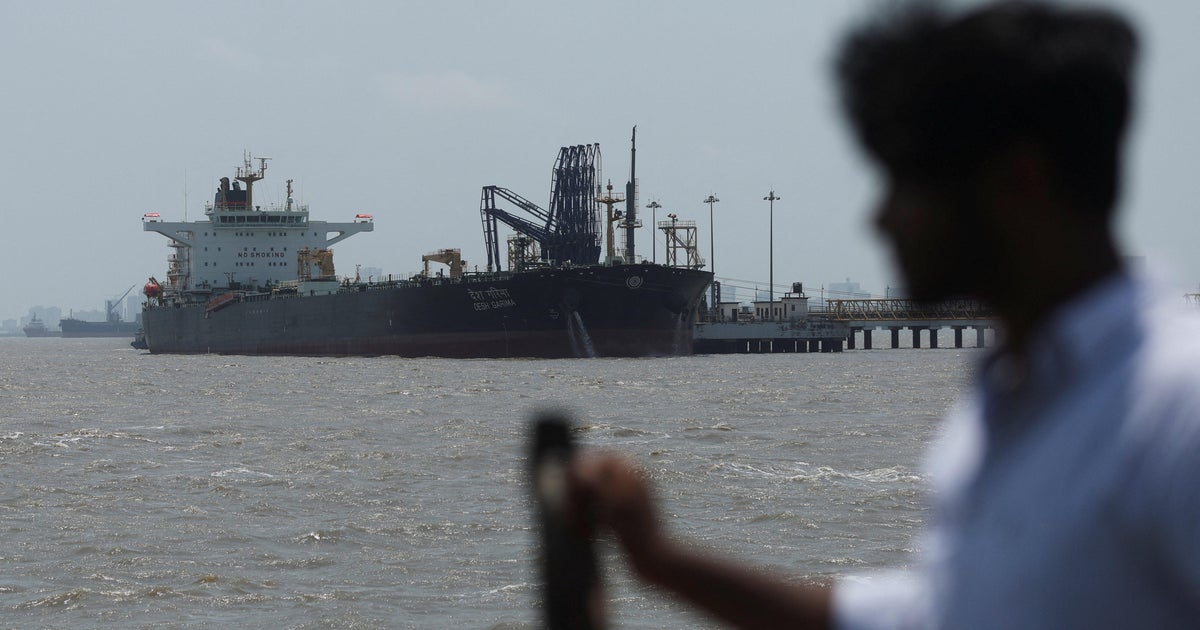
Brent crude briefly spiked above $126 a barrel, a four-year high, as stalled U.S.-Iran talks and fears over the Strait of Hormuz disrupted oil flows and lifted benchmark U.S. crude to $108.28. The war has already cost an estimated $25 billion, while President Trump is considering new strike options and a possible troop reduction in Germany amid widening NATO tensions. The article points to sustained geopolitical risk, higher energy costs, and broader market volatility.
The market is moving from a geopolitical event trade into a macro input shock: the key second-order effect is not just higher crude, but higher volatility in input costs and transport insurance that bleeds into every energy-intensive industry with a lag. If the Strait of Hormuz remains constrained even partially, the winners are not only upstream producers but also firms with flexible export optionality, domestic logistics, and pricing power; the losers are refiners, airlines, chemical names, and any business with just-in-time inventory that cannot reprice weekly. The more interesting setup is that this shock is arriving into a policy environment where the government’s fiscal response capacity is already deteriorating. Elevated fuel costs act like a regressive tax, which raises the probability of political pressure for emergency releases, tariff changes, or a ceasefire push within days to weeks. That means the trade is likely better expressed via volatility and relative-value than outright directional crude longs, because the tail risk is higher but the duration of supply disruption may be shorter than the market is pricing. Consensus seems to be underestimating the convexity around spare capacity and military escalation. If new strikes fail to restore flow quickly, the oil complex can overshoot far beyond spot fundamentals because shipping, storage, and derivative hedging demand can gap higher simultaneously; but if diplomacy or corridor enforcement improves, the reversal can be violent given how much fear premium is embedded after a sharp move. In other words, the near-term edge is in owning gamma around crude rather than making a heroic call on the eventual endpoint. A subtle contrarian angle: the most damaged assets may be not the obvious energy consumers, but businesses that rely on stable global freight rates and working-capital discipline. Even a modest increase in bunker fuel and insured passage cost can compress margins for retailers, industrial distributors, and e-commerce logistics over the next quarter, while energy equities may already be partially discounting the move if the market assumes a durable war premium.
AI-powered research, real-time alerts, and portfolio analytics for institutional investors.
Request DemoOverall Sentiment
strongly negative
Sentiment Score
-0.72
