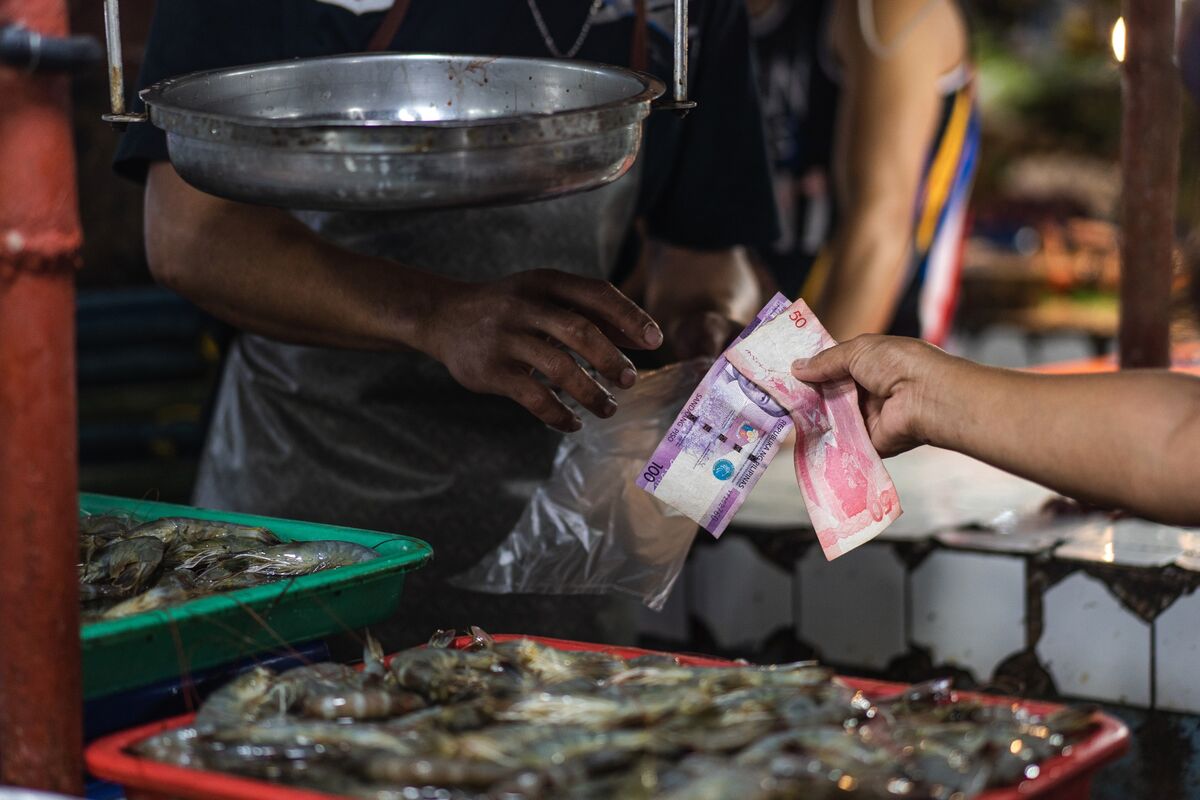
The Philippine peso is experiencing its longest losing streak since April 2024, driven by rising global oil prices; the currency weakened as much as 0.5% to 56.7 per dollar on Tuesday, marking the sixth consecutive day of declines. The peso's 1.6% drop in June makes it the worst-performing emerging market currency this month, signaling potential headwinds for the Philippine economy due to increased import costs and inflationary pressures.
The Philippine peso is under significant pressure, on track for its sixth consecutive day of declines, which would mark its longest losing streak since April 2024. This weakening trend is primarily attributed to a surge in global oil prices, causing the currency to fall by as much as 0.5% to 56.7 per dollar on Tuesday. Cumulatively, the peso has depreciated 1.6% in June, distinguishing it as the worst-performing emerging market currency this month. This sustained depreciation signals potential headwinds for the Philippine economy, likely leading to increased import costs and exacerbating inflationary pressures. The moderately negative sentiment and bearish tone surrounding the currency, coupled with a market impact score of 0.6, highlight the market's concern over this development.
AI-powered research, real-time alerts, and portfolio analytics for institutional investors.
Request DemoOverall Sentiment
moderately negative
Sentiment Score
-0.65
