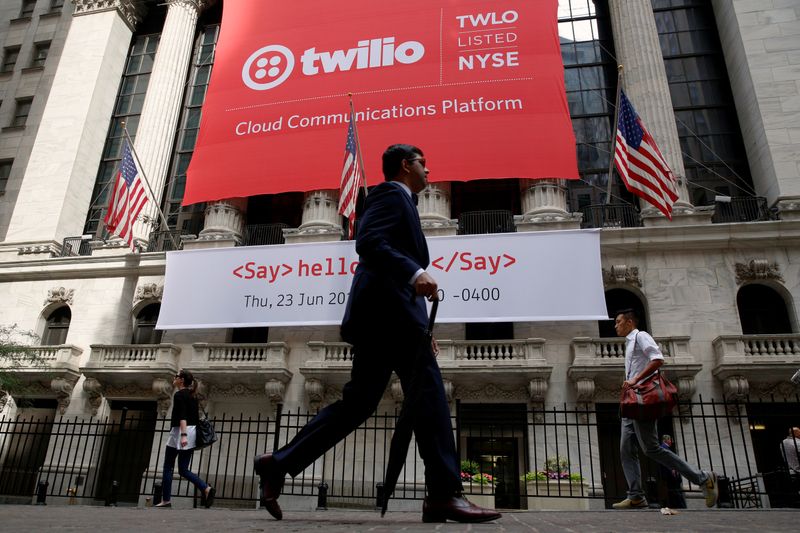
Jefferies upgraded Twilio to Buy and set a $160 price target (≈22% above the $131.52 close), citing Voice AI as a structural volume tailwind. The broker forecasts total Voice revenue of $1.15B by 2028 ($769M traditional, $383M Voice AI), Voice rising to ~18% of total revenue by 2028 vs. 12% in 2025, and ~115bps of gross margin upside in 2028. The thesis implies materially higher monetization per call (estimated $0.21 per 3-minute Voice AI call vs $0.03 for traditional) and supports modest near-term upside tied to successful AI product adoption and execution.
Twilio’s move to capture orchestration economics in Voice AI creates a classic platform-margin opportunity: orchestration can reprice a commodity input (carrier minutes, STT/TTS/LLM compute) into a differentiated, sticky service sold as workflow automation. The second-order winners are orchestration-adjacent vendors (contact center software, conversational analytics) that can upsell into existing Twilio integrations, while pure-play SIP carriers and standalone STT/TTS resellers face commoditization pressure and margin squeeze unless they vertically integrate.
Key risks are structural rather than cyclical: LLM inference costs, latency and reliability of real‑time models, and regulatory/data-residency constraints that raise implementation cost for large enterprises. These create a 12–36 month adoption window where Twilio must either internalize inference (capex/opex tradeoff) or lock favorable wholesale terms with model providers; failure or unfavorable vendor leverage would compress gross margins despite higher ARPU per call.
The consensus upside assumes Twilio captures orchestration pricing without meaningful reinvestment into inference or loss of distribution to hyperscalers. A contrarian read is that orchestration monetization is binary at scale — either Twilio becomes the invisible routing+orchestration layer with stickiness that defends margin, or hyperscalers and large buyers replicate orchestration cheaply, leaving Twilio with higher volume but compressed take-rates. The next 2–4 quarters of customer-level Voice AI ARPU, net-retention trajectories, and any announced inference partnerships will be the clearest inflection signals.
AI-powered research, real-time alerts, and portfolio analytics for institutional investors.
Overall Sentiment
mildly positive
Sentiment Score
0.35
Ticker Sentiment
