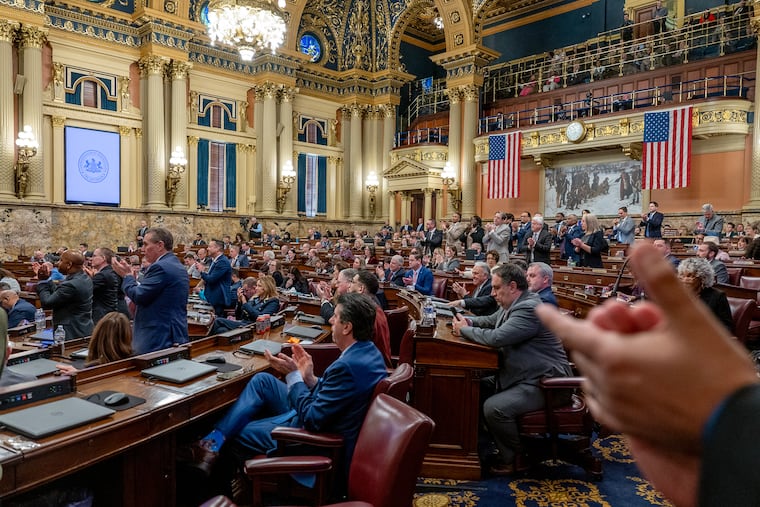
The Pennsylvania House passed the data center bill 104-95 to require centers to pay incremental energy costs and meet clean energy shares of 10% (2027), 14.5% (2030) and 32% (2035). It also mandates contributions to low-income energy assistance and allows curtailment during peak demand, prompting industry opposition and concerns it could deter investment from major operators; there are 56 active and 55 proposed data centers in the state. The measure now moves to the GOP-controlled Senate, creating near-term legislative uncertainty with potential sector and regional grid impacts.
This bill is a recipe for a geographically skewed reallocation of hyperscaler capex rather than an industry-wide shock: raising per-site compliance costs and embedding renewable+curtailment constraints materially increases the near-term cost of greenfield builds in Pennsylvania and adjacent high-cost states, pushing incremental demand into lower-regulation, lower-interconnection-cost markets. Expect interconnection and permitting friction to lengthen effective deployment timelines by 6–24 months for projects that don’t already have PPAs or on-site resources, which in turn compresses short-term cloud region supply growth even as long-term demand for compute (AI) remains intact.
Mandated renewable share plus potential curtailment clauses creates a new product mix for data-center buyers: standardized microgrids, long‑term PPAs, utility-scale battery + generator stacks, and turnkey EPC packages. For a 100MW campus, incremental capex to meet modest 10–30% phased-in clean/firming requirements is plausibly in the $10–40M range (solar/BESS + hooking/firming contracts), which lifts developer break‑evens and raises the threshold for smaller entrants while increasing TAM for storage and EaaS vendors.
Second-order winners will be incumbent colo owners and integrated renewable/storage builders — higher barriers to greenfield lowers competitive new‑entry and benefits firms that can offer utility-like contracting or turn-key green energy stacks. The main tail risks are (1) coordinated pushback from industry + utilities that produces softer, negotiable rules in the Senate within 3–9 months, which would unwind near-term discounting of hyperscaler equities, and (2) a cascade of similar laws in neighboring states that would materially change build portfolios over 12–36 months and create a sustained re-rating of both cloud capex and power‑infrastructure names.
AI-powered research, real-time alerts, and portfolio analytics for institutional investors.
Request DemoOverall Sentiment
mixed
Sentiment Score
0.00
Ticker Sentiment
