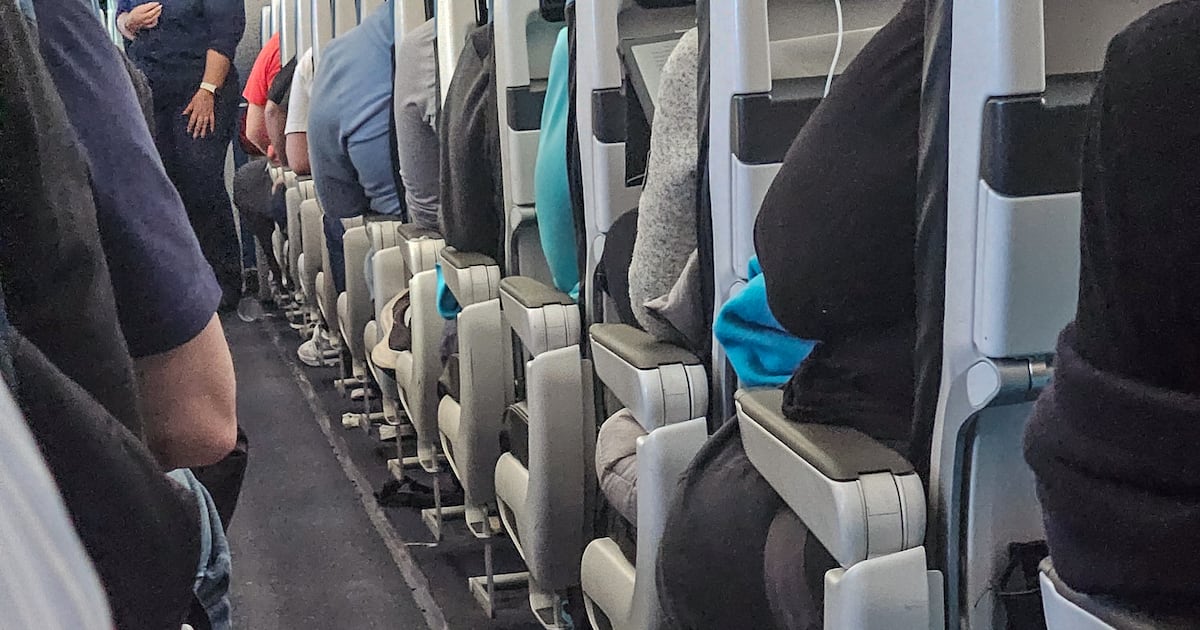
WestJet has reversed a prior plan to reduce legroom on its aircraft, abandoning proposed seat-density changes. The decision preserves passenger comfort and avoids likely reputational and customer backlash, but it also forgoes a potential avenue for incremental capacity and ancillary revenue; the update carries limited near-term financial implications and is unlikely to move markets.
Market structure: WestJet’s reversal on reducing legroom is a defensive move that protects ticket pricing power and brand equity for full-service carriers; winners are legacy/premium carriers (e.g., Air Canada AC.TO, DAL, UAL) able to preserve yield, losers are ULCCs/seat-densification strategies (e.g., SAVE, JETS) that rely on higher seats-per-aircraft to lift unit revenue. Expect marginal upward pressure on fares for carriers that maintain pitch — a 2–5% fare premium is plausible over 1–3 quarters if competitors follow suit or if consumers shift preference.
Risk assessment: Tail risks include regulatory action (consumer protection or antitrust inquiries) and reputational shocks (viral social backlash) that could reverse the move quickly; fuel price spikes or sudden demand drops remain overarching systemic risks. Immediate market impact is likely muted (days), with tangible revenue/yield effects over 1–3 quarters and brand/loyalty shifts over multiple years.
Trade implications: Prioritize long exposure to loyalty-rich, full-service airlines and short/select ULCCs that monetize densification; use credit spreads as a hedge if travel demand softens. Options: use 2–4 month call spreads on legacy carriers and buy puts or put spreads on ULCCs to capture asymmetric downside if price competition re-emerges. Monitor KPIs (ancillaries per passenger, seat density announcements, monthly yield reports) on a 30–90 day cadence as trade triggers.
Contrarian angles: Consensus understates regulatory and consumer pushback — investors assume densification is inevitable; instead, reversals create scarcity on certain seat types and open a 3–6 month window for legacy carriers to widen yield curves. Historical parallels (Spirit/Frontier PR backlashes) show that initial negative margin pressure from added seats can be offset by loss of high-yield customers; mispricings exist in short-dated options on ULCCs and selective bond spreads.
AI-powered research, real-time alerts, and portfolio analytics for institutional investors.
Request DemoOverall Sentiment
neutral
Sentiment Score
0.00
