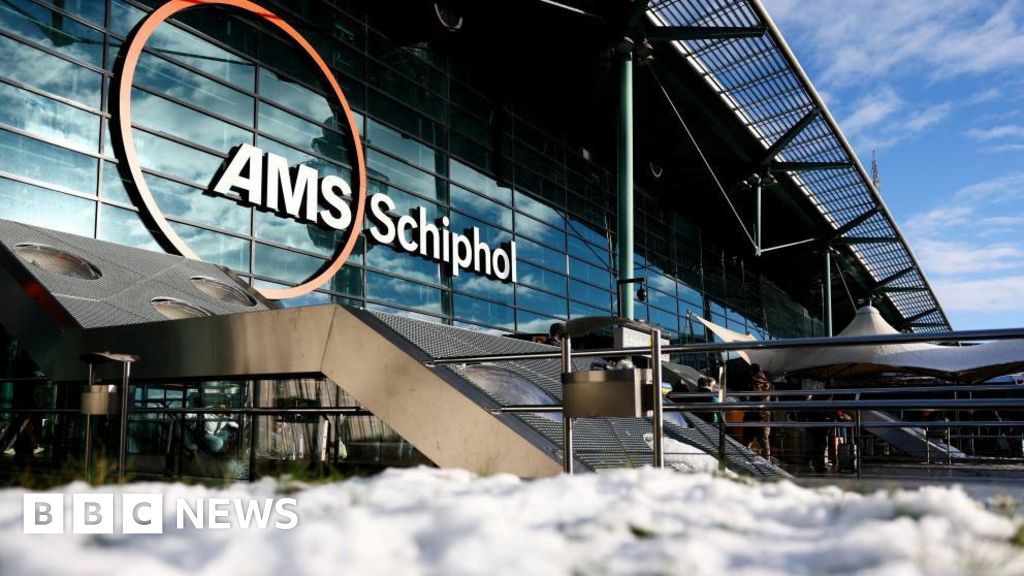
A prolonged cold snap and heavy snowfall across western Europe has caused widespread transport disruption: more than 700 flights were cancelled at Amsterdam Schiphol, France asked airlines to cut 40% of flights at its main Paris airport, over 100 cancellations at Charles de Gaulle and 40 at Orly, and Eurostar services and haulage have been affected. KLM warned Schiphol was close to running out of de-icing fluid, lorry bans and road closures were imposed across regions of France, and weather-related fatalities were reported; these developments create near-term operational risk for airlines, rail operators and logistics chains with potential for knock-on delays and extra operational costs but are unlikely to be broadly market-moving.
Market structure: Short-term winners are specialty chemical suppliers and ground-handling/hotel services that provide de-icing, beds and catering (spot demand spike; Schiphol >700 cancellations, Paris ~40% cuts implies multi-day incremental de-icing demand concentrated in NW Europe). Direct losers are European short-haul airlines and freight hauliers (lost revenue, accommodation and re‑routing costs) and rail/express logistics that face modal congestion; airports face transient volume losses but maintain high fixed-cost leverage, so pricing power is limited in the near term.
Risk assessment: Tail risks include a multi-week cold snap causing systemic crew displacement, prolonged supply shortages of de-icing fluid forcing flight caps, or regulatory mandates to stockpile (raising capex for airports/airlines). Immediate impact (days) is operational; short-term (weeks–months) sees revenue and margin pressure and potential 3–7% EPS hit for small carriers if disruptions persist; long-term (quarters) the shock fades unless inventory/contracting structures change. Hidden dependencies: crew/slot knock‑on effects, fuel hedge mismatches, and perishable supply-chain spoilage that can amplify losses.
Trade implications: Tactical short exposure to airline equities/ETFs is warranted over 1–3 weeks; conversely, selectively buy airport infrastructure and chemical suppliers on sharp pullbacks (mean reversion over 3–12 months). Use option structures (short-dated put spreads on carriers, call options on chemicals) to express views with defined risk. Catalysts to watch: 7‑day cumulative cancellation rate >15% across CDG/AMS/LHR, airport de-icing inventory warnings, and 10‑day weather model persistence.
Contrarian angles: The market may over-penalize airport owners (ADP) and underprice their revenue stability — a >5% sell-off is buying opportunity for 6–12 month holders. Conversely airlines' immediate operational hits are real but typically recover in 6–12 weeks (Iceland ash precedent); if de-icing supply normalizes within 10–14 days, short airline positions should be trimmed quickly to avoid mean-reversion losses.
AI-powered research, real-time alerts, and portfolio analytics for institutional investors.
Request DemoOverall Sentiment
moderately negative
Sentiment Score
-0.35
