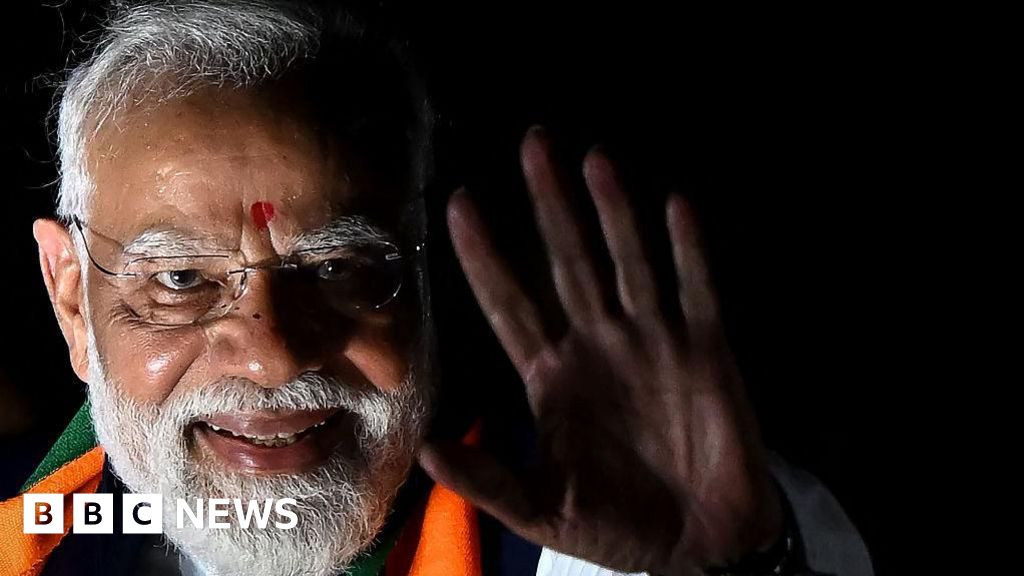
The BJP appears to have won West Bengal, a major breakthrough in one of India's most politically resistant states, after polling above 44% of the vote versus roughly 39-40% in prior elections. The result strengthens Narendra Modi and Home Minister Amit Shah politically, but the article is primarily about domestic political realignment rather than an immediate market-moving event. Wider implications include stronger BJP momentum in eastern India and potential scrutiny of Bengal's voter-roll revision process.
The market implication is less about a one-off state result and more about a lower perceived probability of policy drift at the center: a deeper BJP mandate in a strategically important state improves the odds of administrative continuity, faster execution on infrastructure, and less friction around land, logistics, and industrial permitting in the eastern corridor. That is constructive for domestic cyclicals with heavy India exposure—especially banks, cement, capital goods, rail/ports, and power distributors—because the second-order effect is not just more spending, but a stronger chance that state-level bottlenecks get removed faster over the next 12-24 months.
The other underappreciated effect is political-risk compression in eastern India. If the BJP can win in a historically resistant state without needing a coalition, it likely emboldens a more aggressive governance and institutional-reset agenda, including tighter enforcement on corruption and electoral administration. That tends to help formal-sector incumbents and hurt firms reliant on regulatory arbitrage, informal cash flows, or politically protected local monopolies.
Near term, the key catalyst is whether the incoming administration moves quickly on visible capex and administrative appointments. If yes, the next leg is likely in names levered to public works and utility capex; if implementation stumbles, the move will fade into a classic event-driven pop. The main tail risk is backlash: a sharper social polarization cycle or legal challenge around voter roll issues could force policy paralysis and delay investment decisions for 3-6 months.
Consensus may be underestimating how much this matters for succession politics in New Delhi. A stronger Shah-backed victory raises the probability of a more centralized, execution-heavy BJP style, which is usually better for listed infrastructure and financial assets than for discretionary local rent-seekers. The contrarian read is that the win may already be partially priced into India beta, so the higher-conviction trade is relative value inside India rather than a broad country overweight.
AI-powered research, real-time alerts, and portfolio analytics for institutional investors.
Request DemoOverall Sentiment
mildly positive
Sentiment Score
0.15
