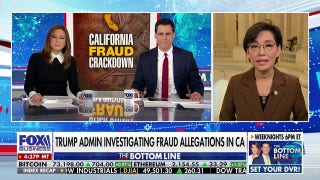
The Office of Management and Budget has canceled $1.5 billion in federal grants earmarked for projects in California, Colorado, Illinois and Minnesota, cutting $943 million from Department of Transportation programs and $602 million from CDC initiatives and citing alleged waste and mismanagement. Affected items include equity-focused infrastructure and public-health programs (examples: $15 million for San Francisco EV chargers, a $60 million California public-health disparities program, a $7 million CDC STD research award) and paused transit projects in Chicago totaling roughly $2.1 billion; the move signals a policy shift prioritizing “America First” criteria and increases political risk to municipal project pipelines, renewable-energy and public-health contractors, and state-funded initiatives.
Market structure: The direct losers are state-level contractors, EV-infrastructure vendors and public-health grantees operating in CA/CO/IL/MN; winners are providers of non-federal infrastructure finance (private P3 sponsors) and traditional energy producers who benefit from policy headwinds to renewables. At scale this is a relative reallocation, not a systemic funding shock — $1.5B is ~0.01–0.03% of market cap for large listed clean-tech names, but politically-driven funding risk raises idiosyncratic execution risk for municipal projects and smaller vendors over the next 3–12 months.
Risk assessment: Tail risks include an escalation to broader federal grant cancellations (> $20–50B) or legal/preemption battles that freeze multiyear projects, which would materially compress revenues for smaller contractors and state GO bond credit profiles. Near-term (days–weeks) expect headline-driven volatility and muni spread widening of ~5–25bp for targeted states; medium-term (3–12 months) project deferrals and repricing of municipal credit; long-term (1–3 years) potential re-routing of capital to private infrastructure and fossil-fuel capex.
Trade implications: Tactical short exposure to concentrated clean-infrastructure names and ETFs (e.g., ICLN, CHPT) using 3-month put spreads hedges headline risk, while taking modest long positions in majors in oil & gas (XOM, CVX) and private-infra-adjacent equities (BX, KKR) can capture policy rotation. Hedge municipal-credit risk by trimming concentrated CA/IL/CO/MN muni holdings by 1–3% of portfolio and increasing short-duration Treasuries or cash for 30–90 days to await legal clarity.
Contrarian angles: Consensus treats this as existential for renewables but historical parallels (policy reversals in 2017–2019) show technology adoption and private capital often offset federal pauses; sell-offs >15% in diversified renewables (NEE, ENPH) are buying opportunities on a 6–18 month horizon. Unintended consequence: accelerating private P3 and muni-bank lending opportunities — consider selectively financing or equity stakes in private infrastructure vehicles if grant risk continues to crowd out public funding.
AI-powered research, real-time alerts, and portfolio analytics for institutional investors.
Request DemoOverall Sentiment
mildly negative
Sentiment Score
-0.30
