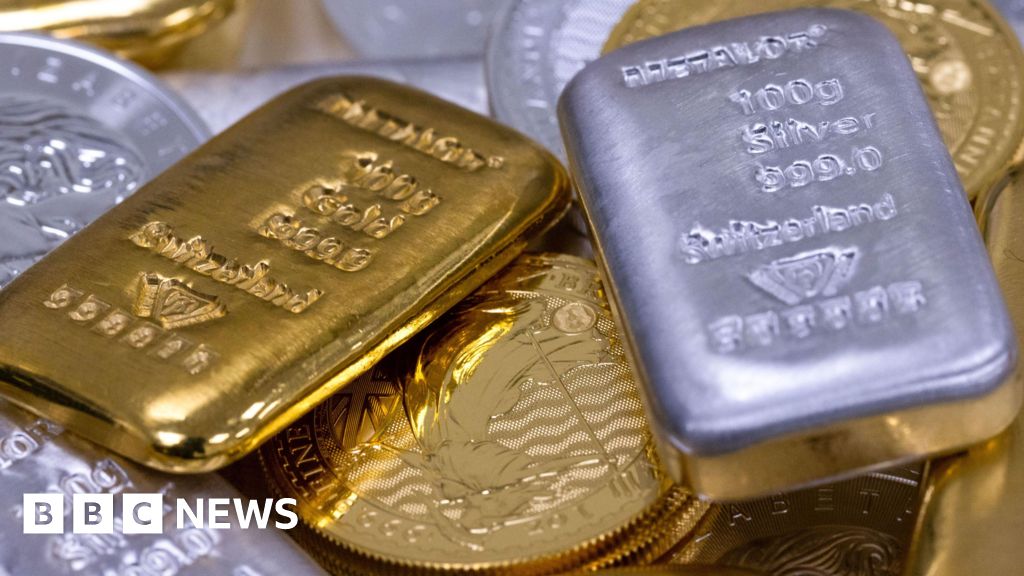
Gold surged more than 60% in 2025 to a record above $4,549/oz before easing to roughly $4,350 on New Year's Eve, while silver hit an all-time high of $83.62 and was trading near $74/oz. The rally has been driven by expectations of US rate cuts in 2026, large central-bank gold purchases, safe-haven demand amid global tensions, ETF inflows and supply-side moves such as China’s new export restrictions on silver; analysts expect further upside in 2026 but warn of potential sharp corrections.
Market structure: Winners are bullion ETFs (GLD/IAU, SLV/SIVR), major miners (GDX, NEM, GOLD) and central banks that gain portfolio insurance; losers include industrial consumers dependent on silver (electronics, PV) facing higher input costs and any LME/industrial metal producers that compete for investment flows. Expect pricing power to shift to miners and recycler networks as paper demand (ETFs + central banks) competes with constrained physical supply from China; gold market becomes more interest-rate-sensitive as real yields fall.
Risk assessment: Key tail risks include a Fed that delays cuts (real yields +200–300bp shock risk to metals -> >20% correction), China reversing export curbs (silver -15–30% in weeks), or a liquidity-driven ETF rush for redemptions causing physical squeezes. Immediate (days) — volatility spikes around macro prints; short-term (weeks–months) — profit-taking and sector rotation; long-term (quarters–years) — central-bank reserve accumulation and structural industrial demand could support higher floors.
Trade implications: Tactical allocations (2–4% portfolio) to GLD/IAU and 0.5–1.5% to SLV/SIVR; selective miner exposure (GDX 1–2% + NEM 0.5–1%) as a leveraged call on metal prices. Use 6–12 month call spreads on GLD and calendar spreads on SLV to express directional view while capping theta. Pair ideas: long GDX vs short XME (broad metals) to isolate precious-metal upside.
Contrarian angles: Consensus bets on 2026 Fed cuts — if inflation persists, metals re-rate lower; silver’s rally may be overstated because tightness invites substitution/recycling and policy rollback by China once domestic supply dislocations appear. Historical parallel: 1979-style spikes often preceded multi-year consolidation; set disciplined stops and size for mean reversion risk.
AI-powered research, real-time alerts, and portfolio analytics for institutional investors.
Request DemoOverall Sentiment
moderately positive
Sentiment Score
0.55
Ticker Sentiment
