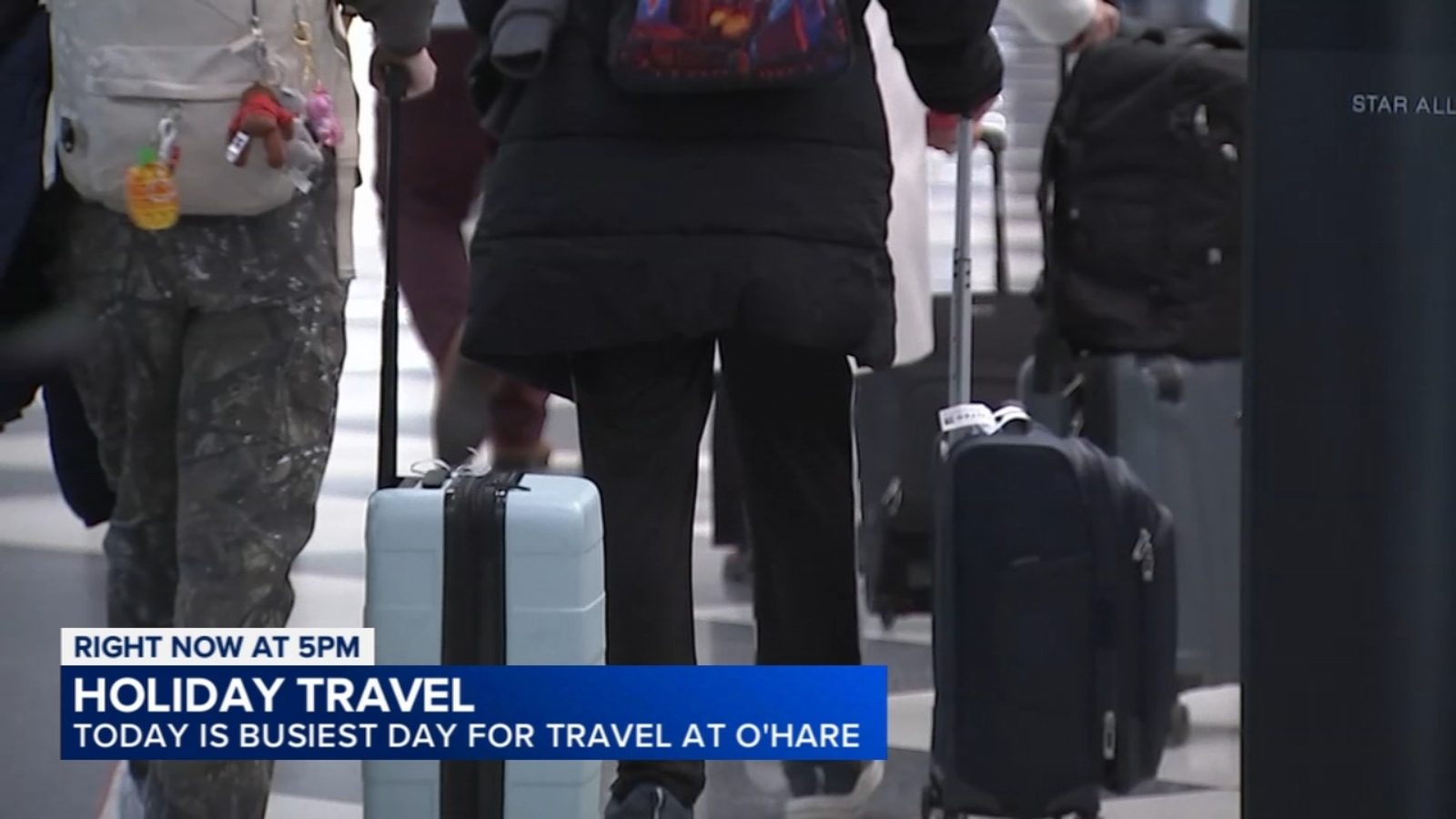
Chicago area travel volumes are at seasonal highs: more than 263,000 travelers are projected to move through O'Hare on Sunday and combined air traffic for Chicago's two airports is expected to be up about 6% year-over-year, with Midway busiest on Dec. 27. Illinois road travel is also strong, with roughly 5.7 million people expected to use tollways through Jan. 1, and O'Hare delays averaged only about 15 minutes with few cancellations. The data point to robust consumer mobility and resilient demand for airlines, airports and regional transportation services over the holidays, with modest operational strain so far.
Market structure: The 6% YoY lift in Chicago air travel and 263k passengers through O'Hare on a single day point to a broad, demand-led rebound benefitting network carriers (UAL, AAL), low-cost carriers (LUV, JBLU), OTA/rental ecosystems (EXPE, BKNG, HTZ, CAR) and jet-fuel suppliers. Short-term pricing power for carriers should improve modestly (yields +3–6% vs prior-year holiday), but margins remain sensitive to jet fuel moves and labor/capacity constraints.
Risk assessment: Tail risks include a COVID/weather/strike shock that could cut bookings 10–30% over 7–30 days, or a >10% spike in jet fuel (WTI/ULSD) that can erase near-term airline profit gains. Immediate horizon (days) is dominated by weather/operations; short-term (weeks–months) by fuel and staffing; long-term (quarters) by consumer travel elasticity and corporate travel normalization. Hidden dependency: airports pushing fees/capacity constraints could raise unit costs and cap regional carriers' upside.
Trade implications: Tactical plays favor cyclical exposure to travel for Jan–Mar 2026 while hedging fuel/variant tail risk. Sell short-dated airline implied volatility (holiday vols likely depressed) and selectively buy demand beneficiaries' skewed call spreads on booking/rental names. Rotate overweight to Consumer Discretionary travel exposures (XLY tilt) and underweight fixed-income exposure if CPI-linked travel demand keeps services inflation sticky.
Contrarian angles: Consensus may underprice fare inflation from constrained holiday capacity—this could lift airline unit revenues more than models expect (scenario: yields +6–10% sustaining into Q1 if capacity growth remains < demand growth). Conversely, market may be complacent on operational disruption risk; options sellers will be vulnerable if a single-event cancellation wave occurs. Historical parallel: 2019 holiday surge lifted yields but also amplified staffing-driven cost spikes in Q1 — expect similar second-order margin compression risk.
AI-powered research, real-time alerts, and portfolio analytics for institutional investors.
Request DemoOverall Sentiment
mildly positive
Sentiment Score
0.25
