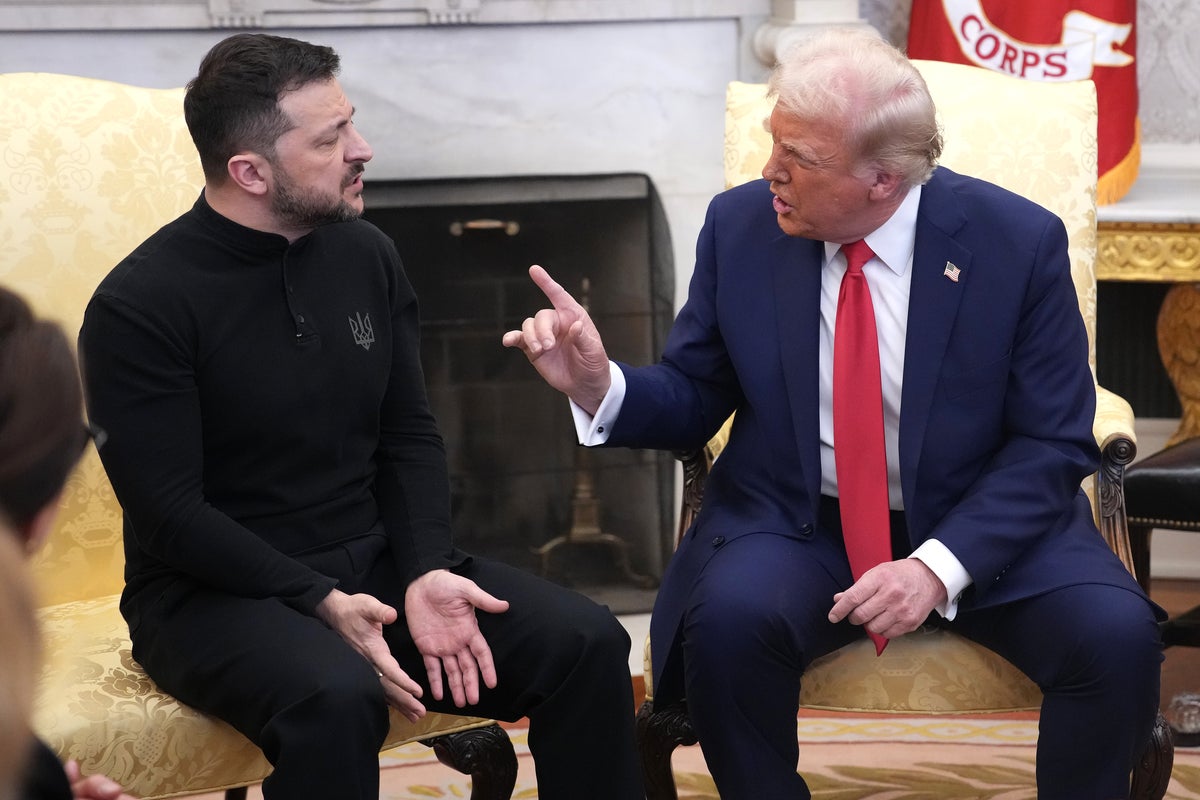
U.S.-brokered peace talks between Ukrainian and Trump-linked U.S. envoys were described as ‘constructive’ by President Zelensky, with a U.S. envoy slated to meet Putin in Moscow, but substantive compromise remains elusive amid Ukrainian insistence on sovereignty and NATO aspirations. Concurrently Kyiv escalated maritime operations, striking two sanctioned 'shadow fleet' tankers (Kairos and Virat) in the Black Sea and damaging a Novorossiysk mooring point that halted loading on the Caspian Pipeline Consortium — actions that raise short-term energy supply and shipping-risk considerations. Europe is debating use of frozen Russian assets for Ukraine reconstruction, with legal and currency concerns delaying consensus, while domestic Ukrainian politics (resignation of lead negotiator Yermak) and U.S. political involvement add negotiation uncertainty. For investors, the key takeaways are elevated energy and transport disruption risks, policy/legal uncertainty over frozen assets, and persistent geopolitical tail risks that could transmit to energy prices and regional risk premia.
Market structure: The tanker strikes and pipeline damage push near-term energy risk premium higher — expect Brent/WTI intraday volatility of ~5–15% and potential 7–12% weekly swings while sea-risks remain elevated. Winners: security vendors, war-risk insurers, and US integrated majors (XOM, CVX) with strong cash flows; losers: shadow-fleet owners, any firms with direct CPC exposure (minor impairments possible at Shell/XOM/CVX) and European refiners dependent on Black Sea crude. Fiscal moves (frozen Russian assets debate) create policy uncertainty for EUR and sovereign risk spreads in EU peripherals if seizures accelerate.
Risk assessment: Tail scenarios are asymmetric: a rapid negotiated peace within 3–6 months could compress Brent 10–20% and remove elevated insurance premia, hitting short-duration commodity longs; conversely, stepped-up attacks or legal seizure of assets could spike oil 15–30% in days and prompt multi-week shipping disruptions. Hidden dependencies include re-routing costs (higher freight raises product cracks) and Western co-ownership of Russian pipeline stakes (operational halts → direct earnings hits). Key catalysts: Witkoff–Putin talks (next 7 days), EU decision on frozen assets (30–90 days), and further Black Sea incidents (immediate).
Trade implications: Tactical: establish 2–3% size longs in XOM and CVX on a 3–8% pullback for a 3–9 month hold; use 3-month Brent call spreads (buy ATM, sell +$10) if strikes show >30% IV skew to capture upside while capping premium. Relative: pair trade long XOM vs short SHEL (SHEL) 1–2% notional for 3–6 months — US majors less exposed to EU legal/regulatory seizure risk. Protect: buy 3-month puts on SHEL (~>20% OTM) if EU moves to repurpose frozen assets within 60 days.
Contrarian angles: Consensus prices-in either negotiated settlement or limited escalation; market underestimates structural re-pricing of maritime insurance — sustained higher war-risk premiums would permanently raise cost curves for Russian oil buyers, favoring pipeline volumes and large, diversified US majors. If CPC downtime >30 days, expect a structural 5–10% upward shift in regional refined product cracks; use that as a trigger to add energy refinery/refined-product long exposure and to trim pure-play tanker names that face rising financing costs.
AI-powered research, real-time alerts, and portfolio analytics for institutional investors.
Request DemoOverall Sentiment
neutral
Sentiment Score
-0.15
Ticker Sentiment
