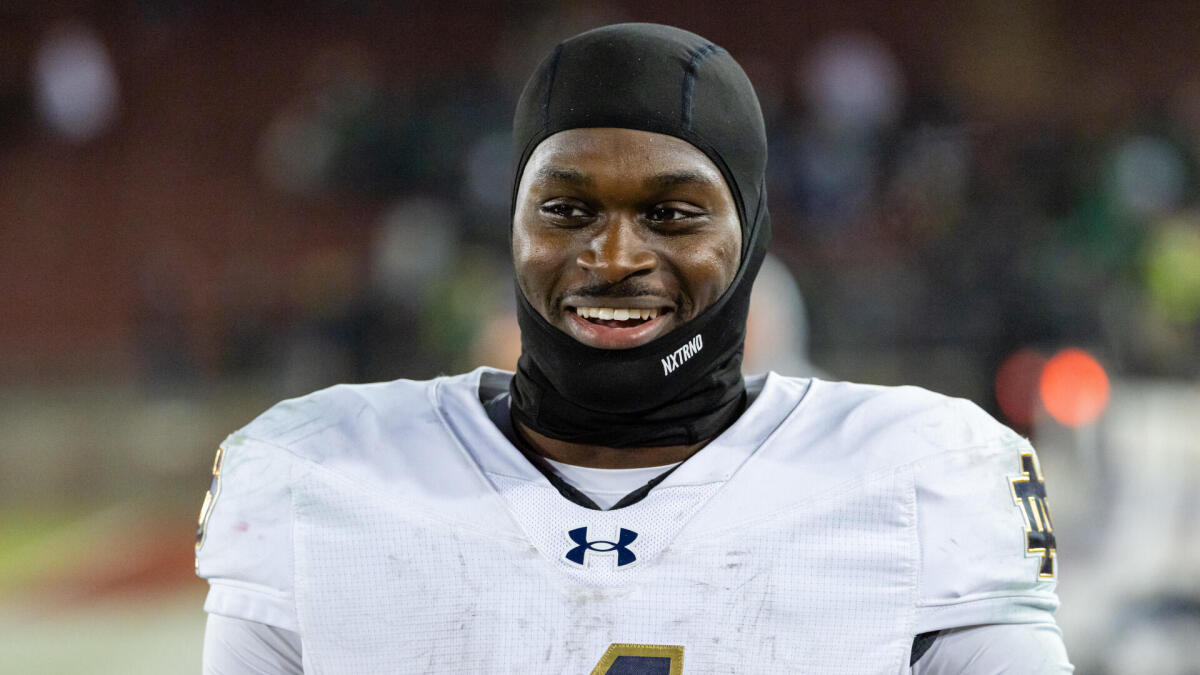
The article is a speculative 2026 NFL mock draft projecting the first 32 picks, including three trades and several team-specific roster upgrades. Notable moves include the Cowboys trading up to No. 8 for Caleb Downs, the Patriots trading up to No. 28 for Denzel Boston, and the Seahawks trading down from No. 32. This is entertainment content with no direct financial or market-moving implications.
This draft signal is less about individual prospects and more about how NFL front offices are re-pricing positional scarcity in a way that should matter for adjacent markets. The most important second-order takeaway is the premium being placed on premium athletes at quarterback, tackle, corner and pass rusher, while running backs and tight ends are being used as force multipliers rather than core offense builders. That preference tends to reinforce a bifurcation in team-building: organizations with stable QB situations can afford luxury picks, while teams still chasing quarterback stability are likely to keep paying up for protection and explosive pass-game assets.
The trade activity is the real tell. Early first-round movement implies teams believe the marginal value of a blue-chip defender or receiver is meaningfully above the chart, which usually leads to more aggressive future trade-up pricing in the top 15. That is supportive for clubs with multiple Day 2 picks, because the market for down-the-board capital should remain liquid; conversely, teams holding picks in the 20s may have weaker intrinsic value if they are stuck between tiers and can’t access the top of the board.
For roster construction, the most vulnerable archetype is the middle-tier offensive line and safety market: if clubs can find starting-caliber talent in Round 1, free-agent prices for second-tier veterans should be compressed into short, incentive-heavy deals. The contrarian angle is that the market may be overestimating how quickly some of these athletic, position-flex prospects convert to immediate NFL value; that creates a lag where teams look smarter on draft weekend than they do by midseason, especially if injuries or role ambiguity slow development. The time horizon to monitor is training camp through October, when usage clarity and rookie snap counts will reveal whether these are true upgrades or just optionality.
AI-powered research, real-time alerts, and portfolio analytics for institutional investors.
Request DemoOverall Sentiment
neutral
Sentiment Score
0.05
