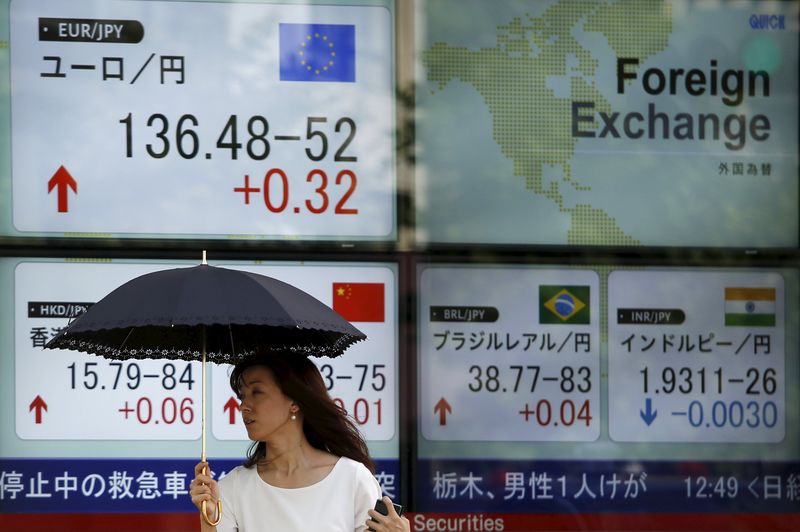
China’s foreign exchange reserves rose to $3.411 trillion in April from $3.342 trillion in March, topping the Reuters consensus estimate of $3.36 trillion. The increase came alongside a weaker U.S. dollar, with the yuan up 0.83% against the dollar and the dollar down 1.76% versus major currencies. The data is mildly supportive for China’s external position but is largely a macro update with limited direct market impact.
A stronger Chinese reserve position in the context of a weaker dollar is not just a macro footnote; it is a signal that global liquidity conditions are easing at the margin, which tends to compress FX volatility and support higher-duration risk assets. The second-order effect is that Chinese policymakers have more room to resist disorderly depreciation, reducing the odds of abrupt capital-outflow policy responses that typically hit EM beta and industrial cyclicals first.
For equities, the main implication is less about China itself and more about the transmission into U.S. mega-cap growth and balance-sheet-sensitive names. If USD weakness persists, it can mechanically inflate overseas revenue translation and ease financial conditions, which is supportive for high-multiple software/AI leaders, but the trade works best when real yields are stable or falling. The risk is that this is a one-month reserve print driven by FX valuation rather than deliberate capital allocation, so the market may be overpricing a sustained policy shift.
The clean contrarian read is that consensus will treat this as a pro-risk signal, but the better expression may be in relative value: lower USD pressure helps firms with large foreign revenue streams more than domestic demand proxies, while easing yuan stress can reduce the urgency of stimulus headlines that would otherwise benefit commodity-linked EM trades. In other words, the trade is not “buy China beta,” it is “buy global duration and sell the names that need a faster China reflation cycle to work.”
AI-powered research, real-time alerts, and portfolio analytics for institutional investors.
Overall Sentiment
neutral
Sentiment Score
0.10
Ticker Sentiment
