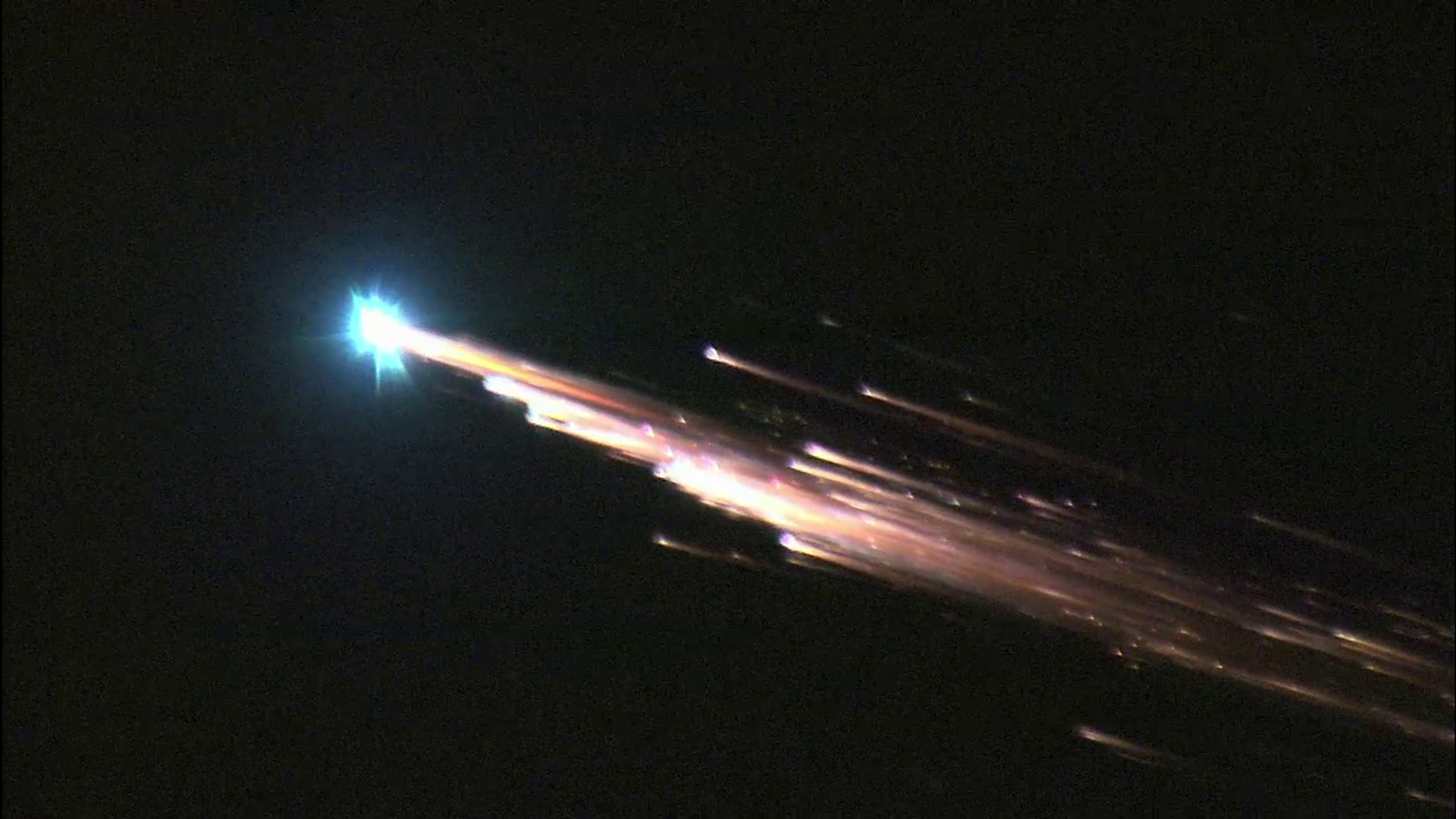
Researchers from Johns Hopkins University and Imperial College London demonstrated that networks of seismic (and potentially acoustic) sensors can track sonic booms from reentering space debris in real time; they used data from 127 California earthquake sensors to reconstruct the April 2024 reentry of a 1.5‑ton module detached from China's Shenzhou 17, finding its path about 40 km north of U.S. Space Command predictions and suggesting possible fragmentfall between Bakersfield and Las Vegas. The method, published Jan. 22 in Science, could materially shorten search times for hazardous debris, inform airspace management and liability assessments, and improve verification of claims about satellite burnup over oceanic regions that lack radar coverage.
Market structure: Near-term winners are defense primes and commercial suppliers of sensors/data-integration (Lockheed LMT, Northrop NOC, Raytheon RTX) and niche analytics/SaaS firms that can ingest seismic/acoustic feeds; insurers and commercial airlines are potential losers if reentry events force more airspace closures or liability claims. Competitive dynamics favor incumbents with government contracting pipelines and sensor-integration expertise—expect 6–24 month procurement cycles and bids that reinforce scale advantages, compressing margins for small point-solution vendors. Cross-asset: modest flight-disruption risk could raise short-term airline equity volatility (AAL, DAL) and push insurers/reinsurers to reprice tail-risk—supportive for short-dated aviation CDS and 1–2% wider property-casualty reinsurance spreads over 6–12 months in stress scenarios.
Risk assessment: Tail risks include a casualty event from reentry triggering multi-billion-dollar liabilities and expedited regulation (3–12 months), or accelerated international SSA data-sharing that commoditizes commercial analytics (12–36 months). Immediate noise: headline-driven trading in airlines/insurers in days; short-term (weeks–months) is contracting/procurement newsflow; long-term (quarters–years) is structural increase in SSA spending and sensor deployments. Hidden dependencies: utility of seismic/acoustic approaches depends on data openness (USGS/foreign access) and integration with orbital tracking—loss of data access or diplomatic frictions materially reduce commercial TAM.
Trade implications: Direct plays—establish 2–3% long positions split LMT (1.25%) and RTX (1.25%) as 9–18 month call-spread trades (buy 12–18 month 5–10% OTM call spreads) to capture contracted SSA upgrades. Pair trade—long XAR (or LMT) vs short regional airlines (ALK/AAL) 1–1 weighting (reallocate 2% of portfolio) to capture defense upside vs operational disruption risk over 3–12 months. Options—buy 9–12 month calls on NOC (10–15% OTM) sized to 0.5–1% portfolio risk to leverage possible multi-hundred‑million contract awards.
Contrarian angles: Consensus treats this as a niche science story; it understates procurement tailwinds and commercial TAM for atmospheric reentry tracking—if acoustic/seismic fusion proves reliable, expect rapid demand from governments + offshore insurers, driving 10–30% upside in SSA-focused vendors within 12–24 months. Reaction may be underdone: defense primes’ Q3–Q4 bookings could already reflect modest increases; mispricings exist in small-cap sensor/data names where M&A is likely—monitor filings and contract notices for 30–90 day alpha opportunities. Unintended consequence: rapid data proliferation could spur liability litigation against satellite operators, creating winners (data/on‑demand recovery services) and losers (cheap mega-constellation operators facing higher OPEX).
AI-powered research, real-time alerts, and portfolio analytics for institutional investors.
Request DemoOverall Sentiment
neutral
Sentiment Score
0.05
