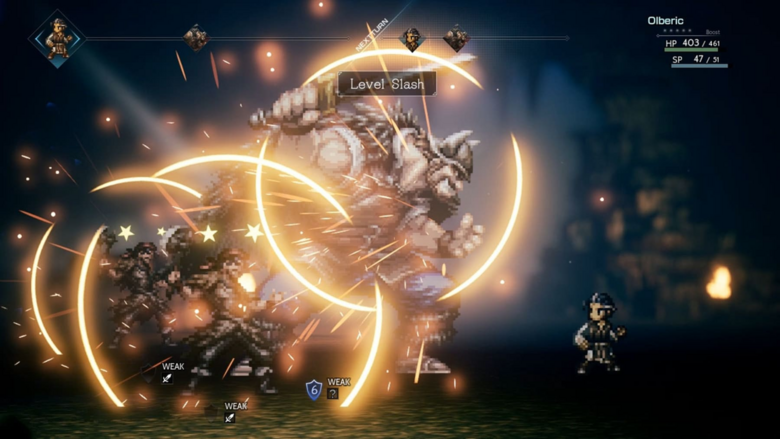
Square Enix confirmed the Octopath Traveler series has sold 6 million units worldwide as of December 22, 2025, following prior milestones of 4 million (June 2023) and an intermediate 5 million update. The publisher also highlighted expanded availability — both games on PlayStation, Steam, Xbox Game Pass and a Switch eShop bundle — which broadens distribution and may strengthen consumer reach for the HD-2D RPG franchise, though no revenue or profit figures were disclosed.
Market structure: A 6M-unit milestone crystallises Octopath as a mid-size but durable IP — direct winners are Square Enix (9684.T / SQNXF), platform holders with recent releases (NTDOY / 7974.T, SONY / SONY, MSFT) and digital storefront economics (Steam/Xbox Game Pass). Pricing power for sequels/ports is moderate — digital distribution shifts the lever from scarcity to lifetime monetisation (DLC/Game Pass payouts), so incumbents with global marketing and platform deals capture most upside while physical retail and small regional publishers are neutral-to-negative.
Risk assessment: Tail risks include IP fatigue or a poorly received Octopath III (low-probability, high-impact) and Game Pass payment compression for third-party devs; operational risks are dev delays and elevated marketing spend that can compress margins in the next 2-4 quarters. Immediate impact (days) is negligible; expect short-term (weeks–months) sentiment spikes around holiday bundles and platform launches, and long-term (12–36 months) franchise value if a III is announced. Monitor Game Pass per-title economics disclosures and Square Enix quarterly guidance within 90 days as key catalysts.
Trade implications: Direct tradeable ideas are idiosyncratic long on Square Enix (capture franchise re-rate) and modest long NTDOY/SONY exposure to Switch/PlayStation tailwinds; use 6–12 month call spreads to limit downside. Relative-value: long SQNXF/9684.T vs short ESPO (VanEck video gaming ETF) to isolate IP upside. Size positions small (0.5–2% each) and target ~20–35% upside or defined option payoffs tied to sequel announcement.
Contrarian angles: Consensus underestimates repeatability of boutique HD-2D success — 6M units implies recurring monetisation potential (~$100–220M gross revenue assuming $15–$35 net/unit) that isn’t fully priced into smaller Japanese publishers. Conversely, risk of over-expansion (porting to every storefront) could compress per-unit revenue; historical parallel: Persona series re-rating after sustained ports and anime tie‑ins, but not every niche JRPG scales the same way.
AI-powered research, real-time alerts, and portfolio analytics for institutional investors.
Request DemoOverall Sentiment
mildly positive
Sentiment Score
0.25
