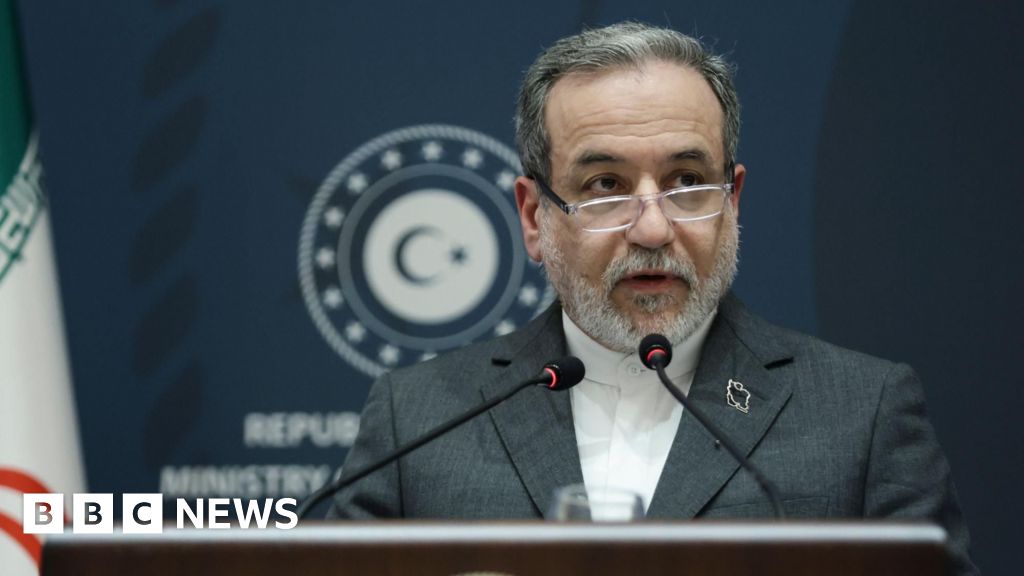
The US and Iran have agreed to hold nuclear talks in Muscat, Oman on Friday (starting 10:00 local / 06:00 GMT), after a period of uncertainty over location and parameters; Washington insists negotiations must address Iran's nuclear programme, ballistic missiles, regional proxies and treatment of its people. President Trump issued stark warnings to Supreme Leader Khamenei and referenced prior strikes on Iranian nuclear facilities, while Iran's negotiators said they would consider a no-nuclear-weapons deal if sanctions were lifted. The talks occur amid large-scale domestic unrest in Iran — official and NGO casualty tallies differ sharply — raising tail risks of regional escalation that could affect risk assets and regional markets.
Market structure: Near-term winners are defense contractors (LMT, NOC, RTX) and commodity producers (XOM, CVX, OXY) from a higher geopolitical risk premium; losers include airlines (AAL, DAL), tourism/leisure and EM importers. Expect oil volatility: 3–7% intraday moves around the Friday talks and a downside/upside oil shock range of ~$5–$20/bbl if talks fail or escalate, shifting short-term pricing power to producers and insurers (PICC-like reinsurance premiums rising). Cross-asset: safe-haven flows should bid USD and gold (GLD) and push 10–30bp lower on 10yr UST yields in initial shock, while equity risk-off could shave 1–3% off broad indices in extreme scenarios.
Risk assessment: Tail risks include a targeted strike on shipping lanes/Strait of Hormuz (short-term probability 10–25%) and large-scale regional war (<5%) with multi-month oil chokepoint disruption; such tails would stress shipping insurance, tanker freight rates, and bank sanctions interoperability. Time horizons: immediate (days) dominated by headlines; short-term (weeks–months) by sanction re-tightening and proxy escalation; long-term (quarters+) by structural investment shifts in US/EU energy security. Hidden dependencies: Israeli actions, GCC diplomatic pressure, and US election calendar could rapidly flip probabilities; watch tanker-insurance spreads and SWIFT/clearing notifications as second-order signals.
Trade implications: Implement size-limited, asymmetric positions: tactical 2–3% portfolio long in XOM/CVX (equally split) and 1% long GLD as hedge, using 3-month horizons; complement with 1% long LMT for defense exposure. Use options to control risk: buy 3-month WTI call spread (5–15% OTM) sized to 0.8–1.2% portfolio to play an oil spike, and buy 6-week VXX call or VIX call spread (0.5%) around the meeting to monetize headline volatility. Pair trades: long LMT (1%) vs short AAL (0.8%) to express defense vs travel divergence. Entry: scale 50% pre-Friday, 50% on failure to secure talks; take profits/trim on 15–25% move or 30 days.
Contrarian angles: Consensus prices a protracted risk premium; markets underprice a successful de-escalation: if talks produce a credible short-term freeze expect oil to drop 8–12% inside 2–4 weeks and defense names to retract 10–20% — hedge positions accordingly. Historical parallels (2015 JCPOA/2019 tanker incidents) show fast mean-reversion in oil once direct supply risk is removed; consider asymmetric short oil exposure (e.g., sell 4–6 week WTI call/put reverse) after a confirmed diplomatic de-escalation. Unintended consequence: a negotiated détente could trigger rapid EM/local-currency rallies (EEM, IEMG) — hold a tactical 0.5–1% long EM basket as a volatility arb if talks progress positively within 7–14 days.
AI-powered research, real-time alerts, and portfolio analytics for institutional investors.
Request DemoOverall Sentiment
moderately negative
Sentiment Score
-0.55
