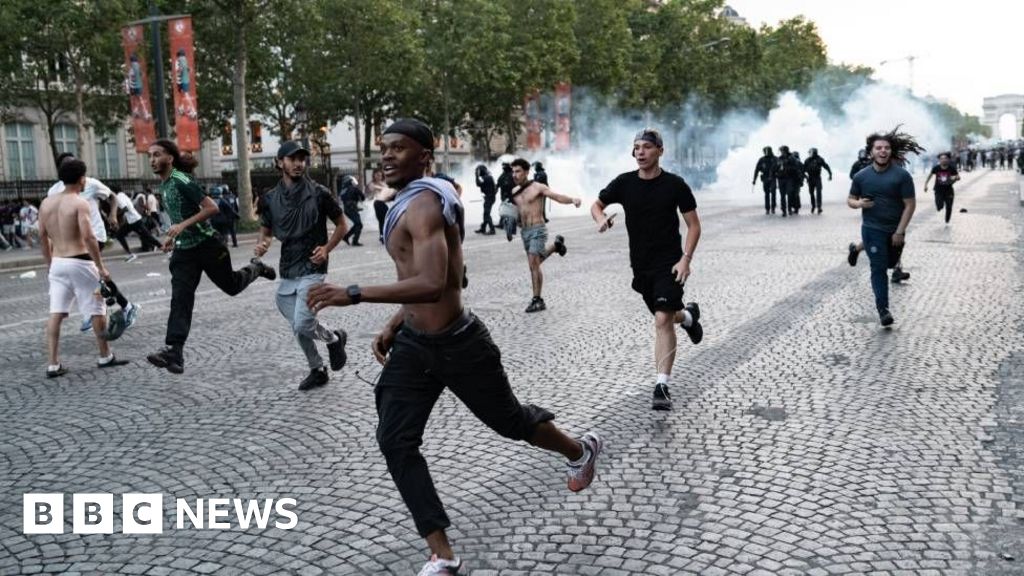
At least 780 people were arrested and 219 injured, including 57 police officers, after Champions League victory celebrations by PSG turned into riots across France. The unrest disrupted bus, train and rail services in Paris and prompted deployment of thousands of officers, with six people left in serious condition and one death reported from an accident on the ring road. The article signals public-order risk around mass events, but the direct market impact is limited and likely confined to transport and leisure activity in Paris.
The immediate market read-through is less about the headline violence itself and more about the incremental cost of staging large public events in France. The state will almost certainly have to keep over-allocating police, transport, and emergency resources around future mass gatherings, which raises the probability of tighter permitting, lower attendance elasticity, and higher operating friction for any asset tied to Paris leisure traffic over the next 1-3 months.
The second-order impact is on transportation and urban commerce rather than broad French equities. Rail, metro, and bus operators face a near-term spike in disruption risk and higher security operating expense, while hotels, restaurants, and retail in the core Paris zone could see a short-lived demand air pocket if tourists substitute away from peak congestion windows. The bigger loser is the city’s event-calendaring premium: repeated disorder makes “celebratory weekends” harder to monetize, which can compress ancillary spend even if headline visitation holds.
Politically, this increases pressure on the government to be seen as forceful, so the next catalyst is not the parade itself but the policy response over the following 2-8 weeks: curfews, tightened crowd controls, heavier policing budgets, and tougher rules around public events. That usually supports defense and security services at the margin, but it is not a clean structural long yet unless the spending translates into multi-year procurement rather than temporary redeployment.
Contrarian view: the market may overestimate lasting damage to French travel demand. These events tend to create a 24-72 hour shock, not a multi-quarter impairment, unless there is a repeat incident that changes international perception. If the parade is uneventful and transport normalizes quickly, the premium on France-risk hedges should decay fast, making this more of a tactical volatility trade than a durable short.
AI-powered research, real-time alerts, and portfolio analytics for institutional investors.
Request TrialOverall Sentiment
moderately negative
Sentiment Score
-0.45
