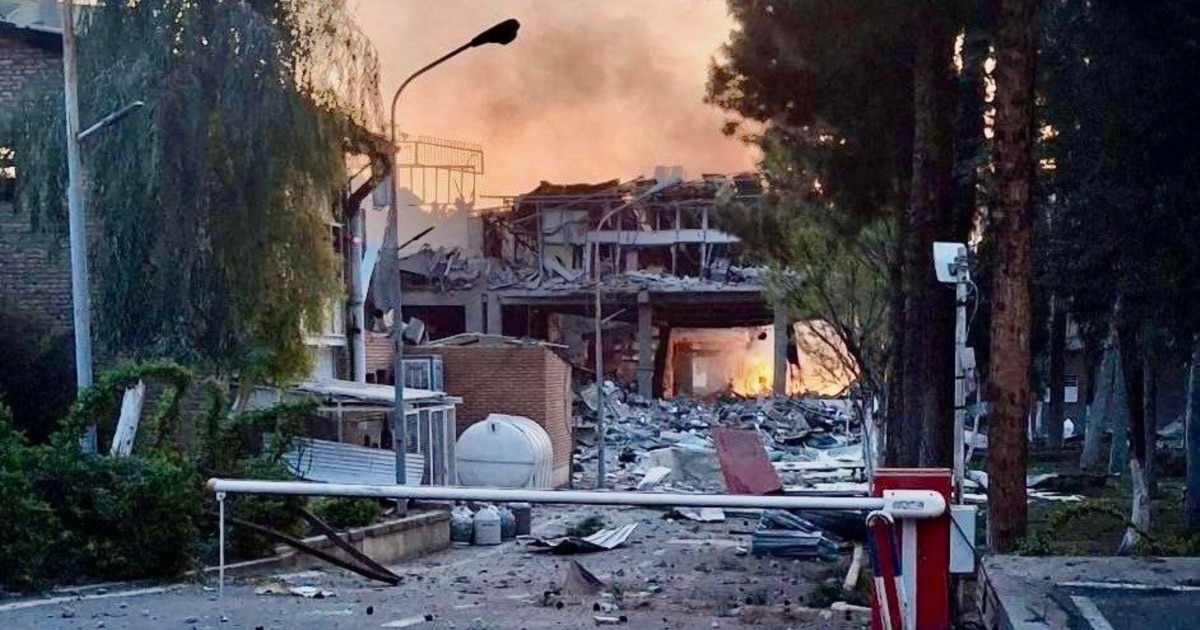
Major escalation: President Trump threatened strikes on Iranian infrastructure (bridges, power plants) after a month of US air attacks while Iran launched missiles and drones at Israel and Gulf states, and the Strait of Hormuz has been driven to a near standstill, creating a global energy bottleneck. Implication for portfolios: heightened risk to oil and shipping markets with upside energy-price pressure and broader market volatility, plus geopolitical risk to regional assets; added uncertainty from the abrupt retirement of US Army Chief of Staff General Randy George. UN and GCC are seeking Security Council action but a vote was postponed, leaving near-term diplomatic resolution unclear.
Energy markets are the immediate transmission channel: a protracted Strait of Hormuz disruption will mechanically raise seaborne crude insurance and tanker freight rates, forcing refiners to draw inventories and pushing Brent/WTI higher in the near term; a conservative working assumption is a $10–$25/bbl premium on Brent if transit risk persists >4 weeks, with the first wave of price action concentrated in days–weeks as physical cargoes re-route. Higher energy costs will pinch goods-intensive sectors (airlines, container shipping, commodity-intensive industrials) through margin compression and could accelerate EM currency stress where FX reserves are thin, concentrating pain in import-dependent Gulf-Asia corridors within 1–3 months.
Targeting of transportation and power infrastructure creates a multi-year rebuilding cycle rather than a single military-spike trade: engineering, grid-resilience, and defense-system sustainment budgets rise and favor large prime contractors and specialist industrials that can win multi-year reconstruction contracts; expect contracting lead times of 6–24 months and recurring aftermarket/service revenue that is underappreciated today. A rapid change in US military leadership increases execution-risk and short-term operational tempo, raising both upside for defense suppliers and tail geopolitical risk for global trade flows.
Catalysts to watch: the Security Council outcome on maritime protection, coalition naval deployments, SPR releases, and any public timeline for reconstruction spending — any of which can reverse energy-driven moves within 4–8 weeks. Contrarian overlay: defense/energy longs look consensus crowded; a coordinated diplomatic or naval convoy solution would unwind much of the oil-premium and leave stretched cyclical names vulnerable, so size positions with explicit hedges and defined stop-losses.
AI-powered research, real-time alerts, and portfolio analytics for institutional investors.
Request DemoOverall Sentiment
strongly negative
Sentiment Score
-0.80
