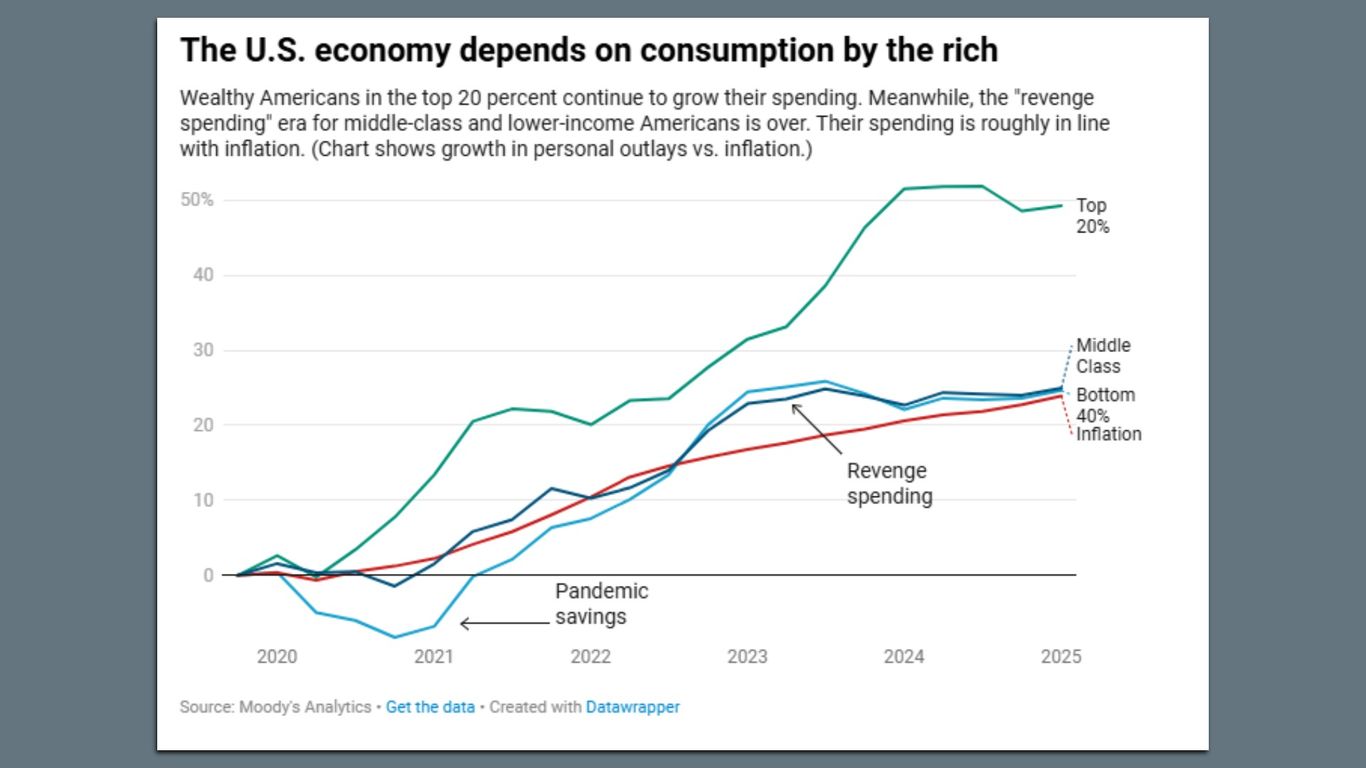
The U.S. economy is exhibiting a K-shaped recovery, with the top 20% of earners now driving over half of consumer spending, while consumption from middle and lower-income households remains stagnant. This bifurcation masks underlying economic fragility, as overall resilience hinges on a small segment, posing risks to the broader labor market via struggling small businesses and creating vulnerability should stock market performance, which fuels wealthy spending, falter. The situation is further complicated by impending tariffs.
The U.S. economy is exhibiting a pronounced K-shaped recovery, where aggregate consumption figures are being skewed by a narrow segment of the population. Data from Moody's indicates that the top 20% of earners now account for over half of all consumer spending, creating a facade of resilience for an economy where consumption comprises two-thirds of GDP. In contrast, spending from middle and lower-income households has flatlined at the start of 2025, merely keeping pace with inflation. This bifurcation extends to the corporate sector, with large corporations outperforming while small businesses, the nation's largest employers, are struggling, signaling potential weakness in the labor market. The situation is precarious, as the robust spending from the wealthy is fueled by a stock market wealth effect, which economist Ryan Sweet of Oxford Economics notes could evaporate if equity prices falter. This fragility exists even before the implementation of new tariffs, which are expected to disproportionately impact the already-strained lower-income consumers and the companies that serve them.
AI-powered research, real-time alerts, and portfolio analytics for institutional investors.
Overall Sentiment
strongly negative
Sentiment Score
-0.65
Ticker Sentiment
