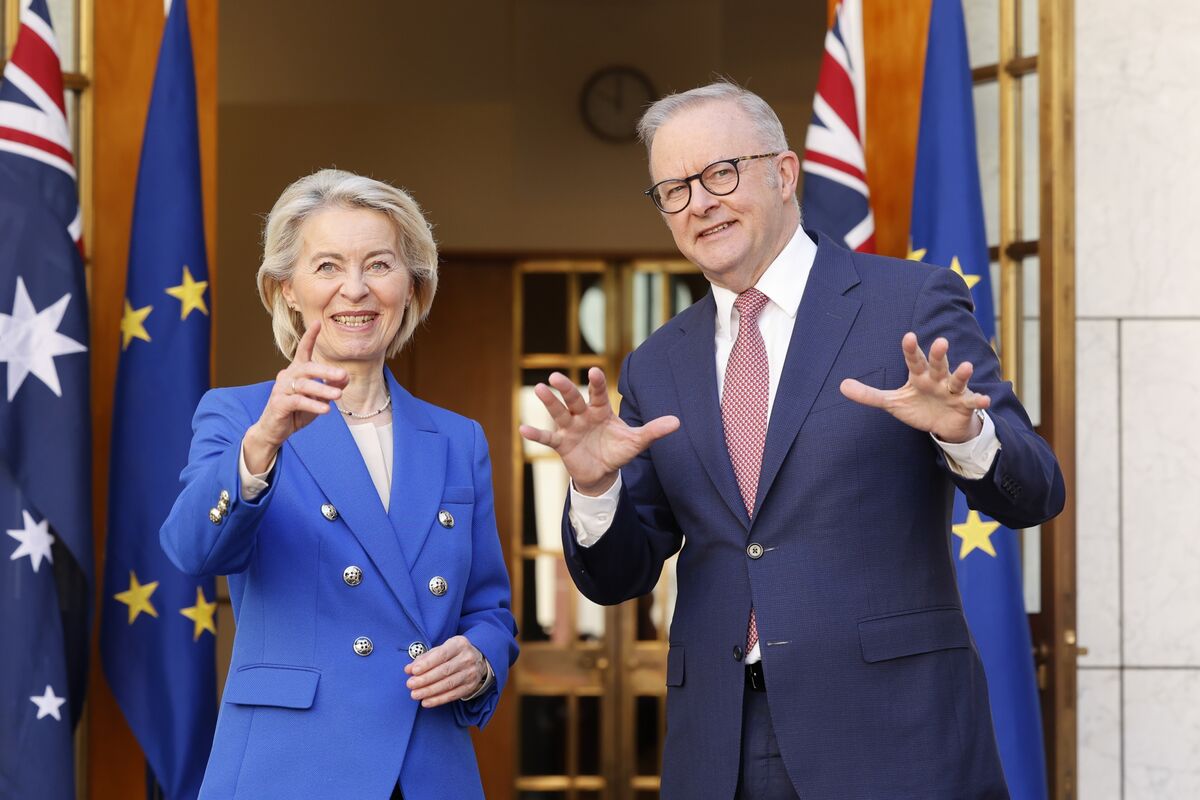
The EU and Australia signed a free-trade agreement that opens new markets for Australian producers. Australian wheat farmers are scaling back plantings amid fertilizer-supply concerns tied to the Iran conflict, creating upside risk to wheat prices and supply volatility. Reports that Iran and the US may be negotiating a de-escalation (and possible US troop deployment plans) leave a mixed outlook: trade liberalization supports exporters while geopolitical risk threatens agricultural input chains.
The tariff-free pathway created by the new EU-Australia dynamic will reprice trade flows over multiple years, not days: Australian exporters with scale in bulk agri-commodities and logistics will gain margin and volume share versus mid-sized EU suppliers, pressuring regional processors to chase cost efficiencies or vertical integration. That reallocation amplifies demand at origin terminals and shipping lanes into Europe — a structural boost to freight and storage providers on the Australia–Europe axis, but a headwind for EU domestic processors that cannot match scale or input-cost advantages.
A fertilizer supply shock that reduces planted acreage compresses next-season global wheat availability with a 6–12 month lag, creating asymmetric upside for grain prices while simultaneously boosting near-term margins for nitrogen producers that can reroute ammonia to higher-value markets. The key technical lever is feedstock flexibility: producers with steam methane reforming and domestic natural gas optionality can monetize tightness quickly, whereas players dependent on imported intermediates will see margin volatility and working-capital stress.
The geopolitical negotiation track is the primary near-term swing factor: a credible de‑escalation can restore shipments within weeks‑to‑months, collapsing fertilizer premia and reversing the wheat-tightness narrative; conversely, renewed sanctions or military escalation would entrench higher prices and forced demand destruction among smaller farmers. Position sizing should therefore be asymmetric — trade themes with concentrated operational optionality (storage, flexible ammonia capacity, freight) are preferable to pure commodity longs that depend entirely on supply shocks persisting for >12 months.
AI-powered research, real-time alerts, and portfolio analytics for institutional investors.
Overall Sentiment
mixed
Sentiment Score
0.00
