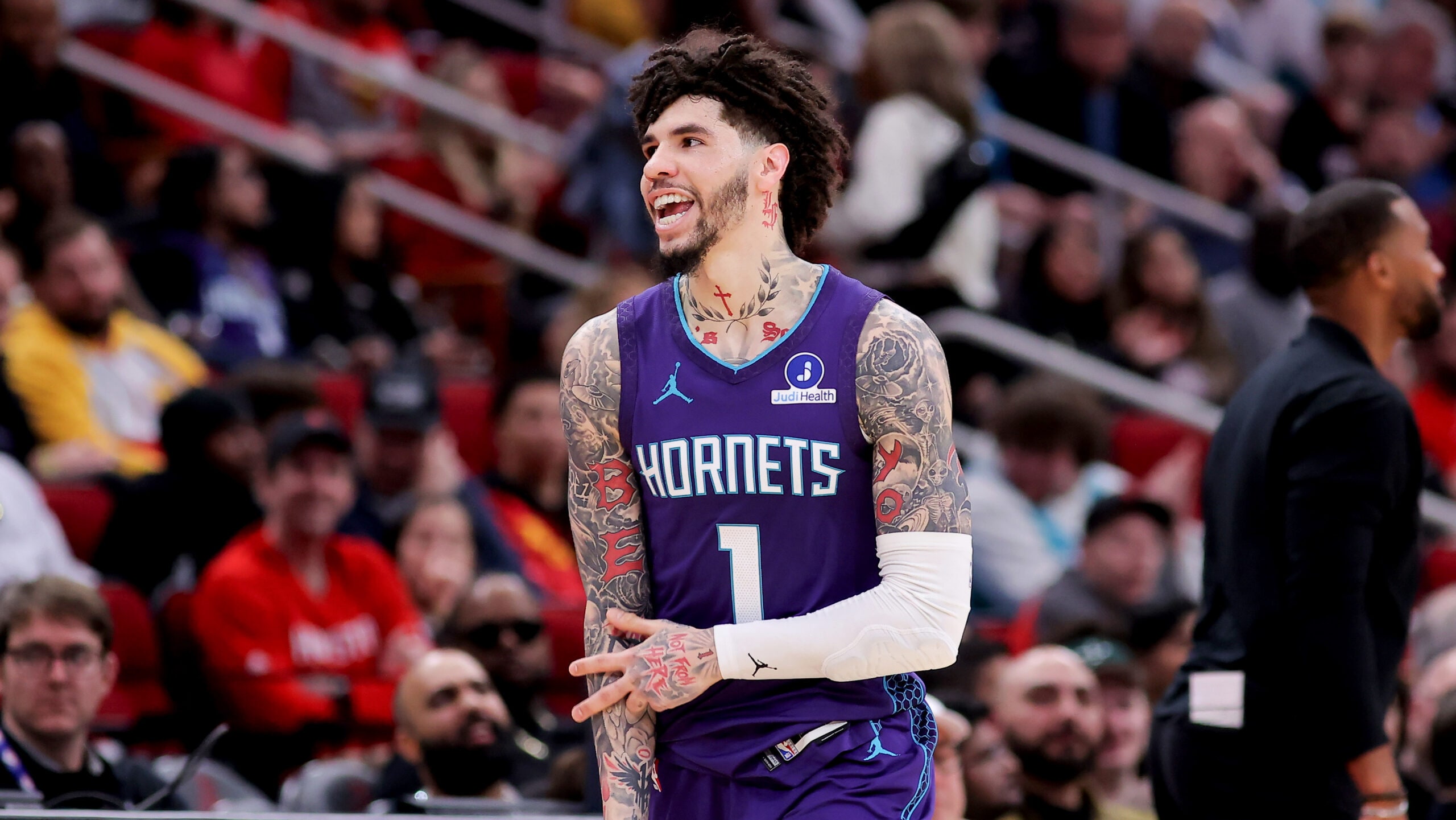
The Timberwolves acquired LaMelo Ball and Josh Green in a blockbuster trade, sending Naz Reid, an unprotected 2033 first-round pick, three first-round pick swaps (2028, 2029, 2030) and three second-round picks (2029, 2032, 2033) to Charlotte. Ball, a 2020 No. 3 pick, averaged 20.1 points, 4.8 rebounds and 7.1 assists last season and gives Minnesota a high-end backcourt alongside Anthony Edwards. The move follows Minnesota's reported Julius Randle trade and reshapes both teams' roster outlooks.
The immediate market signal is that Minnesota is paying up for optionality and fit, not just talent. A high-usage creator next to a heliocentric wing like Edwards can raise the offense’s ceiling, but it also concentrates downside in ball-dominant shot creation if Ball’s health reverts to its prior pattern; the trade is really a bet that the Wolves can smooth variance with depth and scheme. The secondary effect is on the Hornets’ asset base: they converted a fragile star into a far more tradeable package of futures plus a rim-protecting, high-floor rotation big, which improves their flexibility whether they accelerate or pivot later. The more interesting implication is valuation asymmetry across the league. Deals like this reset the market for young, productive guards with extension control, but they also highlight how expensive “name” talent becomes once teams are close to contention and short on surplus picks. That tends to compress the willingness of mid-tier buyers to overpay for similar players over the next 1-2 months, while improving the bargaining power of teams holding redundant backcourt pieces or future firsts. For Minnesota, the key risk is not talent fit but timeline mismatch: if the new backcourt’s defense and availability do not stabilize by the first 30-40 games, the front office may have turned future assets into a short-lived regular-season bump. For Charlotte, the upside case is a cleaner roster hierarchy and a more balanced rebounding/bench profile that could translate into a better floor within this season, but the downside is that the unprotected 2033 first has very long-duration value if Minnesota stumbles or age/injury hits their core. The consensus is probably underpricing how quickly pick-swaps can become meaningful if one team peaks early and the other gets stuck in the middle.
AI-powered research, real-time alerts, and portfolio analytics for institutional investors.
Request DemoOverall Sentiment
mildly positive
Sentiment Score
0.35
Ticker Sentiment
