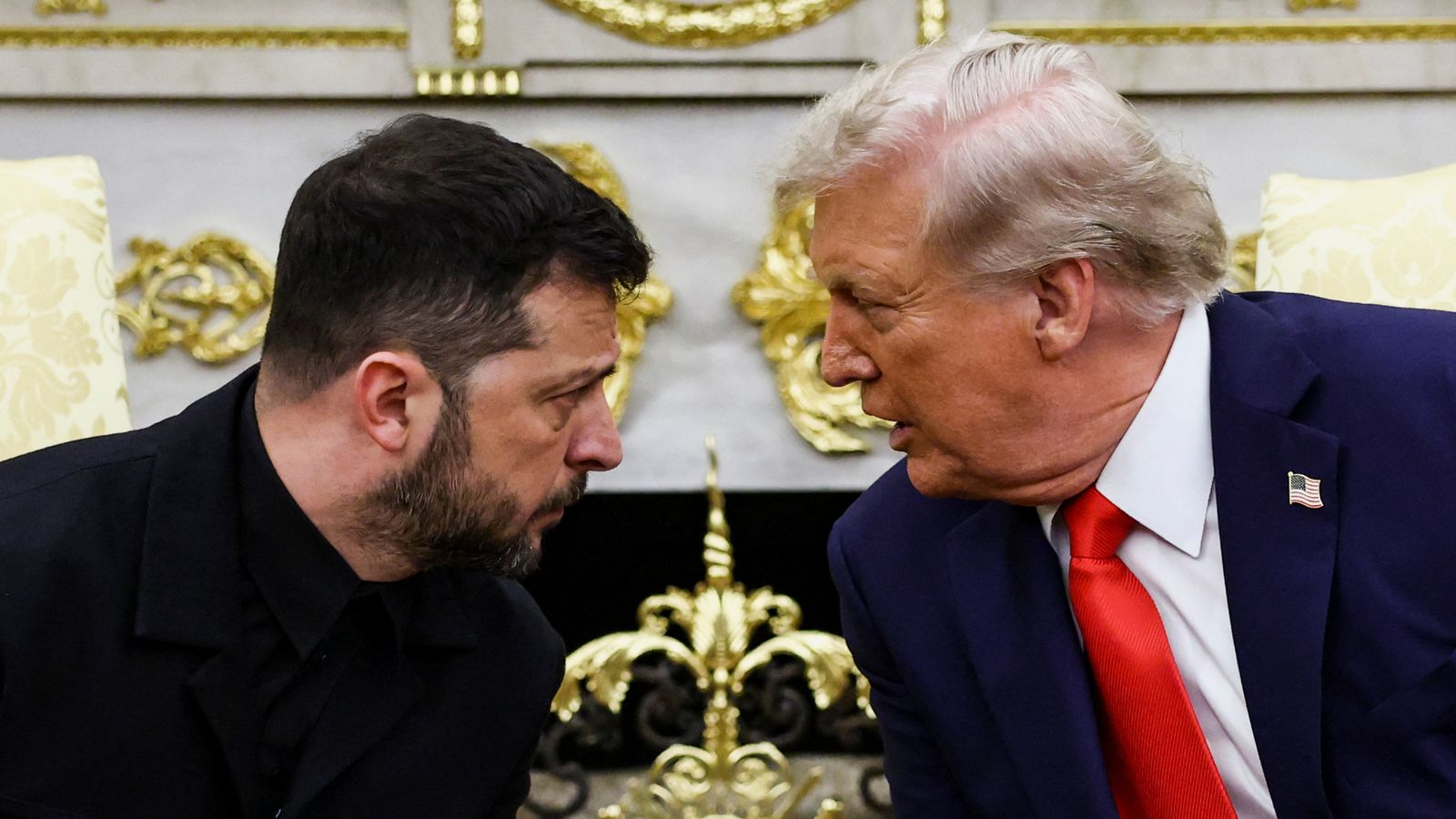
At the Doha Forum 2025, Donald Trump Jr. signalled that President Trump might withdraw from the Ukraine peace process, arguing the issue lacks appetite among Americans and urging Europe to prepare alternative plans. He promoted an "America first" agenda focused on defence technology and AI investment, confirmed a rapprochement with Elon Musk and noted his family's 1789 Capital has invested in Musk-related companies such as SpaceX. The remarks underscore policy uncertainty on geopolitics and defence funding while reaffirming pro-technology, pro-investment rhetoric that could influence-sector positioning but are unlikely to be immediately market-moving.
Market structure: The combination of a potential US pullback from Ukraine and an "America First" pivot toward defence tech and AI shifts incremental demand from traditional platform/materiel suppliers to US-based primes (LMT, RTX) and AI semiconductor winners (NVDA, AMD). Expect a 6–18 month reallocation of ~$10–30bn incremental budget toward AI-enabled systems and domestic supply-chain onshoring; politically sensitive European defense exporters may lose relative share. Cross-asset: reduced east-west kinetic risk should compress energy and gold risk premia by 5–15% if perceived de-escalation takes hold, while bond volatility may fall modestly (5–10 bps on 10y) absent other shocks.
Risk assessment: Tail risks include sudden escalation if Russia/Europe interpret US withdrawal as abandonment (spiking oil +15–30% and defence equities +10–25% in days), and regulatory/antitrust scrutiny of big tech-AI partnerships under a pro-Musk administration (policy shocks in 30–90 days). Immediate (days): headline-driven volatility in TSLA and NVDA; short-term (weeks–months): repricing around FY26 defence budgets and Congressional signals; long-term (quarters–years): structural capex into AI chips and onshore fabs. Hidden dependencies: increases in US defence R&D can be offset by supply bottlenecks in advanced node semiconductors and rare earths.
Trade implications: Favor US defence primes and AI chipmakers while tactically capitalizing on TSLA sentiment gains from pro-Musk alignment. Recommended instruments: equity longs in LMT/RTX for 6–12 months, NVDA call-spreads for 3–9 months to express AI hardware upside, and a small momentum/opt-based TSLA position sized to event risk. Use pair trades (US defence long / European OEM short) to isolate political premium; manage with 8–12% stop-loss and profit targets of 15–25% depending on catalyst outcomes.
Contrarian angles: The market may underprice the risk that US withdrawal forces European rearmament, which benefits EU defence contractors (EADSY) and NATO supply chains—this would narrow any US/EU spread over 12–24 months. TSLA sentiment lift is likely front-loaded and could be a short-term overreaction versus fundamentals (production, margins); volatility-hedged short against NVDA/AI hardware exposure could profit if regulatory/antitrust actions accelerate. Historical parallel: post-Afghan drawdown saw transient risk-premium compressions followed by regional arms build-ups; expect a two-stage move rather than monotonic decline.
AI-powered research, real-time alerts, and portfolio analytics for institutional investors.
Request DemoOverall Sentiment
neutral
Sentiment Score
0.00
Ticker Sentiment
