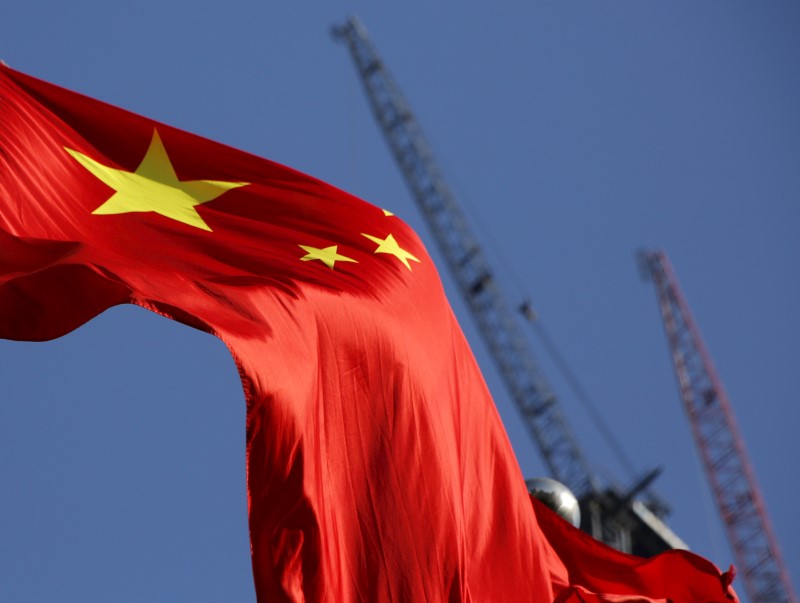
China's April macro data disappointed across the board, with industrial production rising 4.1% year-on-year versus 6.0% expected, retail sales up just 0.2% versus 2.0% expected, and fixed-asset investment falling 1.6% instead of rising 1.7%. The report points to fragile domestic demand, weak consumer spending, and continued property-sector stress despite stronger external demand and policy support. The backdrop remains relevant for China-linked equities and global industrial demand, but the article itself is primarily macro-focused rather than stock-specific.
The key second-order read-through is not just weaker Chinese demand; it is a tightening of the feedback loop between export strength and domestic weakness. If China keeps leaning on external demand while internal capex and consumption stall, upstream industrial volumes can look fine even as pricing power erodes across the supply chain, which is negative for cyclical hardware, materials, and China-facing advertisers. That mix tends to favor firms with differentiated secular demand over those reliant on broad-based enterprise or consumer upgrade cycles.
For the AI hardware complex, the near-term implication is mixed rather than uniformly bullish. A softer China macro backdrop can support U.S. semis through lower commodity and freight inputs, but it also raises the probability that hyperscaler spending becomes more discriminating over the next 1-2 quarters, especially if management teams see less visibility into Asia end-demand and inventory digestion. That is a subtle headwind for names whose valuation assumes uninterrupted build-out cadence, while the best-positioned beneficiaries are those with pricing power, backlog visibility, and software-like attach rates.
The contrarian point is that the market may be underestimating policy option value in China. Weak retail and fixed investment increase the odds of incremental stimulus, and the first leg of any support package usually helps trading up in the most beaten-down domestic cyclicals before it helps true end-demand. But stimulus that stabilizes activity without fixing property typically shortens the cycle, creating tradable rallies rather than durable fundamentals; that argues for tactical positioning rather than chasing a sustained China rebound.
Tail risk over the next 1-3 months is a sharper-than-expected demand downgrade from multinational management teams tied to China and broader EM capex, which would compress multiples even if headline earnings hold. The cleaner catalyst to reverse this would be a credible property stabilization package or a tariff/trade détente that improves business confidence, but absent that, the burden of proof remains on the bulls.
AI-powered research, real-time alerts, and portfolio analytics for institutional investors.
Request DemoOverall Sentiment
moderately negative
Sentiment Score
-0.45
Ticker Sentiment
