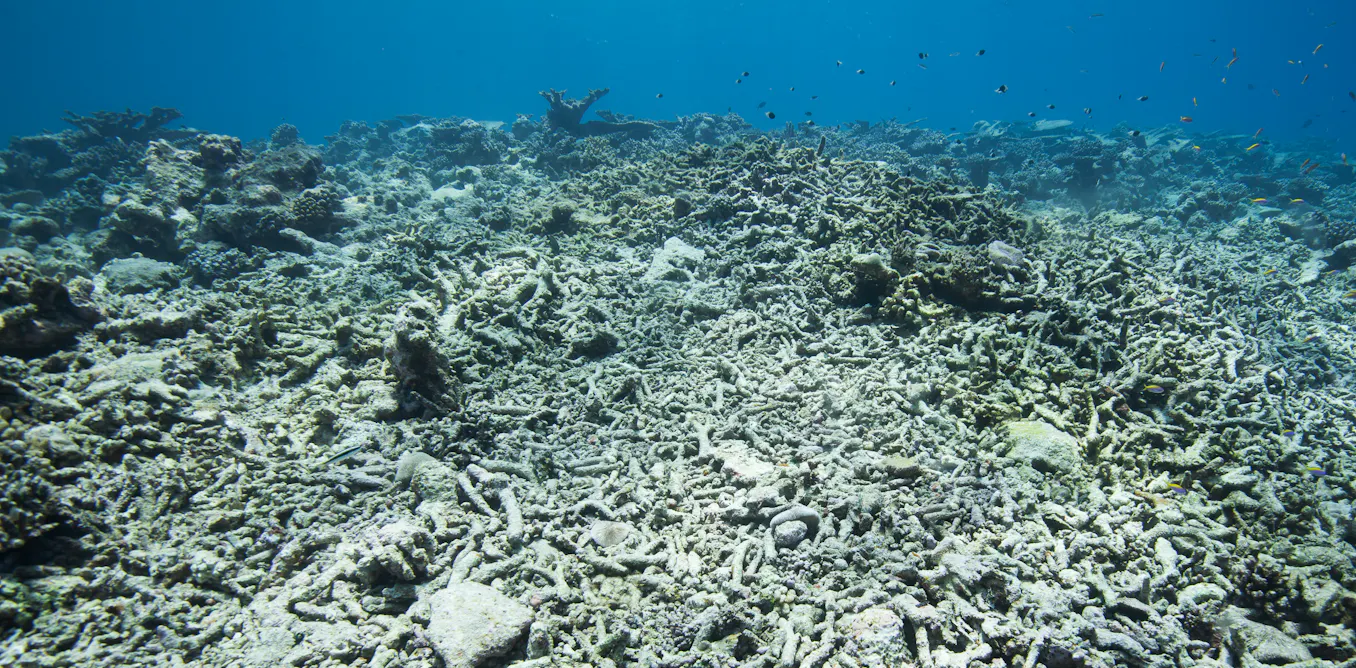
New research from the Global Tipping Points report indicates the world has reached critical Earth system tipping points, with some already crossed and others imminent, posing irreversible, catastrophic risks to global societies and economies. These interconnected climate events, including potential ocean current collapse and widespread coral bleaching, threaten food systems and asset stability, demanding radical acceleration of climate action beyond current commitments. For institutional investors, this signals escalating systemic risks to long-term asset values and supply chains, while also highlighting emerging opportunities in climate mitigation technologies and sustainable finance driven by 'positive tipping points' like declining renewable energy costs and increasing climate litigation.
The latest Global Tipping Points report indicates that the world has already crossed several critical Earth system tipping points, with others imminent, leading to potentially irreversible and catastrophic global impacts. These interconnected events, such as the potential collapse of the Atlantic Meridional Overturning Circulation (AMOC) and widespread coral bleaching, threaten fundamental ecological and social systems, including food security and coastal protection. The report emphasizes that small, incremental changes are insufficient, demanding radical acceleration of climate action to mitigate greenhouse gas emissions.
The "extremely negative" sentiment and high market impact score (0.8) associated with this report underscore the escalating systemic risks to long-term asset values and global supply chains. The interconnected nature of these tipping points suggests cascading negative impacts, increasing the likelihood of further ecological and social disruptions. This scenario implies significant unpriced risks for sectors reliant on stable environmental conditions and natural resources.
Despite the dire warnings, the report also identifies "positive tipping points" that could drive exponential change, such as the decreasing cost of solar photovoltaic panels and more affordable battery storage systems. These trends, coupled with increasing climate litigation against fossil fuel companies, signal a shift towards sustainable finance and renewable energy. However, the report cautions against new harms from resource extraction for green technologies, like rare earth mining or seabed mining, which could displace communities or damage ecosystems.
AI-powered research, real-time alerts, and portfolio analytics for institutional investors.
Request DemoOverall Sentiment
extremely negative
Sentiment Score
-0.80
