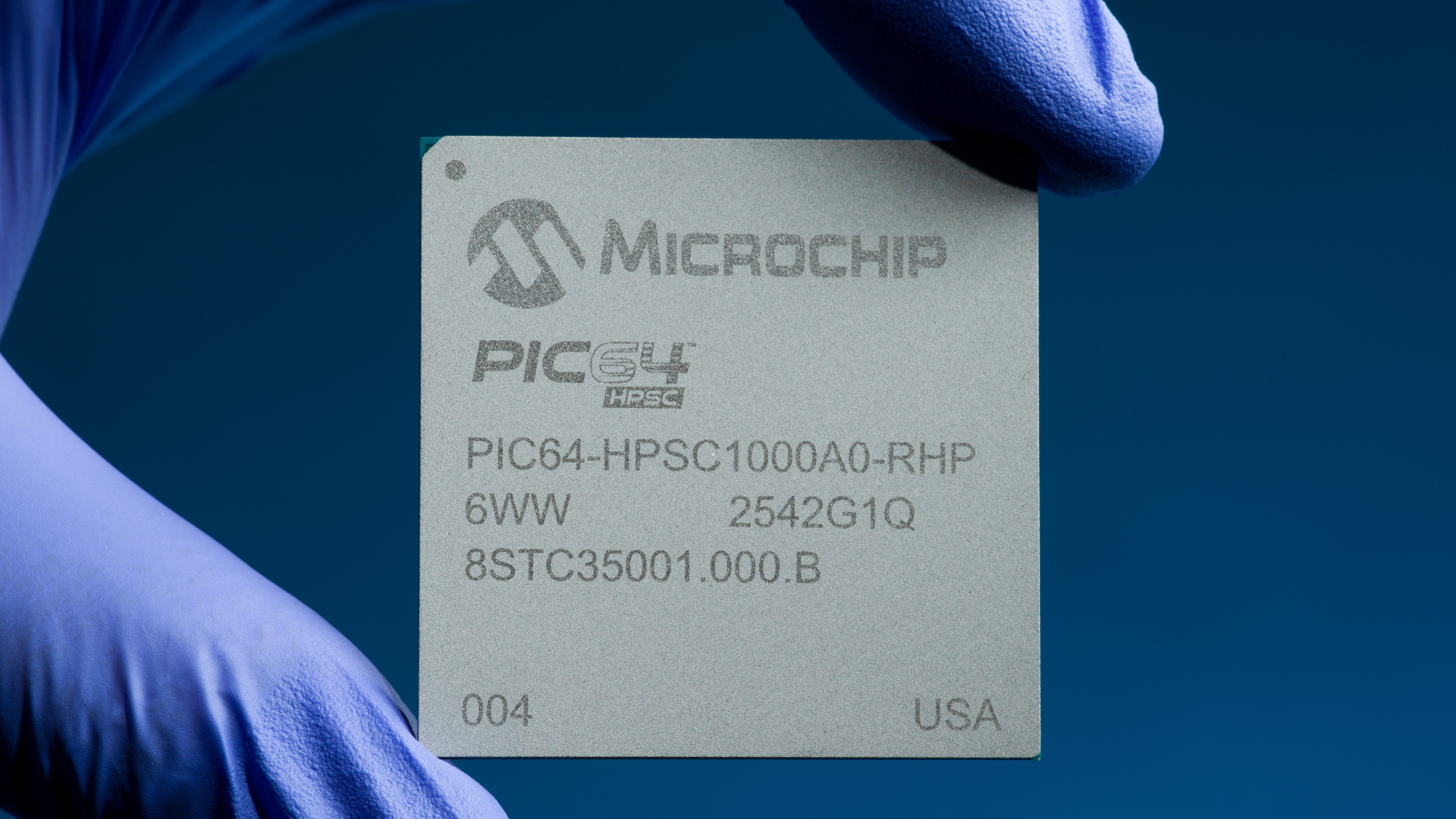
NASA has partnered with Microchip Technology to develop next-generation spaceflight chips with 100x the computing capacity of current space processors. The system-on-a-chip is intended to support radiation-hardened missions to the Moon, Mars, and deep space, while a radiation-tolerant version targets low Earth orbit and commercial uses. The broader opportunity includes terrestrial applications such as drones, energy grids, medical equipment, AI, and data transmission, but the article does not cite financial terms or near-term revenue impact.
The strategic value here is less about near-term revenue and more about NASA effectively de-risking a market category that commercial players have struggled to scale: high-reliability edge compute in extreme environments. That matters because once a space-grade compute architecture is validated, the follow-on demand is usually broader and stickier than the initial space program, especially in autonomy-heavy defense, industrial sensing, and remote infrastructure where power efficiency and fault tolerance are monetized directly.
For the public comps, the most relevant second-order beneficiary is not necessarily the “fastest chip” vendor but the one with the deepest embedded systems and defense qualification pathway. That tilts the setup toward Microchip as the cleanest direct read-through, while QCOM, NVDA, and AAPL are more indirect beneficiaries through design halo and spillover validation of heterogeneous edge AI architectures. TSM is the quiet enabler if the architecture graduates into higher-volume variants, but the timing is measured in years, not quarters, because the space qualification cycle suppresses immediate wafer demand.
The main contrarian point is that the headline overstates near-term financial impact. Space and lunar missions are excellent PR, but they are tiny unit markets; the upside only matters if this becomes a reference design for defense, satellites, drones, and critical infrastructure procurement. The market should also be careful not to extrapolate “100x compute” into a commodity performance race, because the economic moat is reliability-per-watt under radiation constraints, not raw FLOPS.
Catalyst-wise, the next 6-18 months should be judged on contract milestones, prototype validation, and whether NASA’s architecture gets pulled into adjacent government programs. The risk to the thesis is execution delay, integration complexity, or a competing radiation-tolerant solution from a larger semiconductor incumbent that can bundle software, tools, and manufacturing scale more aggressively.
AI-powered research, real-time alerts, and portfolio analytics for institutional investors.
Request DemoOverall Sentiment
mildly positive
Sentiment Score
0.35
Ticker Sentiment
