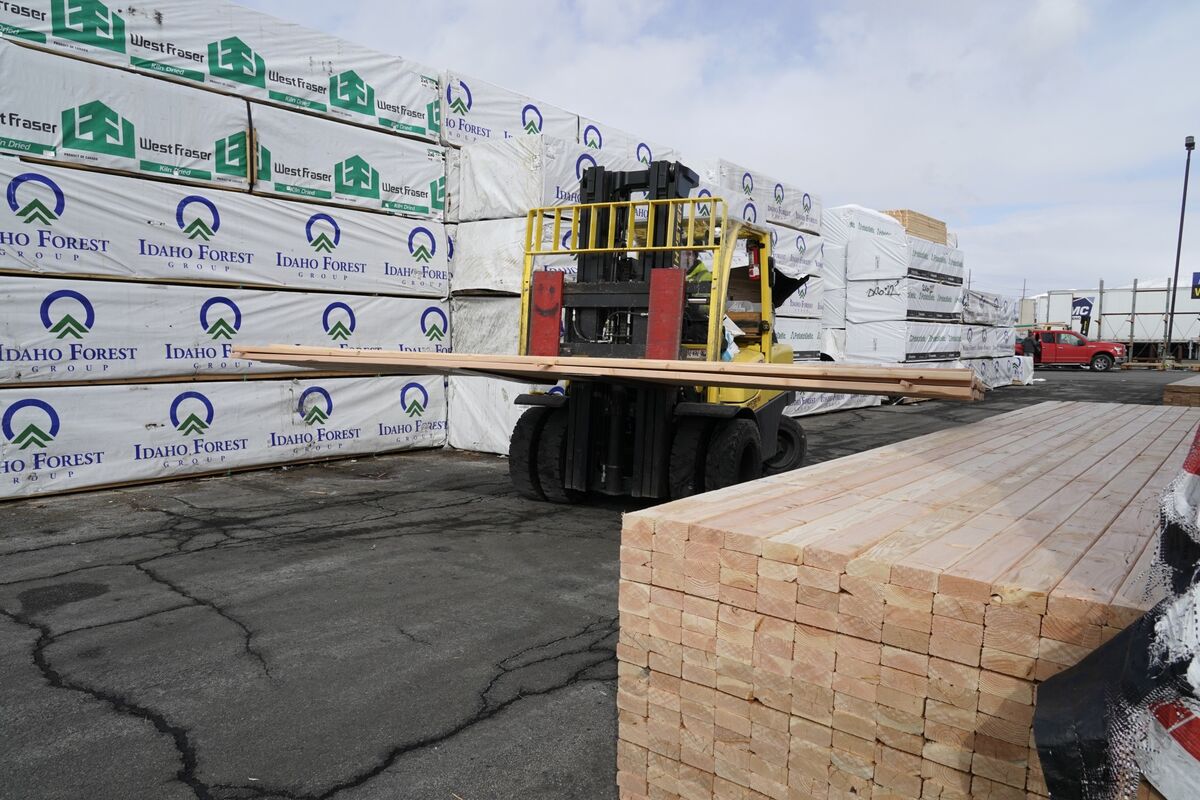
Despite the Trump administration's policy to double import fees on Canadian softwood lumber to support domestic prices, benchmark lumber prices have plunged 18% since an August peak, reaching a seven-month low. This significant decline, driven by sluggish homebuilding activity and an inventory glut, has forced mills on both sides of the border to scale back production, indicating the policy's failure to counteract market-driven pressures.
Despite a U.S. policy intervention to more than double import fees on Canadian softwood lumber, the intended effect of supporting domestic prices has failed to materialize. A benchmark for the commodity has instead plunged 18% since its August peak to a seven-month low, indicating that market fundamentals are overriding the impact of the tariffs. The price slump is explicitly driven by a combination of weak demand, evidenced by sluggish homebuilding activity, and excess supply, reflected in a glut of inventory. Consequently, the negative price pressure has become so significant that it is forcing lumber mills on both sides of the U.S.-Canada border to scale back production, undermining the policy's goal of boosting U.S. output.
AI-powered research, real-time alerts, and portfolio analytics for institutional investors.
Request DemoOverall Sentiment
strongly negative
Sentiment Score
-0.65
