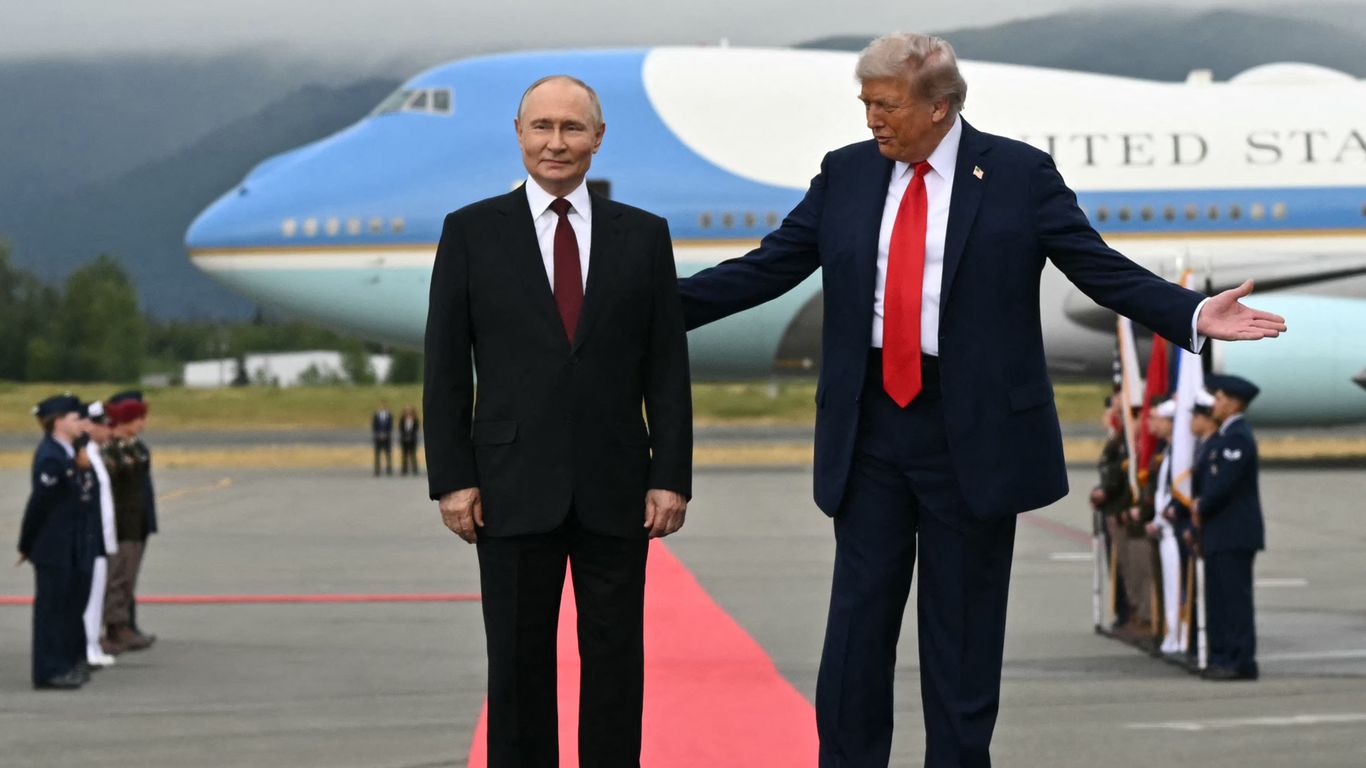
U.S. President Trump's immediate Russia-Ukraine diplomatic objective is to facilitate a direct meeting between Presidents Putin and Zelensky for peace talks, with an immediate ceasefire not being the primary short-term goal. Following the Alaska summit, administration officials indicate a three-step process aiming for a trilateral U.S.-Russia-Ukraine meeting. A key outcome is Putin's reported agreement to discuss "security guarantees" from the U.S. and allies to halt further aggression, a potentially game-changing development that could involve U.S. troop presence. This strategy aims to find a diplomatic resolution amid intensifying conflict, requiring concessions from both sides.
The current U.S. diplomatic strategy regarding the Russia-Ukraine war prioritizes facilitating a trilateral meeting between the leaders of the U.S., Russia, and Ukraine over securing an immediate ceasefire. This three-step process, initiated after the Alaska summit, aims to create a framework for peace negotiations. A significant, albeit tentative, outcome from the U.S.-Russia meeting is President Putin's reported agreement to discuss U.S. and European "security guarantees" to prevent future aggression, a development administration officials label as "game-changing" and which could potentially involve U.S. troop commitments. However, significant obstacles remain, including Russia's escalating military pressure to gain negotiating leverage and its maximalist territorial demands for regions like Donetsk. The high-risk environment is underscored by conflicting U.S. intelligence on Russia's military progress and the severe human cost of the war, with an estimated 20,000 Russian casualties in July alone, indicating a prolonged and brutal conflict is a distinct possibility if diplomacy fails.
AI-powered research, real-time alerts, and portfolio analytics for institutional investors.
Request DemoOverall Sentiment
Neutral
Sentiment Score
-0.10
