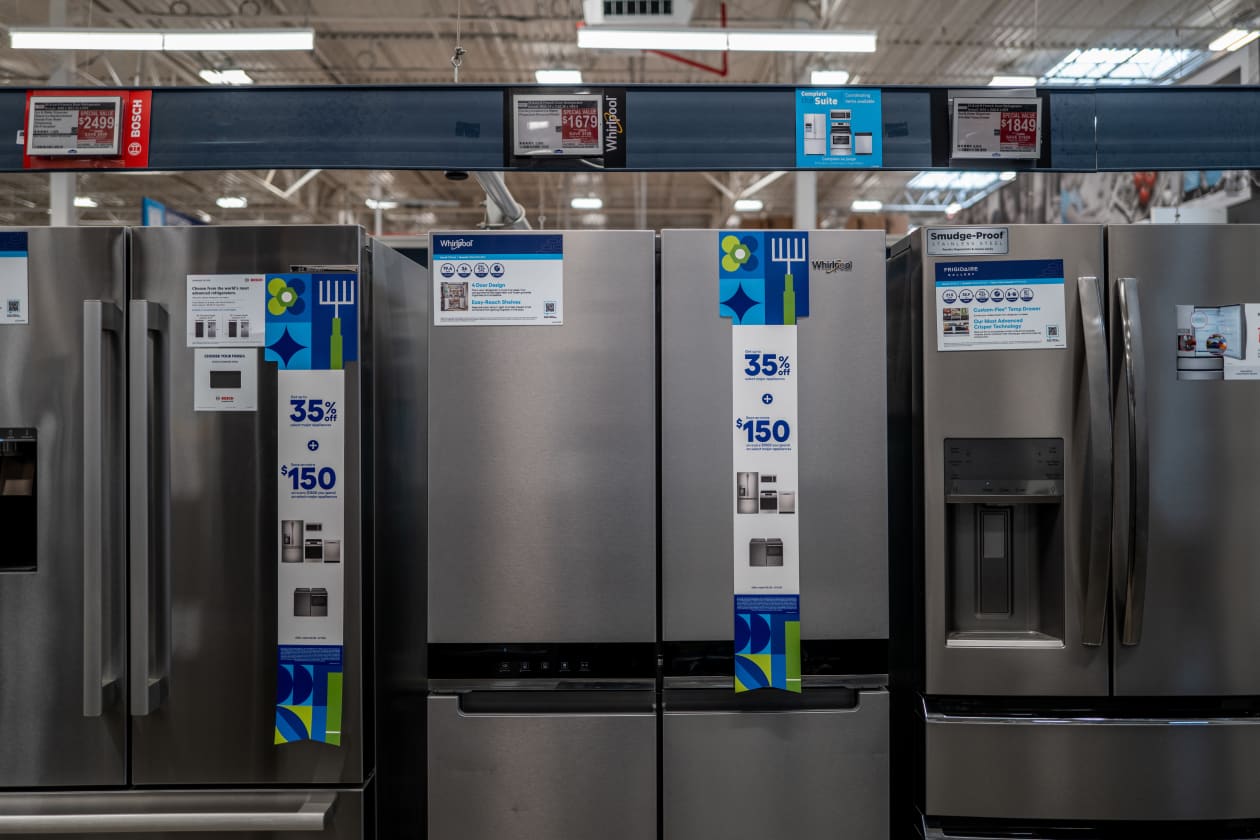
Whirlpool warned that appliance demand fell 7.4% in the first quarter, with customers cutting back on discretionary purchases and conditions now looking worse than in some prior recessionary periods. The update points to deteriorating consumer demand and a softer outlook for Whirlpool WHR, likely pressuring the stock. The message is negative for the appliance sector and signals broader household spending caution.
This reads less like a one-off earnings miss and more like a demand signal for the mid-to-late-cycle consumer. Discretionary appliance purchases are highly correlated with housing turnover, home equity extraction, and consumer confidence; when households delay replacing durable goods, it usually reflects a broader willingness to stretch asset life rather than a temporary brand issue. That makes the read-through broader than WHR: it pressures the whole home-improvement complex, especially suppliers dependent on replacement cycles rather than repair revenue.
The second-order effect is margin compression across the channel. If unit demand is weakening while fixed manufacturing and freight costs stay sticky, the next leg is likely promotional intensity and inventory normalization, which can hit not only branded OEMs but also retailers with private-label exposure and weaker pricing power. The risk is asymmetric over the next 1-2 quarters: negative earnings revisions can stack quickly, while any rebound likely requires rates to fall, refinancing activity to pick up, and housing turnover to stabilize — none of which is immediate.
The more interesting angle is that this may be a lagging indicator of consumer bifurcation rather than outright recession. Higher-income households may keep spending on experiences and services while postponing big-ticket home purchases, so the selloff in durable-goods names can overshoot if investors extrapolate a universal demand collapse. Still, the setup favors caution: the market usually underestimates how long replacement demand can be deferred once consumers get used to living with older appliances.
For trading, the cleaner expression is relative rather than absolute because the macro beta is doing much of the work. The best opportunities should emerge in names with levered exposure to housing and discretionary durable goods, while repair-oriented or service-heavy businesses should prove more resilient if this becomes a prolonged replacement-cycle downturn.
AI-powered research, real-time alerts, and portfolio analytics for institutional investors.
Request DemoOverall Sentiment
strongly negative
Sentiment Score
-0.55
Ticker Sentiment
