Despite criticisms of UN climate summits, the article contends that the international climate framework, particularly the Paris Agreement, has significantly reduced global warming projections by fostering policy-driven innovation in renewable energy and electric vehicles, leading to substantial market growth and falling costs. It notes that national climate pledges (NDCs) often serve as minimum targets, with countries frequently exceeding them, and highlights upcoming initiatives like the "Baku to Belém Roadmap" aiming to mobilize $1.3 trillion annually in climate finance by 2035. The focus of COPs is evolving towards practical implementation and investment in green technologies, underscoring that sustained government commitment is vital for maintaining business confidence and ensuring the profitability of the clean energy transition.
The UN climate framework, particularly the Paris Agreement, has significantly reduced global warming projections from 6°C in 2009 to an anticipated 2.5°C without additional policies. This progress stems from policy-driven innovation, dramatically lowering costs and increasing adoption of renewable energy and electric vehicles. Renewables are projected to surpass coal in electricity generation soon, and EVs now comprise over 20% of global car sales.
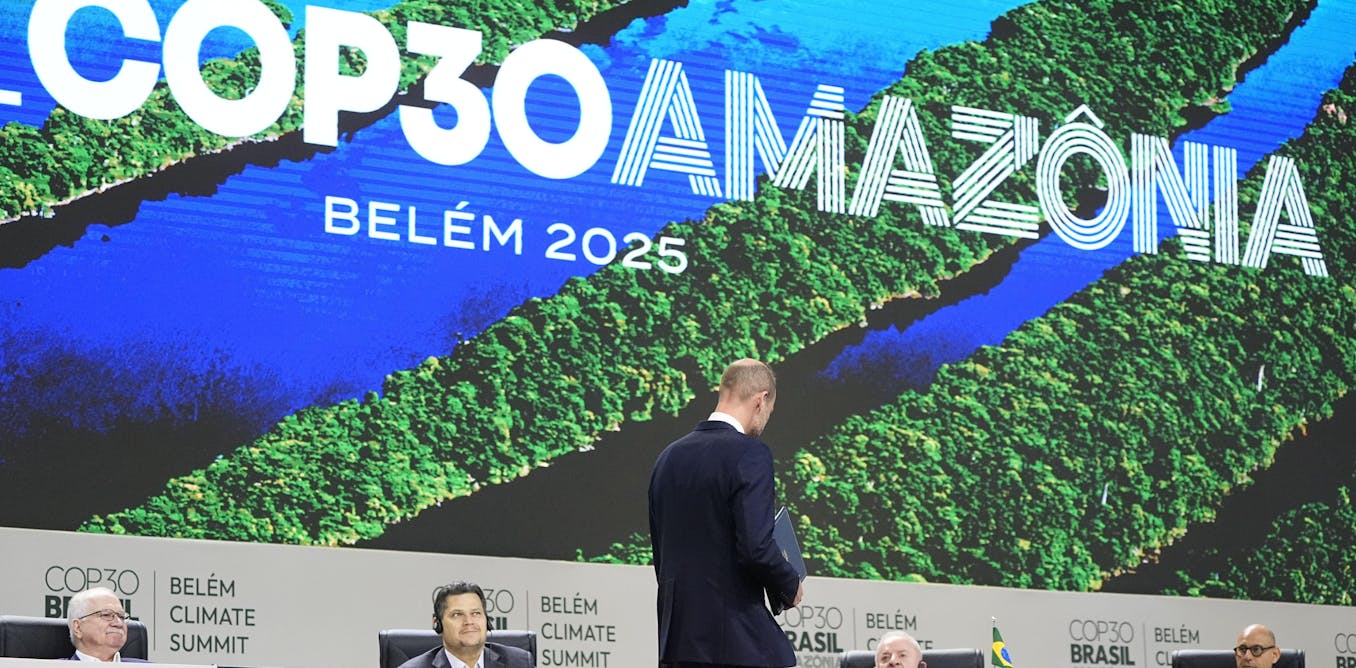
This virtuous cycle of policy, innovation, and falling costs drives substantial growth in low-carbon markets. National pledges (NDCs) often serve as minimums, with countries frequently exceeding them, indicating greater ambition. Future COPs, like Cop30, are shifting focus towards practical implementation and investment in green technologies.
Significant financial commitments are emerging, such as the "Baku to Belém Roadmap" targeting $1.3 trillion annually in climate finance by 2035. This signals a maturing framework where progress increasingly relies on execution and investment, particularly benefiting emerging economies.
However, the clean energy transition's pace depends critically on sustained government commitment and business confidence. Actions undermining this confidence risk slowing green investment and innovation profitability, as climate policy becomes a battle for our energy future impacting corporate strategies and national agendas.
AI-powered research, real-time alerts, and portfolio analytics for institutional investors.
Request DemoOverall Sentiment
strongly positive
Sentiment Score
0.75
