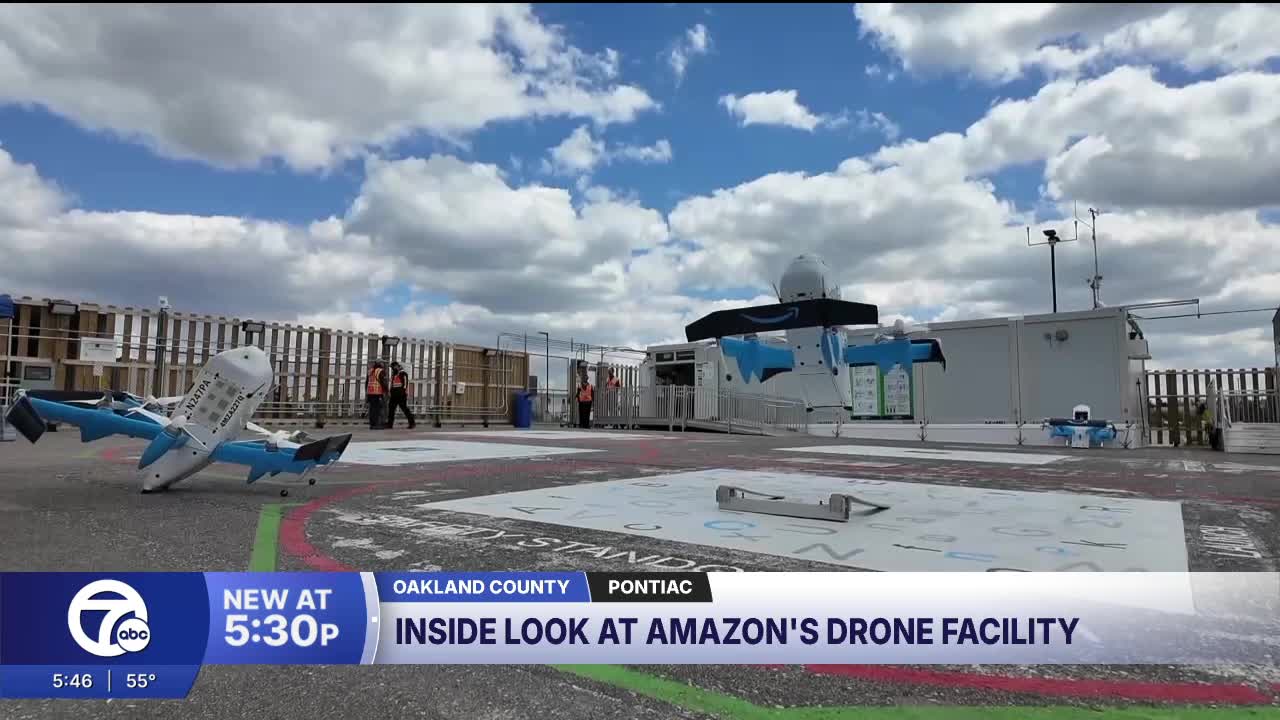
Amazon's Prime Air drone delivery service has been operating from a Pontiac facility for 6 months, delivering to metro Detroit customers in under 2 hours within a 7.5-mile radius. The program averages more than 100 deliveries a day and over 1,000 a week, but residents are raising concerns about noise and privacy as the service expands. Amazon says deliveries are opt-in, drones carry packages under 5 pounds, and human operators monitor every flight on a map rather than via live camera.
The strategic value here is not the drone itself; it is the operating proof that last-mile delivery can be partially re-routed away from vans, labor, and curb access into a constrained aerial network. That matters most in dense suburban corridors where delivery density is high enough to amortize fixed launch infrastructure, but parcel weights are small enough to fit the system’s payload limits. The second-order implication is that Amazon can improve service speed in geographies where traditional same-day delivery is still margin-negative, which should pressure local logistics incumbents more than national parcel share.
The near-term financial impact is still immaterial, but the data point is important for Amazon’s broader cost-to-serve roadmap. If drone delivery scales, the beneficiary is not just Prime retention; it is basket expansion on urgent, low-weight goods and a lower dependency on human courier capacity during peak windows. The biggest hidden upside is on Amazon’s retail mix: faster fulfillment can lift conversion in categories where customers currently abandon carts because same-day options are too slow or too expensive.
The risk is regulatory and social-license driven, not technical. Noise and privacy complaints create a long runway for local restrictions, and the first meaningful constraint is likely to be municipal or county-level rather than federal. That means the catalyst path is lumpy: incremental network expansion over 12-24 months, punctuated by headline risk from resident pushback or a safety incident that could freeze approvals in new metros.
The contrarian read is that the market may be underestimating how small the initial TAM is, which is actually bullish for Amazon because expectations remain low. This is a classic option-value setup: limited P&L contribution today, but meaningful strategic leverage if Amazon proves drone delivery is repeatable in multiple suburbs and not a one-off pilot. Competitively, the more important effect is forcing rivals to defend same-day economics in a world where Amazon can selectively bypass the truck route on certain orders.
AI-powered research, real-time alerts, and portfolio analytics for institutional investors.
Request DemoOverall Sentiment
neutral
Sentiment Score
0.05
Ticker Sentiment
