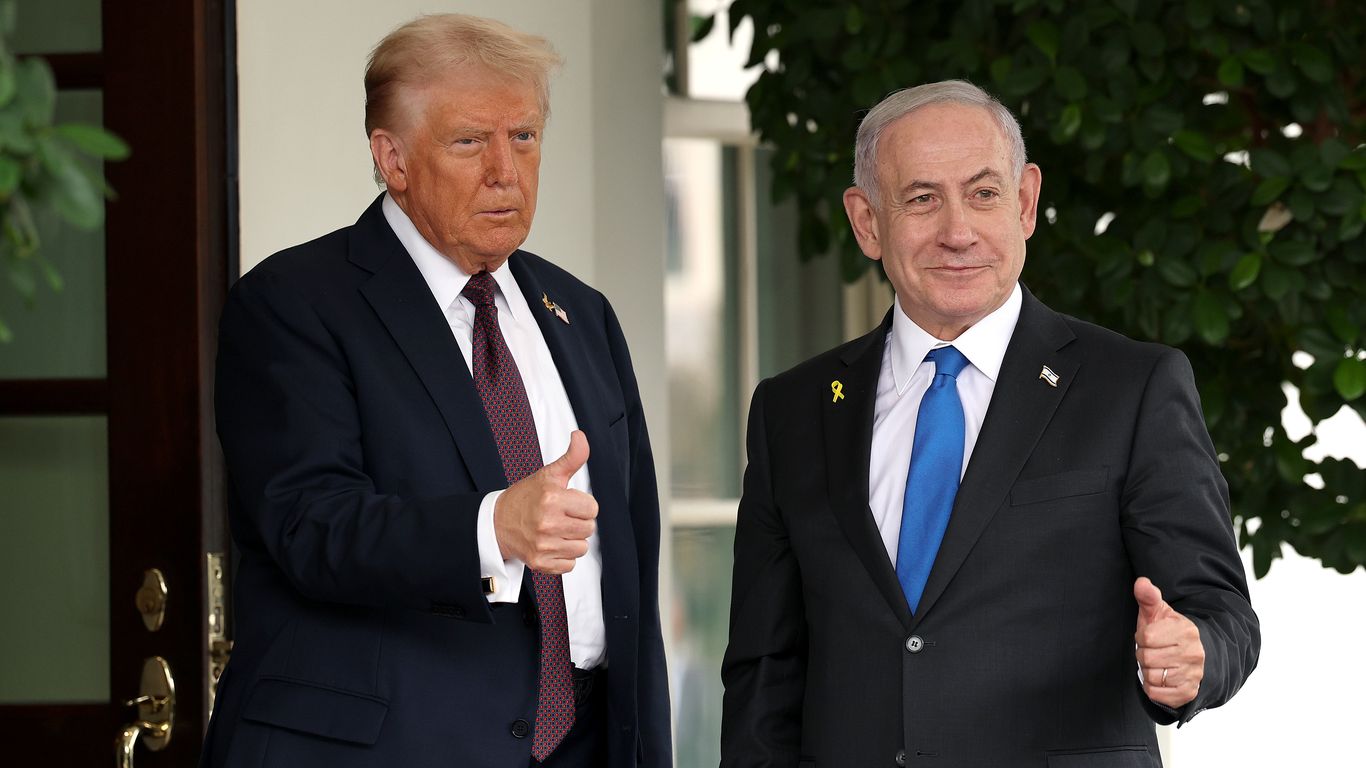
President Trump and Israeli PM Netanyahu unveiled a new Gaza peace plan, which Netanyahu endorsed as achieving Israel's war aims, placing the onus on Hamas to accept. The proposal outlines a phased approach for ending the conflict, including a technocratic Palestinian government overseen by a Trump-led 'peace board,' Israeli troop withdrawal, hostage and prisoner exchanges, and Gaza's demilitarization. Trump affirmed full U.S. backing for Israel if Hamas rejects the deal, underscoring the high-stakes nature of this initiative for regional stability and future governance in Gaza.
A new US-led peace plan for Gaza has been publicly endorsed by Israeli Prime Minister Netanyahu, shifting the onus for de-escalation onto Hamas. The proposal outlines a phased process involving an Israeli military withdrawal to an "agreed upon line," the release of all remaining hostages within 72 hours, and a significant prisoner exchange. Governance would transition to a technocratic Palestinian government supervised by a 'peace board' chaired by President Trump, with a long-term vision that could involve the Palestinian Authority, despite Netanyahu's noted opposition to a Palestinian state. However, significant uncertainties cloud the plan's viability. Key sticking points with Arab states, such as the demilitarization of Hamas and the PA's future role, may not be fully resolved. Furthermore, Netanyahu's comments regarding a "modest withdrawal" and retaining the option to "finish the job" if Hamas rejects the deal suggest a dual messaging strategy aimed at appeasing hardliners in his domestic coalition, which could complicate implementation. While diplomatic efforts to re-engage Qatar as a mediator are underway, the success of this entire framework is contingent upon the agreement of Hamas, whose position remains the critical unknown variable.
AI-powered research, real-time alerts, and portfolio analytics for institutional investors.
Request DemoOverall Sentiment
mildly positive
Sentiment Score
0.15
