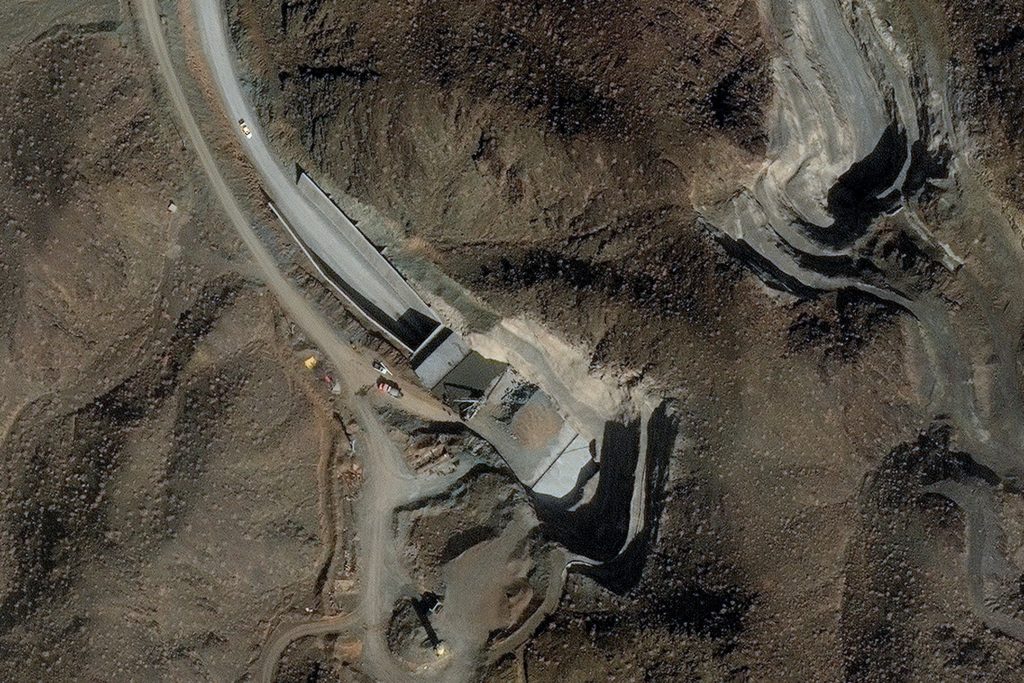
The U.S. announced a consolidation of its Syria presence—closing two bases and reducing but not fully withdrawing roughly 1,000 troops—shifting support away from Kurdish forces toward the Syrian central government under Ahmed al-Sharaa, with further posture tied to Damascus's capacity to combat ISIS. Separately, Iran reportedly offered a temporary pause in domestic uranium enrichment until the end of the first Trump administration, proposals to join a regional enrichment consortium and dilute/export recently bombed highly enriched material, while the U.S. insists on permanent relinquishment of domestic enrichment; Washington has deployed a carrier strike group and additional air assets as Tehran fortifies sites and prepares for possible strikes. The developments raise near-term regional risk that could influence oil markets and defense-sector positioning, while keeping geopolitical uncertainty elevated for investors.
Market structure: A U.S. drawdown/consolidation in Syria combined with heightened U.S.-Iran tensions structurally favors defense contractors, security services, and energy-insurance providers. Expect 5–15% upward pressure on defense earnings estimates if the market prices a >25% probability of limited strikes over 3 months; energy risk premium could lift Brent $8–20/bbl if Gulf shipping is threatened.
Risk assessment: Tail risks include a broader regional escalation (low-probability, high-impact) that could spike oil >25% and widen CDS on EM sovereigns; immediate risk window is 0–90 days with the highest volatility in the first 2–4 weeks. Hidden dependencies: Kurdish displacement risks reintroducing ISIS-related supply disruptions to Syrian fields and pipelines—this is non-linear for local infrastructure but can create geopolitical risk spillovers to Gulf shipping lanes.
Trade implications: Tilt portfolios toward defense (LMT, NOC, RTX) and tactical oil exposure (XOM, CVX or XLE) while buying convex hedges (TLT and GLD) to protect equity downside. Use 3-month option structures to capture event-driven gamma; pair trades (long defense, short travel/airlines) offer relative-value protection if conflict depresses travel demand.
Contrarian angle: Consensus may underprice persistent low-level kinetic activity that keeps defense order books elevated for 6–12 months—not a one-week move. Conversely, oil upside is often front-loaded; avoid outright long duration oil if Brent reverts below $75 for >30 days; prefer equities/options to futures to control drawdown.
AI-powered research, real-time alerts, and portfolio analytics for institutional investors.
Request DemoOverall Sentiment
moderately negative
Sentiment Score
-0.35
