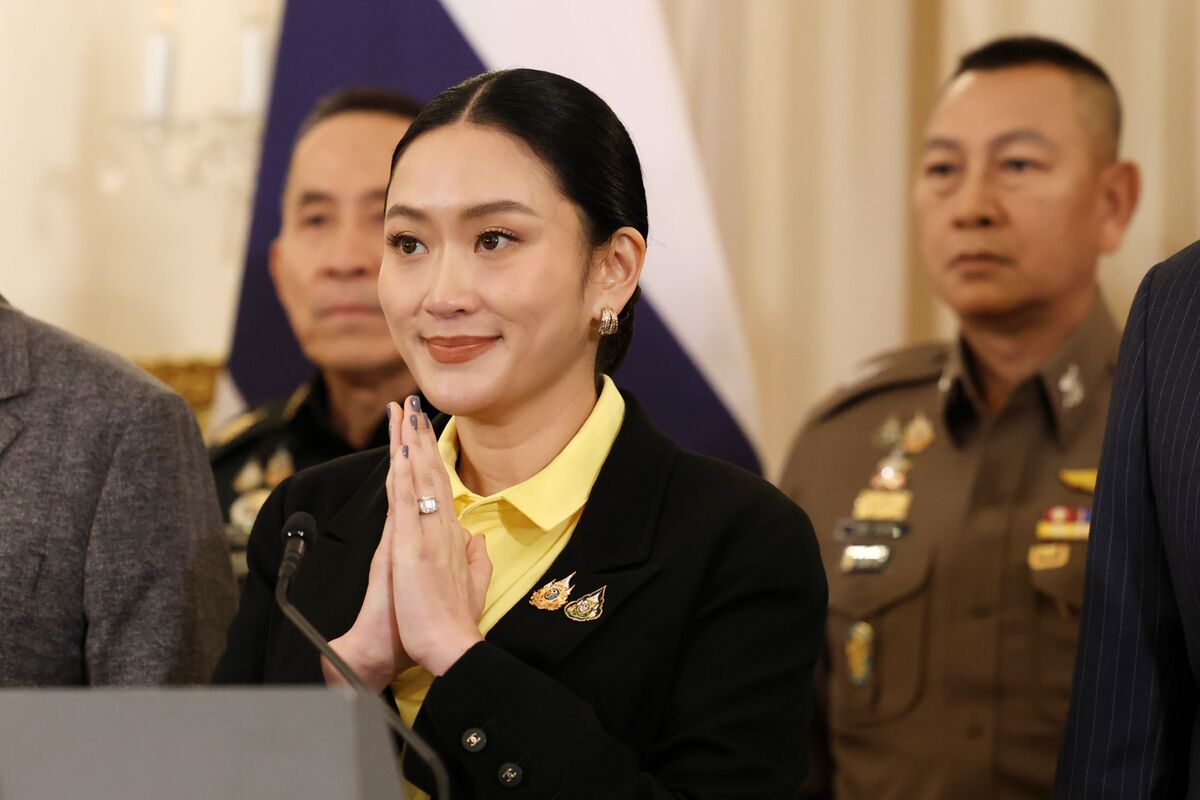
Thai Prime Minister Paetongtarn Shinawatra is set to remain in power, defying calls for her resignation amidst a political crisis, with her Pheu Thai Party confirming she will neither resign nor dissolve parliament. Her strategy involves a cabinet expansion to solidify the ruling coalition and adopting a tougher stance in the escalating border dispute with Cambodia. This signals a commitment to political stability, which could influence investor confidence in Thailand and regional geopolitical dynamics.
Political uncertainty in Thailand is elevated as Prime Minister Paetongtarn Shinawatra confronts internal challenges to her leadership. Despite calls for her resignation, the PM's stated intention to remain in power, backed by her Pheu Thai Party, suggests a period of heightened domestic political maneuvering rather than an immediate resolution. Her strategy involves a cabinet expansion aimed at consolidating her ruling coalition, a move that could either stabilize the government or signal underlying fragility. Concurrently, adopting a tougher stance in the border dispute with Cambodia introduces a significant geopolitical risk factor. The market's reaction, reflected by a moderately negative sentiment score (-0.5) and an uncertain tone, indicates that investors are pricing in these risks, which could weigh on Thai assets until a clearer political outlook emerges.
AI-powered research, real-time alerts, and portfolio analytics for institutional investors.
Request DemoOverall Sentiment
moderately negative
Sentiment Score
-0.50
