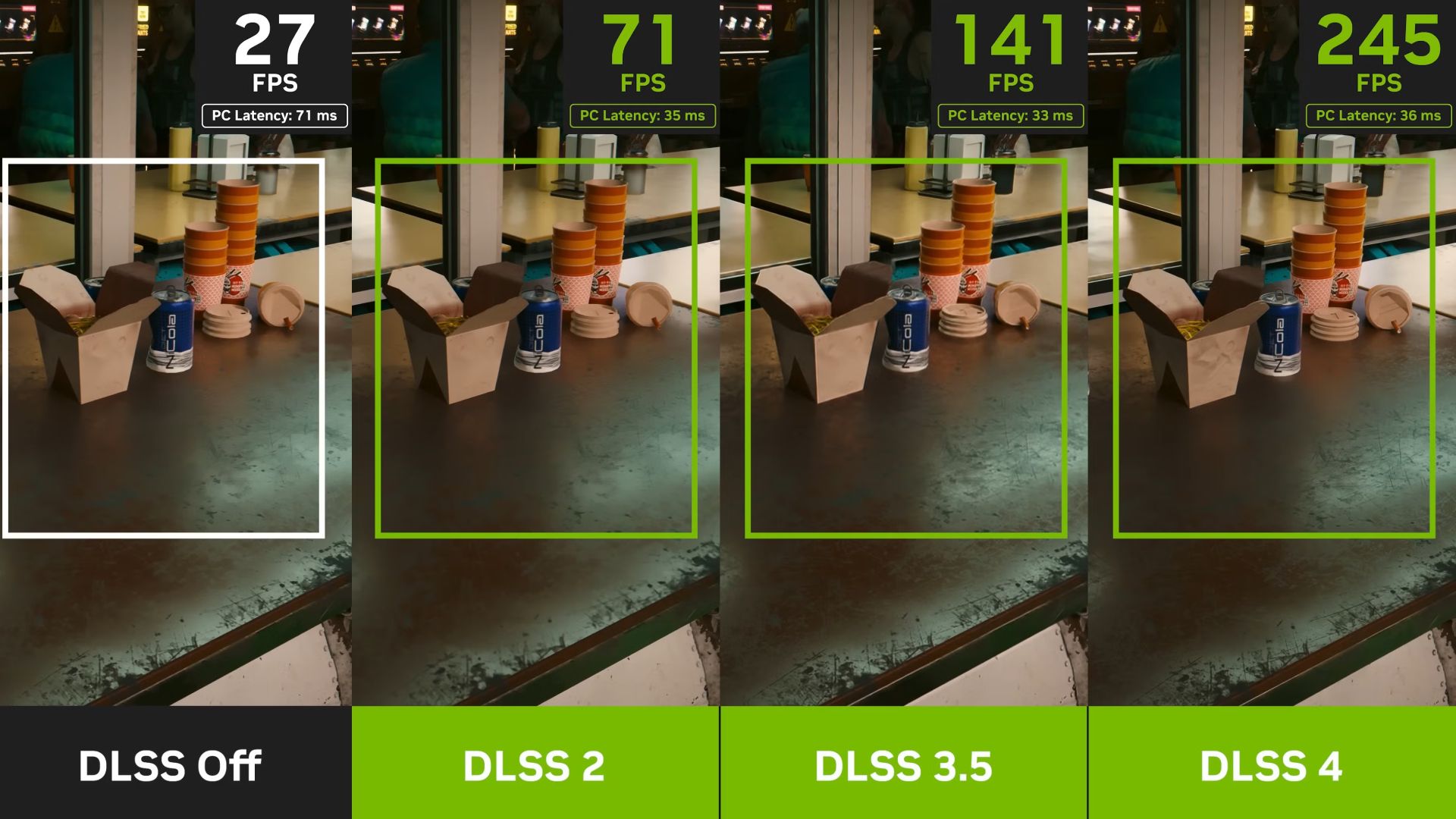
At CES 2026 Nvidia announced DLSS 4.5, which raises Multi Frame Generation (MFG) from 4x to 6x — meaning one in six frames is fully rendered and the rest are AI-interpolated, a theoretical 50% framerate uplift. Independent testing shows practical benefits from lower MFG modes (e.g., RTX 5060 in Alan Wake II: ~40fps -> 55fps at 2x; RTX 5070: 66fps -> 90fps at 2x) while higher multipliers (4x/6x) introduce visible artifacts and latency; uptake will be constrained by hardware requirements and current supply/pricing pressure for RTX GPUs, implying modest product-strengthening for Nvidia but limited near-term financial impact.
Market structure: Nvidia (NVDA) is the primary beneficiary — DLSS 4.5 and 6x MFG increase software-led differentiation and deepen hardware lock‑in, effectively raising NVDA’s pricing power for RTX-class GPUs and software subscriptions over the next 6–24 months. GPU competitors (AMD, INTC) and older‑GPU owners are the losers in the near term; game studios gain bargaining power to push AI-driven features but face higher QA/optimization costs. Cross-asset: sustained GPU/memory tightness supports semiconductor suppliers and memory names (e.g., MU), lifts implied vol on NVDA options around product/earnings windows, and is modestly positive for tech equities while adding disinflationary risk to cyclicals.
Risk assessment: Tail risks include export controls/antitrust action (10–20% chance over 12–24 months) and a sudden TSMC capacity reallocation that delays GPUs (material revenue hit for NVDA). Immediate reaction (days) will be headline-driven; short term (weeks–months) adoption and OEM stocking matter; long term (quarters–years) developer uptake and silicon supply set durable margins. Hidden dependencies: performance depends on base framerate, driver/dev implementation, and RT/AI core availability — meaning real adoption could be capped if developers don’t optimize. Key catalysts: NVDA guidance/earnings, TSMC/TSLA capacity announcements, and major game titles shipping with MFG support.
Trade implications: Direct long NVDA exposure is preferred but best via structured options to cap downside; implied vol will spike before earnings/CES follow‑ups so staggered entry is optimal. Relative value: long NVDA vs short INTC (AI GPU execution gap) or long memory suppliers (MU) to play component tightness. Tactical options: buy 6–12 month call spreads to capture upside while selling short‑dated calls to monetize near-term vol; size positions at 1–3% of portfolio and set 25–35% profit targets or time stops at 12–24 weeks.
Contrarian angles: Consensus underestimates implementation friction — real user benefit likely concentrated at 2x–3x MFG, not 6x, which compresses upside from headline claims; market may be overpricing seamless adoption. Historical parallel: DLSS 2.0 took ~12–18 months to become ubiquitous — expect similar slow conversion, giving windows to buy dips. Unintended consequences: tighter GPU supply can temporarily lift ASPs but slow consumer upgrade cycles, creating a >6‑month trough in retail demand that could surprise vendors and OEMs.
AI-powered research, real-time alerts, and portfolio analytics for institutional investors.
Request DemoOverall Sentiment
mildly positive
Sentiment Score
0.25
Ticker Sentiment
