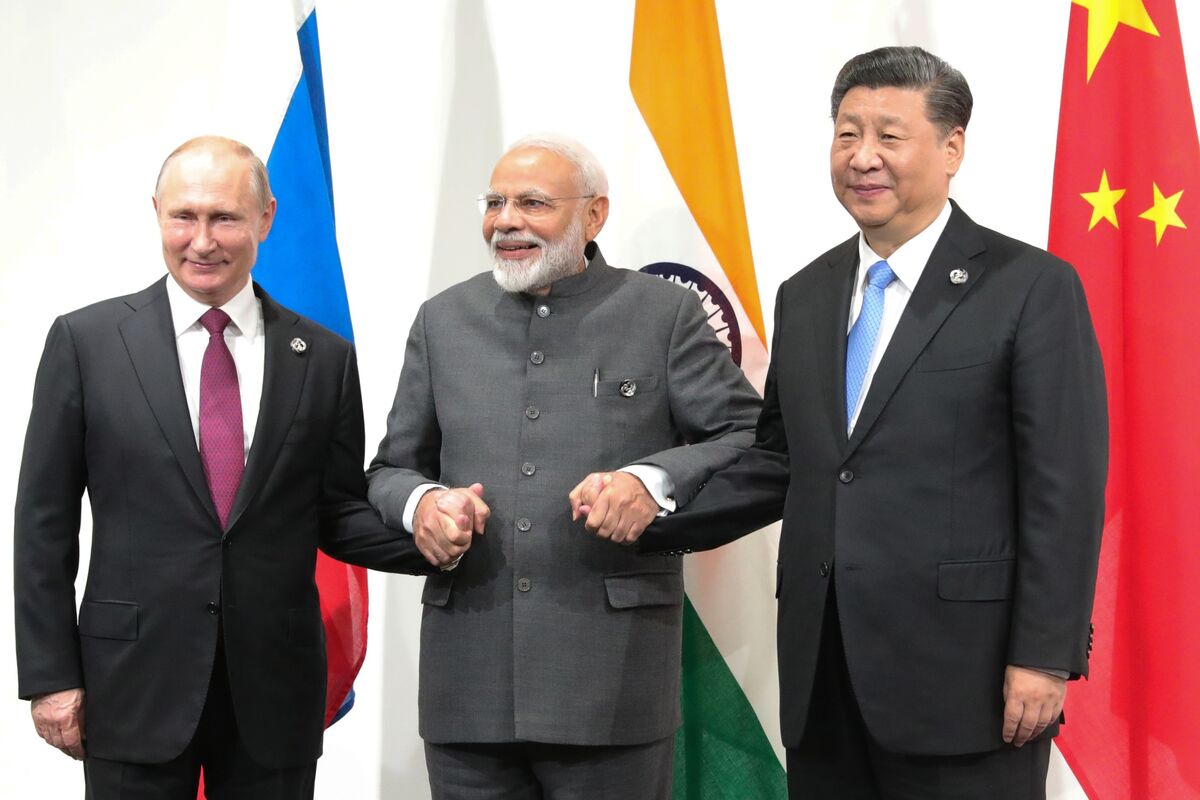
Indian Prime Minister Narendra Modi is strengthening strategic ties with Russia and China, highlighted by his scheduled meeting with Vladimir Putin and a recent reset of relations with Beijing. This geopolitical alignment signals India's independent foreign policy stance, carrying implications for global trade flows and international relations relevant to institutional investors.
India is executing a significant strategic realignment, pivoting closer to Russia and China, as evidenced by Prime Minister Narendra Modi's scheduled meeting with Vladimir Putin and a recent reset of diplomatic relations with Beijing. This maneuver, framed as a defiance of US policy, signals India's commitment to an independent, multi-aligned foreign policy rather than a firm position within a Western-led bloc. The geopolitical implications are considerable, potentially altering global trade flows and strengthening an alternative economic and political axis. This trend of geopolitical fragmentation is further contextualized by parallel events; a German political figure's assessment of a prolonged war in Ukraine reinforces ongoing global instability, while a substantial £10 billion UK-Norway naval contract highlights deepening defense cooperation and increased military spending among NATO-aligned nations, creating a point of contrast with India's diplomatic orientation.
AI-powered research, real-time alerts, and portfolio analytics for institutional investors.
Request DemoOverall Sentiment
mixed
Sentiment Score
-0.10
