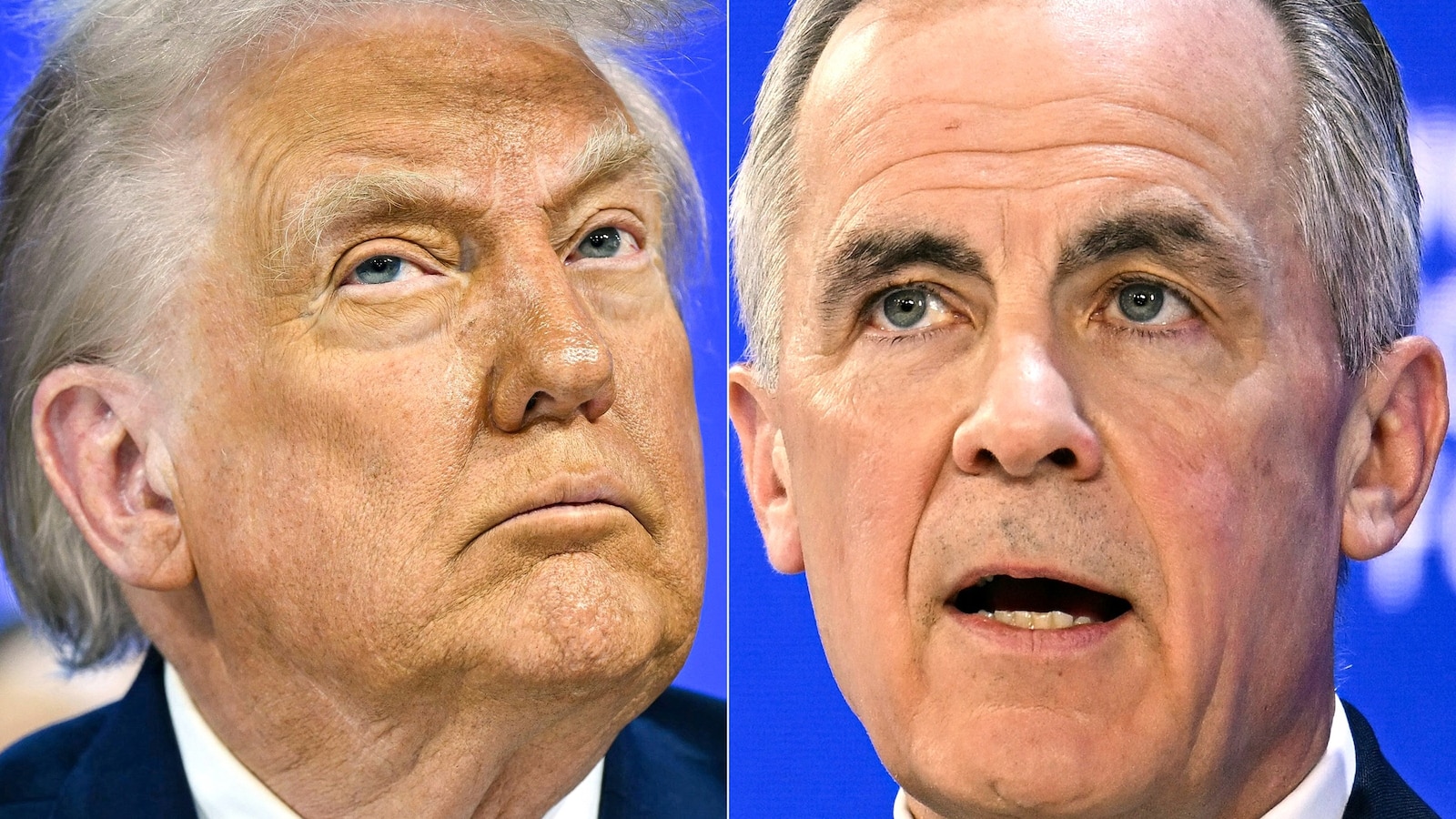
President Donald Trump threatened to impose a 100% tariff on all Canadian goods if Canada finalizes a deal with China, escalating bilateral trade rhetoric. Ottawa's trade minister denied pursuit of a free-trade agreement with China, while a recent accord would cut Canada's 100% tariffs on Chinese electric vehicles in exchange for lower Chinese tariffs on Canadian agricultural products; the episode increases policy uncertainty for North American automotive and agricultural supply chains and could lead to risk-off positioning if threats are enacted.
Market structure: A threatened 100% tariff on Canada (even if rhetorical) disproportionately threatens Canadian exporters — autos, energy, mining, agriculture — and large-cap TSX names (EWC constituents) while temporarily benefiting US domestic producers and import-substitutes. Expect immediate compression in Canadian exporters’ pricing power (10–30% hit to near-term EBIT sensitivity for exporters selling into US markets) and a one-way shock to cross-border supply chains (auto parts flow, oil pipelines) that raises replacement-cost input prices.
Risk assessment: The tail scenario (full 100% tariff implemented) is low-probability (<15%) but extreme: GDP shock to Canada, CAD down >10% and multi-quarter supply-chain re-routing. Near term (days–weeks) markets will price volatility; medium-term (3–12 months) earnings revisions and capex delays; long-term (1–3 years) potential structural re-shoring or Canada-China alignment if Ottawa perceives US risk. Hidden dependency: tight North American auto/parts just-in-time network means small trade barriers cause outsized operational stoppages.
Trade implications: Tactical volatility trades (FX and Canada equity puts) are highest-conviction for days–months; directional equity shorts in EWC and Canadian names with >40% US revenue exposure are preferred. Cross-asset: expect CAD weakness, bid for US Treasuries and gold, widening corporate CDS on Canadian names; options markets will reprice 30–60% higher IV on Canada risk if rhetoric continues.
Contrarian: Markets may overprice the rhetorical risk — past Trump tariff threats were often walked back — so a disciplined buy-on-dip on high-quality Canadian assets is attractive if selling exceeds fundamentals. If EWC falls >12% or CAD >7% from current levels, consider accumulation into 6–12 month positions because probability of negotiated de‑escalation within one presidential cycle is >60%.
AI-powered research, real-time alerts, and portfolio analytics for institutional investors.
Request DemoOverall Sentiment
moderately negative
Sentiment Score
-0.45
