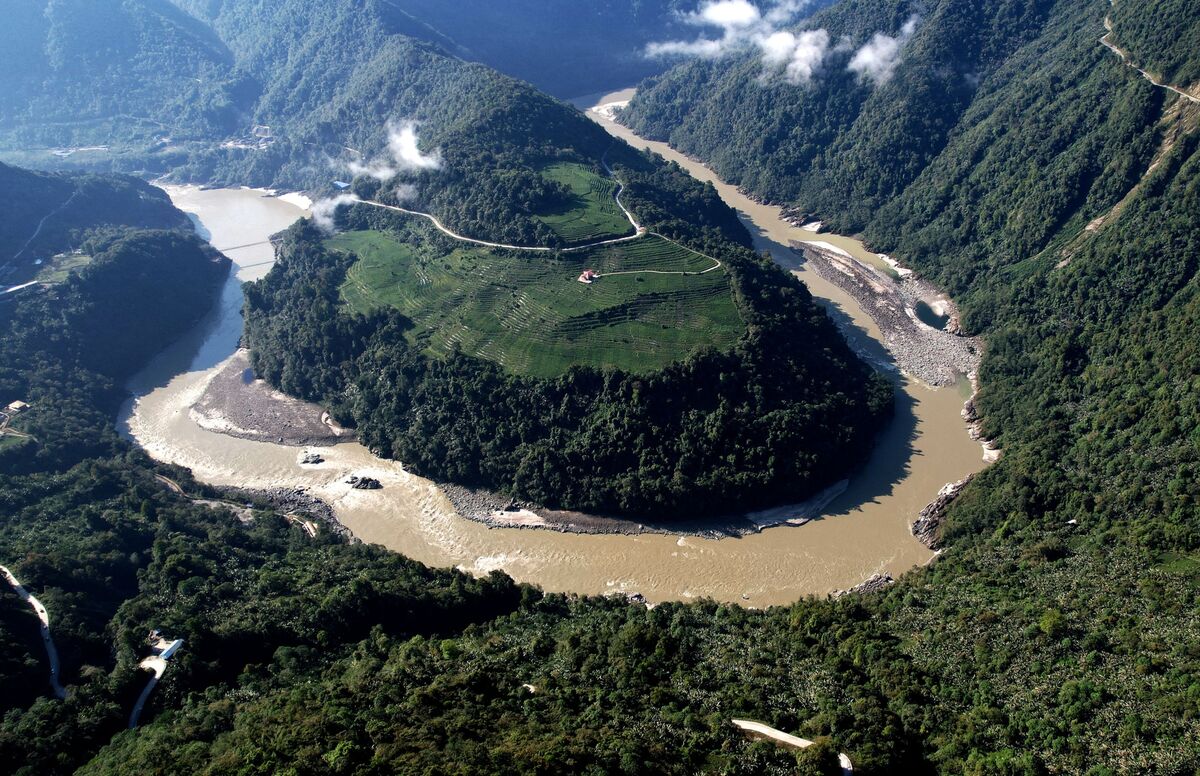
China has initiated construction on a massive 1.2 trillion yuan ($167 billion) hydropower mega-dam on the lower Yarlung Tsangpo river in Tibet, despite significant concerns over biodiversity and India relations. Premier Li Qiang launched the project, which is intended to provide substantial economic stimulus and clean energy, with the newly formed China Yajiang Group overseeing its development.
China has initiated a significant 1.2 trillion yuan ($167 billion) hydropower mega-dam project in Tibet, signaling a dual-pronged strategy to deliver substantial economic stimulus while advancing its renewable energy objectives. The launch of this project on the Yarlung Tsangpo river, spearheaded by Premier Li Qiang, and the establishment of a new state-owned entity, China Yajiang Group, to manage its development, underscore a high level of state commitment. This move is poised to inject significant capital into China's economy, likely benefiting industrial sectors involved in construction and infrastructure. However, the project proceeds despite explicit acknowledgements of severe risks, including potential damage to regional biodiversity and, critically, heightened geopolitical tensions with India, which relies on the downstream river flows. While the project aligns with the global energy transition theme, its significant environmental and cross-border political ramifications introduce a layer of long-term risk that contrasts with the immediate economic benefits.
AI-powered research, real-time alerts, and portfolio analytics for institutional investors.
Request DemoOverall Sentiment
moderately positive
Sentiment Score
0.50
