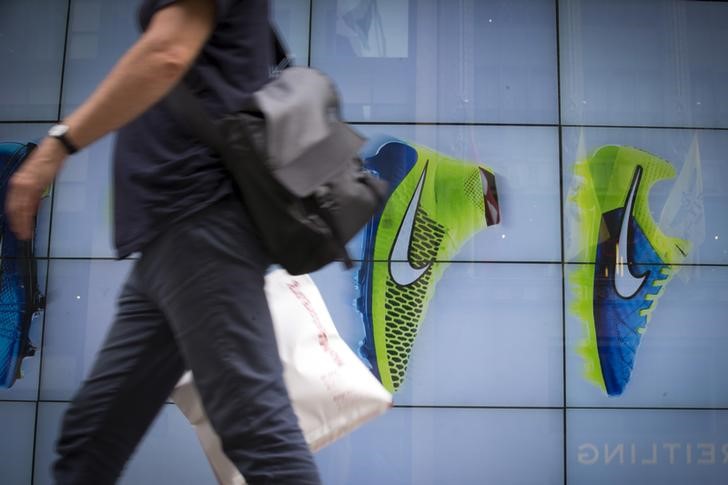
Nike will cut approximately 1,400 jobs, with most reductions in technology, as part of its "Win Now" turnaround strategy. The layoffs represent less than 2% of global headcount and follow 775 job cuts in January, signaling continued restructuring rather than a one-off cost action. The changes affect employees across North America, Asia, and Europe and could modestly weigh on sentiment toward the stock.
This is less about near-term cost savings than about Nike admitting the operating model is still too fragmented for a slower-growth, margin-sensitive world. Cutting technology headcount while simultaneously reworking supply-chain ownership suggests management is trying to shrink decision latency and reduce coordination overhead; if it works, the benefits show up first in inventory discipline and product cycle speed, not in the P&L line item from severance. The market usually underprices how much restructuring at consumer brands is really a proxy for defending gross margin when demand is normalizing.
The second-order winner is likely not the obvious apparel rival, but any footwear/sportswear competitor with cleaner org structure and fewer legacy systems because Nike’s replatforming creates a temporary execution handicap. In the next 2-3 quarters, the key risk is that reorganizations meant to accelerate innovation instead slow commercialization: delayed launches, muddier ownership of data/ERP, and elevated one-time spend can pressure operating margin even if SG&A falls. If management can prove better lead times and fewer stockouts by holiday, the market will start to look through the restructuring noise.
Consensus may be treating these cuts as a routine efficiency move, but the more important signal is that the prior turnaround has not been sufficient to restore operating leverage. That makes the setup asymmetric: if the reorg improves product freshness and lowers markdowns, the earnings rebound can be larger than current estimates; if not, this becomes another step-down story with multiple compression. The contrarian angle is that the stock may already discount incremental bad news, so the cleaner trade is to focus on whether the next two quarters bring measurable working-capital improvement rather than headline headcount reduction.
AI-powered research, real-time alerts, and portfolio analytics for institutional investors.
Request TrialOverall Sentiment
moderately negative
Sentiment Score
-0.45
Ticker Sentiment
