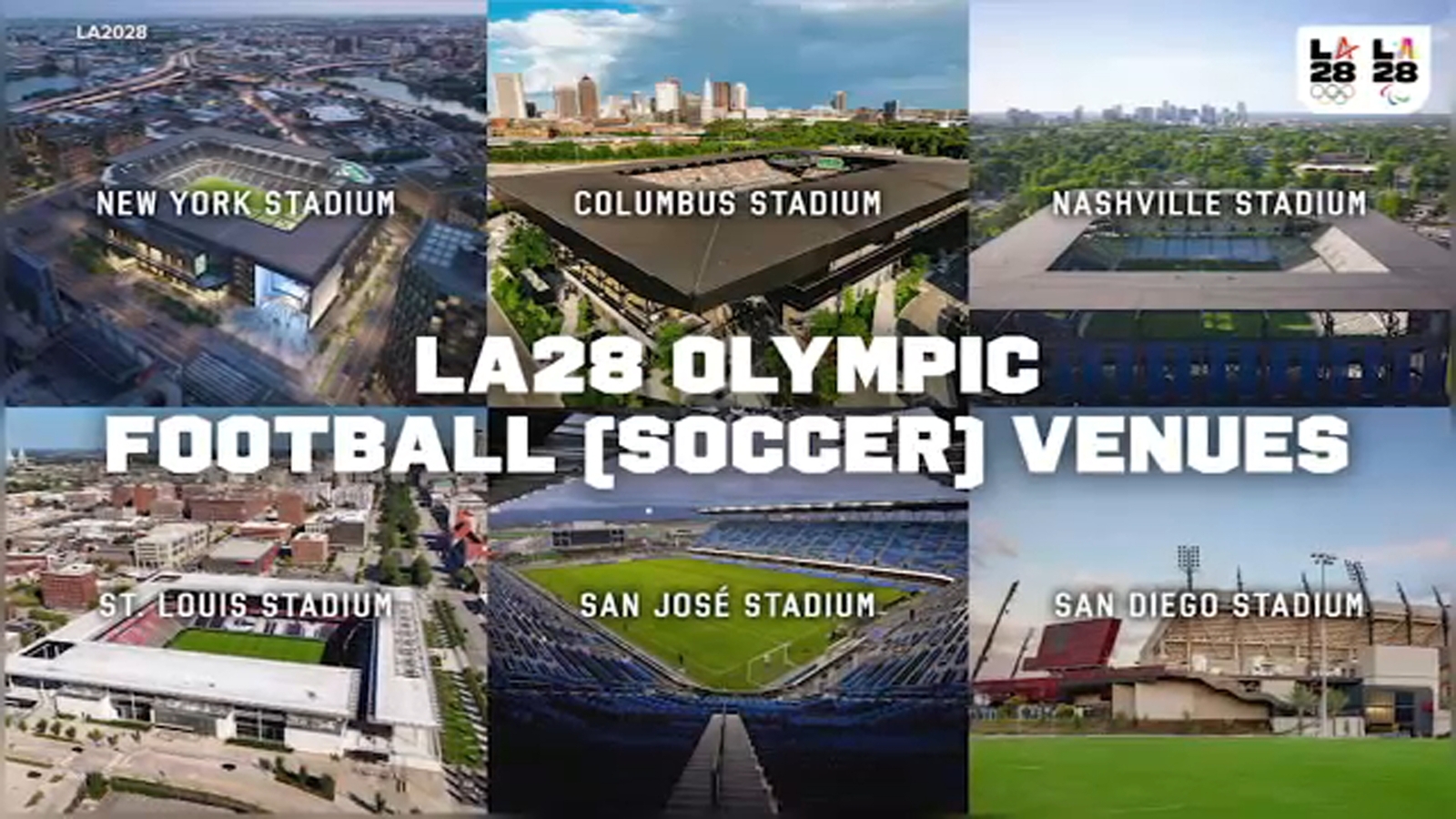
LA28 added six venues for the 2028 Olympic men's and women's football tournament — four out-of-state sites (New York City; Columbus, OH; Nashville, TN; St. Louis, MO) plus San Jose and San Diego — with final and gold-medal matches scheduled at the Rose Bowl in Pasadena on July 28-29, 2028. Organizers say the expansion aims to broaden the Games' U.S. footprint and fan access, and for the first time the Games will include more women's soccer teams than men's; ticket-draw registration is open through March 18.
Market structure: Distributed 2028 soccer venues (NYC, Columbus, Nashville, St. Louis, San Jose, San Diego, Rose Bowl) concentrates incremental demand into hotels, stadium services, ticketing, broadcasters and regional airports. Expect host-city ADR/RevPAR uplifts of 5–10% in peak July 2028 weeks and incremental concession/merchandise revenues; broadcasters (Comcast/NBCU) and Live Nation/Ticketing capture outsized share of consumer spend while airlines face capacity and fuel-driven margin pressure.
Risk assessment: Immediate (days/weeks) signal = ticket-draw registration through Mar 18 — >1.5M registrants would indicate strong demand and compress secondary ticket spreads; short-term (months) risks are municipal permitting and supplier bottlenecks for venue prep; long-term (years) tail risks include pandemic resurgence, terrorism, or municipal budget overruns that could force higher taxes or reduce private returns. Hidden dependencies: local transit capacity, temporary housing, and municipal bond financings are material second-order risks.
Trade implications: Direct plays favor leisure/hospitality, broadcasters and ticketing: relative winners are CMCSA, LYV, MAR/HLT, UBER/EXPE; losers are price-sensitive airlines (AAL, UAL) and small regional carriers. Use pair trades (hotel long vs airline short), 12–24 month call spreads on ticketing/broadcasters to play cyclical demand, and selectively add muni exposure to host-city bonds if spreads cheapen.
Contrarian angles: Consensus underprices women's-sports monetization — expect incremental merchandise and streaming rights growth (Nike, broadcasters) that compounds beyond 2028. Conversely, distributed venues increase logistic complexity and local cost overruns; markets that buy broad leisure exposure may be overdone while select venue-adjacent infrastructure and rights-holders are underowned.
AI-powered research, real-time alerts, and portfolio analytics for institutional investors.
Request DemoOverall Sentiment
mildly positive
Sentiment Score
0.30
