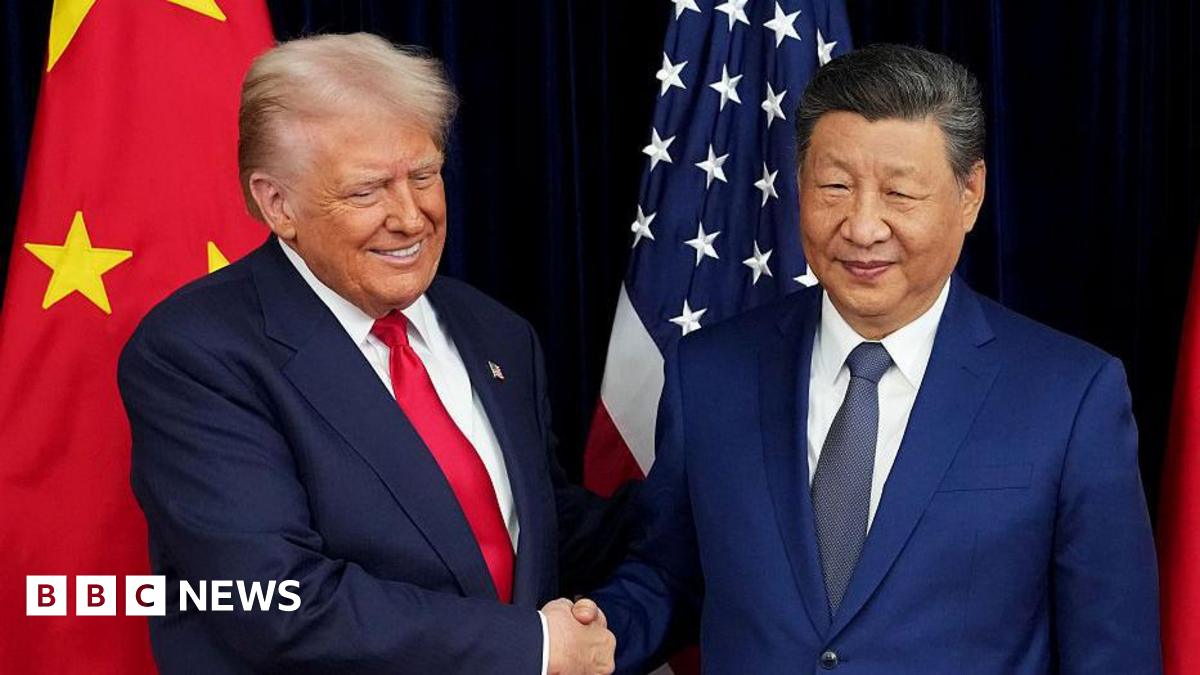
Trump's May 13-15 China visit comes amid an unresolved trade truce after tariffs on Chinese goods previously exceeded 100% and were later paused, with fresh court setbacks to his global tariff program adding uncertainty. The agenda centers on tariffs, export controls, rare earths, and Chinese purchases of US soybeans and aircraft parts, while the Iran war is also likely to feature in talks. The meeting has market-wide implications for trade policy, supply chains, semiconductors, agriculture, and defense-related materials.
The key market read-through is not simply “tariffs up or down,” but that Beijing now has more optionality than Washington in a prolonged stalemate. That shifts bargaining power toward Chinese firms with globally diversified end demand and away from US import-dependent manufacturers, while raising the probability of intermittent policy relief rather than a durable reset. In practice, that means headline risk stays elevated, but the second-order effect is that companies with non-China supply chains can win share even if the truce holds, because buyers will continue paying for redundancy.
The most mispriced channel is semis and AI hardware. Nvidia is the obvious symbolic target, but the more important risk is slower conversion of China revenue into cash across the broader compute stack if export-control language tightens again or is litigated in fragments over the next 1-3 months. Qualcomm is comparatively better insulated because handset replacement cycles and non-China OEM exposure offer more ways to offset China softness, but it still faces mix pressure if Chinese device makers delay premium launches.
Financials and industrials in the delegation are more about signaling than direct P&L, but the signal can matter: any commitment to aircraft, aircraft parts, or US services purchases would be a near-term positive for Boeing and a modest relief valve for Citi’s cross-border fee pool. The bigger hidden loser is not US multinationals but second-tier Asian and European suppliers that had benefited from trade diversion; if the truce stabilizes, some of that rerouting premium fades. Conversely, if talks fail, rare-earth and components bottlenecks become a bigger issue than tariffs themselves, which would pressure defense, auto, and electronics margins over a 6-12 month horizon.
Consensus is too focused on whether Trump gets a photo-op win. The more important question is whether both sides quietly accept a managed-decoupling framework: enough trade to avoid supply shocks, not enough to restore confidence in long-cycle capex. That outcome is mildly bearish for high-multiple hardware names and mildly bullish for companies that monetize supply-chain complexity rather than pure volume growth.
AI-powered research, real-time alerts, and portfolio analytics for institutional investors.
Request DemoOverall Sentiment
mildly negative
Sentiment Score
-0.15
Ticker Sentiment
