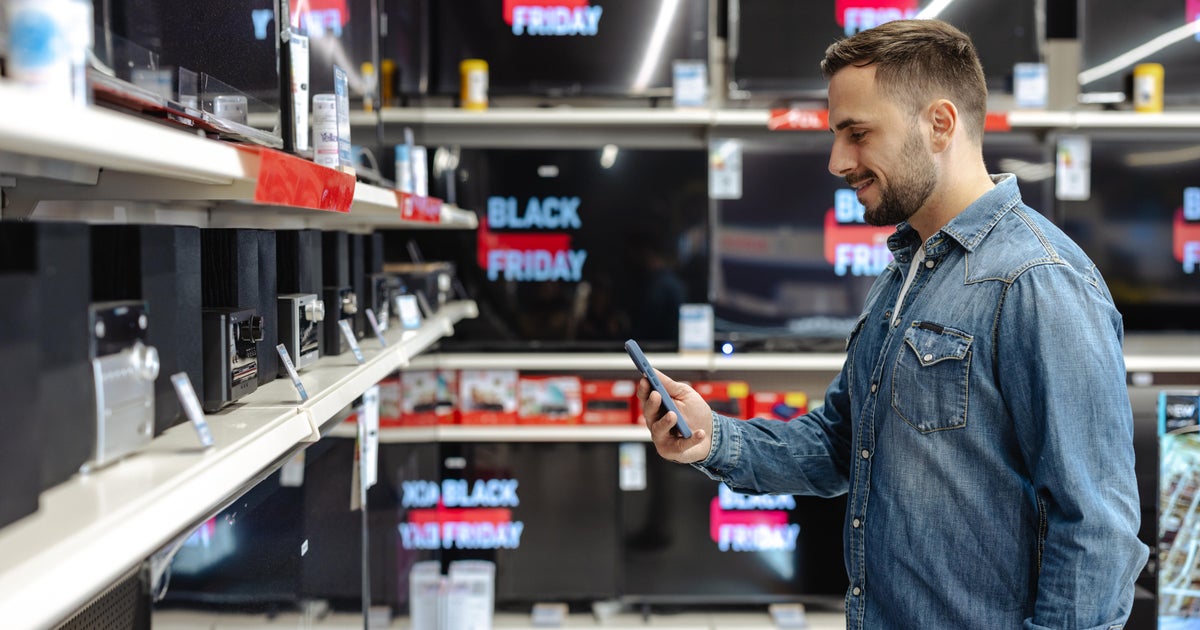
Retail analysts expect mixed but significant holiday activity as the National Retail Federation forecasts holiday spending could top $1 trillion with roughly 187 million shoppers between Black Friday and Cyber Monday; however rising costs may limit retailers' ability to offer deep discounts. Guidance by category: big appliances are best shopped in-store on Black Friday, travel deals often appear as early as Thursday evening (not just Travel Tuesday), Cyber Monday should deliver the strongest consumer-electronics discounts (estimated 10%–28%), and toys see lowest prices on Black Friday. Consumers are advised to use loyalty programs, price-tracking tools, cashback apps and AI assistants to maximize savings amid uneven discounts driven by inventory and demand.
Market structure: Brick-and-mortar appliance sellers (HD, Lowes) and omnichannel electronics retailers (BBY, TGT pickup programs) are direct beneficiaries of in-store Black Friday appliance demand and inventory-driven localized promos; online incumbents (AMZN) capture Cyber Monday electronics but face margin pressure from stacked coupons/cashback. Real-time price adjustments and store-by-store pricing signal tighter inventory management and asymmetric demand — high-income households driving premium spending while lower-income cohorts pull back, concentrating dollar-value in fewer retailers.
Risk assessment: Near-term (days–weeks) revenue and volatility hinge on NRF holiday sales and Black Friday/Cyber Monday beats/misses; short-term (1–3 months) risks include promotional margin erosion from loyalty stacking and price-match guarantees; long-term (3–12+ months) tail scenarios include a CPI shock or shipping/logistics disruption that forces deeper markdowns. Hidden dependency: growing use of cash-back/AI deal tools effectively increases price transparency and compresses retailer gross margins unless offset by private-label mix or service revenue.
Trade implications: Tactical trades should be time-boxed into the promotional window — favor long positions in HD and BBY into Black Friday/Cyber Monday given predictable appliance and electronics flow, while taking relative shorts on smaller specialty retailers without omnichannel scale. Options: use short-dated calls on BBY (30–45 days) to capture Cyber Monday upside and consider collar/covered-call structures on HD to monetize near-term promotional gamma. Rotate capital from small-cap retail into high-quality consumer discretionary and select staples if NRF prints below consensus.
Contrarian angles: Consensus underestimates margin stress from stacked loyalty + cash-back (realized margin compression 100–300bps on promoted SKUs), which favors retailers with private-label leverage (TGT) or superior fulfillment economics (HD). Historical parallel: 2019–2020 promo concentration accelerated share gains for omnichannel players; unintended consequence is pulled-forward demand causing Q1 2026 comps to look weak — look for mispricings in names that can convert promotional traffic into higher-margin membership or services revenue.
AI-powered research, real-time alerts, and portfolio analytics for institutional investors.
Request DemoOverall Sentiment
neutral
Sentiment Score
0.05
Ticker Sentiment
