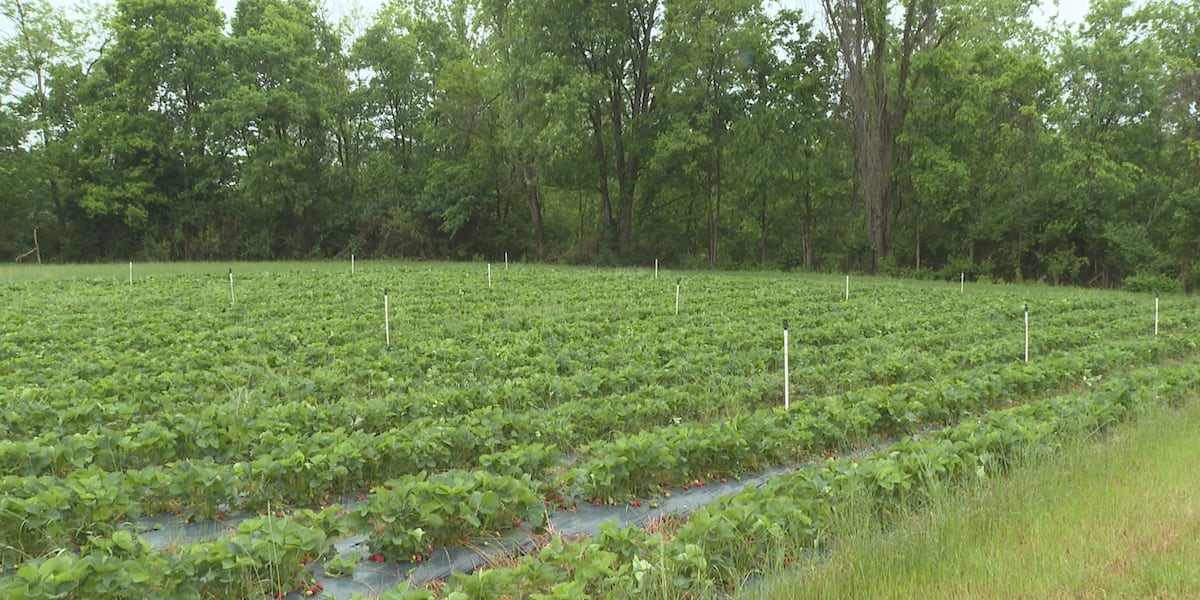
Kentucky strawberry farms are facing materially lower output as cold nights, drought conditions, and higher diesel costs pressure operations. Marcum Farms said berry sales have dropped from about 100 gallons a day to 30-40 gallons, and the season is ending earlier than usual because blooms were damaged by freezing temperatures. The impact appears localized to farm profitability and agricultural supply rather than broader markets.
This is not just a farm-level weather story; it is a micro signal for a broader margin squeeze in fresh produce and roadside retail channels where pricing power is weakest. When weather volatility forces overwatering, night labor, and accelerated harvest timing, the first-order hit is volume, but the second-order effect is quality dispersion: more culls, shorter shelf life, and less reliable supply for local grocers, processors, and foodservice buyers that source regionally. That usually shifts demand to larger, better-capitalized growers farther away, which can temporarily widen spreads for distributors with cold-chain and logistics scale while compressing economics for small operators.
The diesel angle matters more than it looks because it hits both production and distribution simultaneously: pumping, refrigeration, transport, and field operations all become more expensive at the exact moment yields shorten. For growers with limited acreage and thin working capital, a few weeks of weather-driven underproduction can impair seasonal cash flow enough to constrain replanting and next-cycle investment. Over a 1-3 month horizon, this kind of localized squeeze tends to support wholesale berry pricing in adjacent regions, but the benefit is uneven because consumers are highly substitution-sensitive and will trade down to other fruits once retail prices clear a threshold.
The market’s likely mistake is treating this as a pure weather transient rather than a compounding input-cost shock. If fuel remains elevated into the next planting and hauling cycle, the real winners are not the farms themselves but inputs/efficiency providers: irrigation equipment, ag machinery with better fuel economy, and cold-storage/logistics firms with scale. The risk to the bullish read is that produce inflation can only persist briefly before demand destruction kicks in, so any pricing support should be viewed as a one-season trade, not a structural re-rate.
AI-powered research, real-time alerts, and portfolio analytics for institutional investors.
Request DemoOverall Sentiment
moderately negative
Sentiment Score
-0.35
