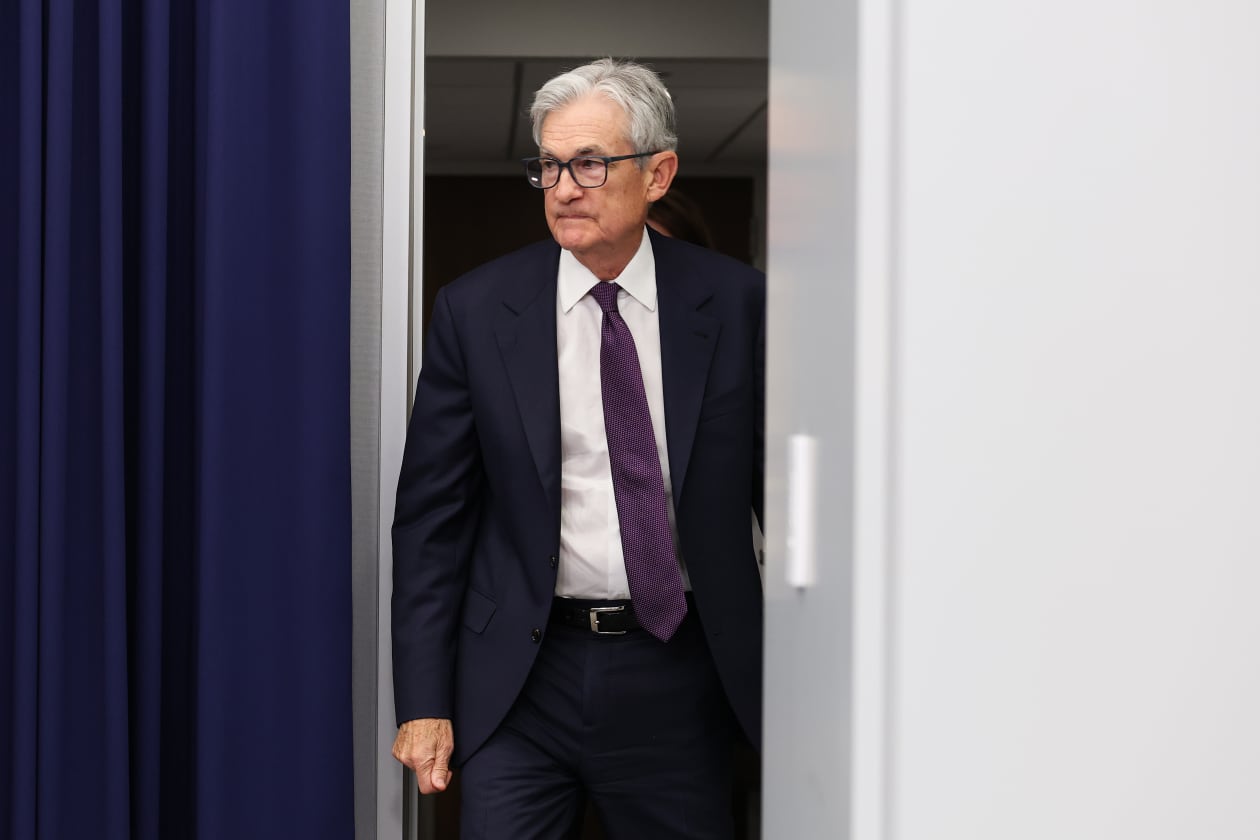
Jerome Powell said he will stay on at the Fed after his chair term ends next month to help shield the central bank from political influence. The move is likely to intensify tensions between the Fed and the White House, raising concerns about Fed independence rather than signaling any immediate policy change.
The immediate market read is not about Powell personally; it’s about the expected discount rate for institutional autonomy. If the White House perceives the Fed as actively adversarial, the next phase is not policy change overnight but a higher probability of messaging pressure, personnel signaling, and attack-on-credibility headlines that can widen term premia even if the policy path stays unchanged. That matters most for rate-sensitive assets where valuation depends on confidence that disinflation and policy normalization remain a technocratic process rather than a political negotiation. The first-order losers are long-duration equities, small caps, and levered credit, but the more interesting second-order effect is on volatility itself. Political conflict around the central bank tends to steepen realized-rate vol, which mechanically benefits options sellers only until a tail event re-prices Fed independence risk; after that, long gamma in rates and equity index protection can outperform simple duration shorts. Financials are a mixed bag: banks can benefit from a steeper curve, but if credibility erosion pushes front-end expectations around, deposit and funding assumptions become less stable. The contrarian mistake would be assuming this is just noise because the Fed cannot be easily forced into action. The market can still tax assets through a higher risk premium long before any formal policy shift, and that repricing usually shows up in the curve, breakevens, and USD funding stress rather than the policy rate itself. Reversal would require a de-escalation signal from the administration or a clearly data-led pivot from the Fed that makes the standoff irrelevant to forward pricing.
AI-powered research, real-time alerts, and portfolio analytics for institutional investors.
Request DemoOverall Sentiment
mildly negative
Sentiment Score
-0.15
