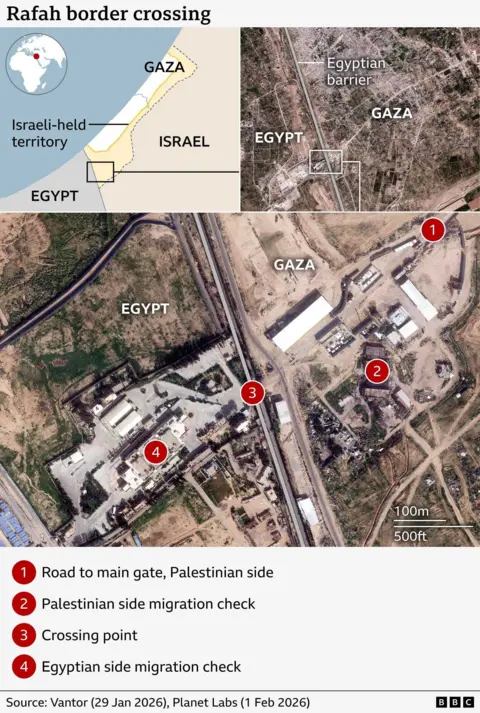
The Rafah crossing reopening has been marred by reports that a local Palestinian militia (Abu Shabab), reportedly supported by Israel, and Israeli forces conducted searches and checks at an Israeli checkpoint inside Gaza, with allegations of mistreatment and strip-searches of women. EU monitors are reported to have confiscated personal items, and medical evacuations have been highly constrained — 50 patients were due to return but only 12 crossed initially, WHO reported 5 patients and 7 companions transferred on Monday, and the Palestinian Red Crescent reported 16 patients and 40 companions left by Tuesday. These developments expose operational confusion between Israeli authorities, local militias, Hamas and international monitors, underscoring risks to humanitarian flows and the fragility of the new Rafah procedures intended to bypass Hamas control.
Market Structure: Short-term winners are defense/security-equipment names and Israeli security-tech providers (Elbit Systems ESLT, Lockheed LMT, Northrop NOC, RTX) as governments accelerate procurement for border-control, ISR and force-protection. Losers include regional humanitarian/logistics operators, Gaza-facing healthcare providers and EM assets (ILS, Palestinian service providers) facing cash-flow disruption; tourism and regional airlines face downward pricing pressure. Cross-asset: expect safe-haven bids (gold GLD +3-6% tail), minor oil upside on escalation (Brent +$3-7/bbl scenario), and near-term ILS weakness vs USD/EUR; modest tightening in credit spreads for defense suppliers with visible backlog growth.
Risk Assessment: Tail risks include wider regional escalation (low-probability, high-impact: Suez transit disruption or >$15/bbl oil spike), cyber/contract sanctity risk to contractors, and reputational/regulatory actions restricting suppliers; these could move markets within days. Time horizons: immediate (days) = FX/commodities volatility; short-term (weeks–months) = award/contract flows and margin re-pricing for defense names; long-term (quarters–years) = structural procurement cycles and regional security architecture shifts. Hidden dependencies include US/EU political decisions, on-the-ground verification (EUBAM) and logistics chokepoints that can stall demand realization. Catalysts: confirmed Israeli ministry procurements, US supplemental defense aid, or a major escalation event.
Trade Implications: Direct: establish 2–3% long position in ESLT (ADR) and 1–2% in LMT as defensive exposure if escalation persists; size to portfolio volatility (target 6–8% portfolio VaR contribution). Fixed income/FX: allocate 3–5% to TLT as tail-hedge if risk-off intensifies and buy 1% notional EMB put spread (60–120 day) to hedge EM credit. Commodities: initiate a 1% tactical long XLE or Brent-call spread if Brent breaks above $85/bbl on 5-day rolling close. Options: buy 3-month ATM+15% calls on ESLT (30–50% of directional position) to cap capital outlay while retaining upside.
Contrarian Angles: Consensus may overestimate sustained procurement speed — historical parallels (2014 Gaza flare-ups) show defense-order peaks often mean-revert within 6–12 months as budgets normalize; contracts require months to convert to revenue. Reputational/regulatory risk can cap multiple expansion for exporters; consider selling short-dated covered calls on newly-acquired defense longs to monetize premium. If geopolitical shock recedes within 4–8 weeks, unwind energy and FX hedges and trim defense exposure by 30–50% to lock gains.
AI-powered research, real-time alerts, and portfolio analytics for institutional investors.
Request DemoOverall Sentiment
moderately negative
Sentiment Score
-0.35
