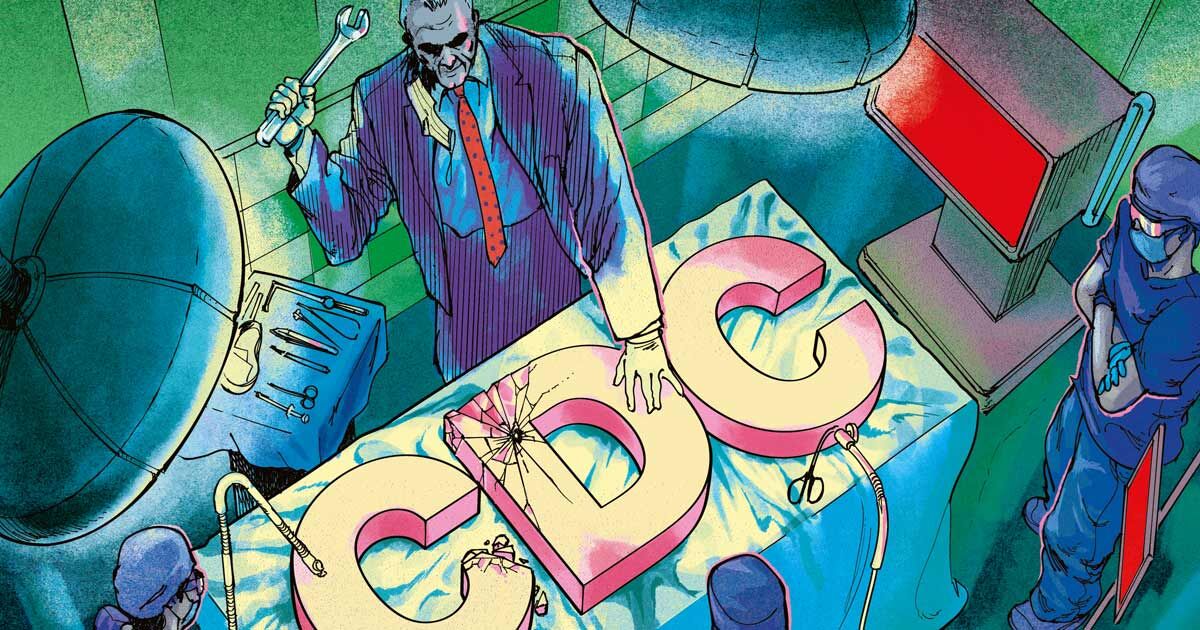
The article outlines a hypothetical 2025 scenario where Robert F. Kennedy Jr., as a new health leader, significantly compromises the CDC's operational effectiveness. This includes implementing a 'communications pause' and promoting unproven treatments, rendering the agency largely 'out of commission' for its core functions like coordinating national disease response and data dissemination. This hypothetical breakdown in federal public health infrastructure leaves local departments unsupported during outbreaks, forcing them to rely on informal networks and raising concerns about the nation's capacity to manage future public health crises.
The article presents a hypothetical scenario for early 2025 that outlines significant operational and systemic risks to the U.S. public health infrastructure under a potential new administration led by Robert F. Kennedy Jr. The core of the issue is the functional neutering of the Centers for Disease Control and Prevention (CDC), which is described as being on a 'communications pause' and rendered 'largely out of commission.' This effectively dismantles the agency's primary roles in data publication, state and local partner coordination, and providing a unified national picture on infectious diseases. The narrative illustrates this breakdown through a measles outbreak in Texas, where local officials are left isolated and forced to rely on informal networks. The promotion of unproven treatments, such as vitamin A supplements, and the reframing of vaccination as a 'personal choice' by the nation's leadership signal a fundamental shift away from established public health science. This scenario elevates political and governance risk, suggesting that a change in leadership could directly translate into institutional decay and a severely diminished capacity to manage public health crises, introducing significant tail risk for economic stability and sectors dependent on a functioning health system.
AI-powered research, real-time alerts, and portfolio analytics for institutional investors.
Overall Sentiment
strongly negative
Sentiment Score
-0.75
