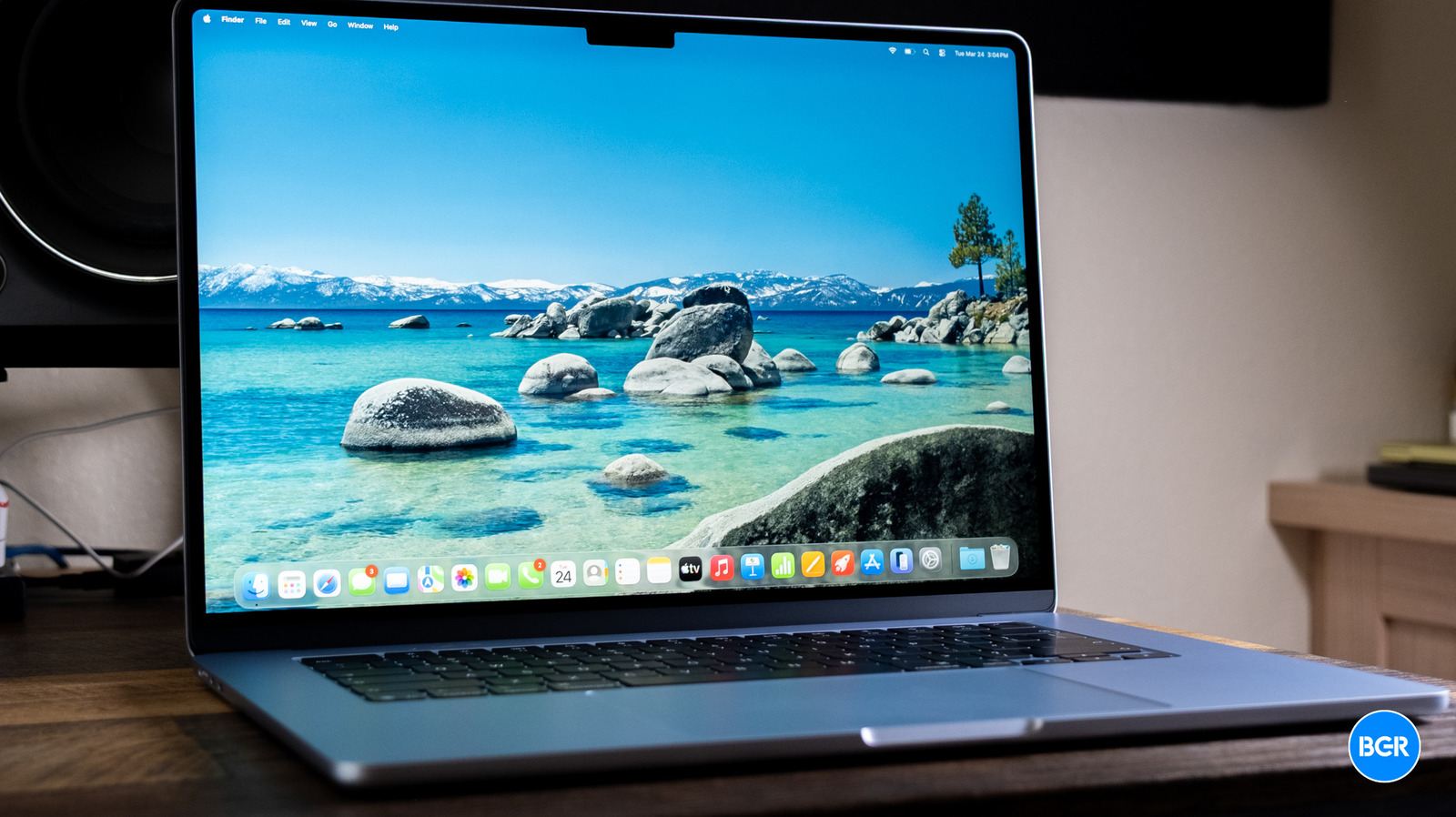
Key specs: 13.6" and 15.3" Liquid Retina (500 nits) displays, 12MP Center Stage webcam with Desk View, 153GB/s memory bandwidth, up to ~18 hours battery life and ~50% charge in ~30 minutes using a 70W adapter, plus Wi‑Fi 7 and Bluetooth 6. Reviewer calls the M5 MacBook Air a refined, incremental upgrade and recommends it as a step up from the lower‑priced MacBook Neo, noting the Air is no longer Apple’s budget model; this could shift unit mix toward the Neo at the entry level but is unlikely to materially move Apple’s stock in the near term.
Apple’s repositioning of the Air upmarket, with the Neo as a new entry product, creates a clearer two-tier funnel that should raise lifetime revenue per user even if near-term unit growth is modest. Over a 12–24 month window this segmentation can translate into higher services monetization (app store, subscriptions, accessory attach) from users who trade from Neo->Air or enter the ecosystem at the Neo price point and later upgrade; model sensitivity: a 10% conversion from Neo buyers to Air within two years could lift aggregate Mac ASPs by mid-single digits and services gross margin by a few hundred basis points.
Component-level second-order winners include NAND/SSD controller vendors and wireless chipset suppliers that sell higher-performance modules, while incumbents exposed to client x86 CPUs face gradual share erosion — particularly Intel in the notebook CPU funnel — as Apple continues vertical integration and feature differentiation (custom N1 Wi‑Fi/Bluetooth stacks). Supply chain timing matters: flash and RF suppliers see near-term order cadence lift in the next 2–6 quarters as refreshed SKUs ramp, whereas traditional PC silicon vendors face the industry-cycle risk of slower replacement in 6–18 months.
Key catalysts and tail risks: consumer elasticity in a softer macro (3–12 months) could accelerate down-trading to Neo, compressing Air sell-through and margins; conversely, faster Wi‑7 router adoption and accessory ecosystems unlock upside over 12–36 months. Monitor inventory days at major resellers, ASP trends, and early attach rates for services — these metrics will lead sales/margin revisions before headline unit numbers move.
Contrarian tension: consensus treats the Air as a premium defender of unit share, but the real lever is ecosystem expansion via the Neo. If Neo adoption proves sticky, Apple’s Mac unit growth could outpace ASP headwinds and lift long-term services revenue more than street models expect, implying the current positive tilt on AAPL may be underpriced relative to durable monetization gains.
AI-powered research, real-time alerts, and portfolio analytics for institutional investors.
Request DemoOverall Sentiment
moderately positive
Sentiment Score
0.30
Ticker Sentiment
