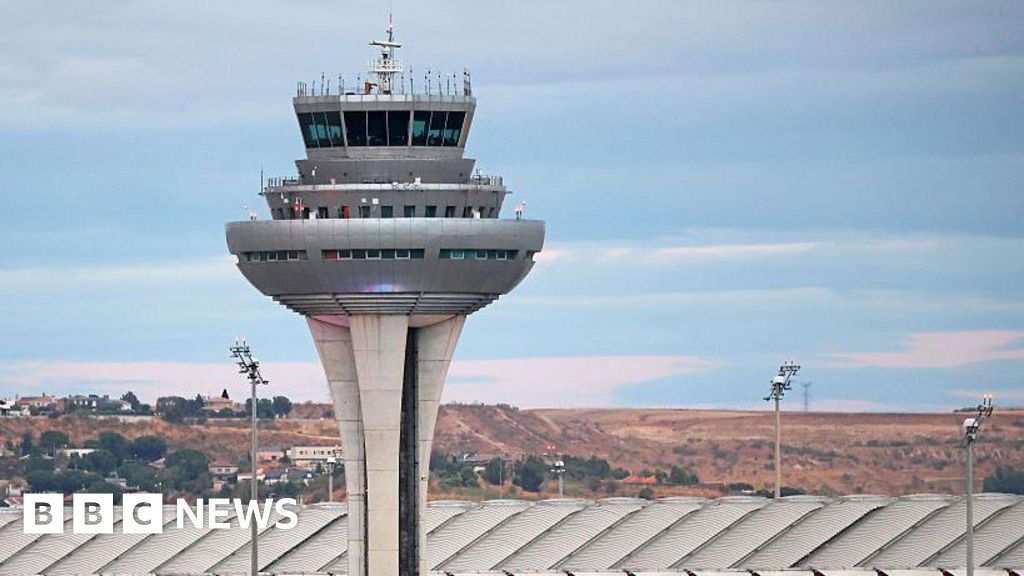
Spain has closed its airspace to US aircraft and barred use of the Morón and Rota bases for operations related to the Iran war, forcing US sorties to reroute via other bases (e.g., RAF Fairford). Around 20% of global oil supply transits the Strait of Hormuz, which has been effectively constrained by threats to shipping and has pushed oil prices sharply higher, making this a sector-moving energy and shipping risk. Spain's move aims to avoid escalation but raises bilateral trade and military frictions (including a threatened US trade embargo), increasing geopolitical risk premia for portfolios with energy, shipping, and defense exposure.
Spain's denial of base access is a tactical constraint that raises operational costs for US air operations in the near term — expect 2-6% higher sortie-level fuel & time costs for missions rerouted through the UK/Atlantic and an incremental logistics premium for tanker/airlift availability over the next 30–90 days. That incremental cost is unlikely to change strategic balances immediately, but it acts as a persistent friction that increases marginal demand for munitions, aerial refuelling, and forward basing solutions (favoring suppliers with fast-cycle revenues) across a 3–12 month window.
Market-level second-order effects concentrate in energy and freight: longer air and sea transit corridors sustain volatility in oil and tanker rates even if physical choke points like the Strait of Hormuz reopen; expect realized crude volatility to remain elevated, with 30-day implied vols staying ~20–30% above pre-crisis baseline until a diplomatic de-escalation. Civil aviation and touristic flows to Spain see asymmetric downside risk from escalation rhetoric and trade threats — a 1–3% hit to summer seat capacity or consumer sentiment would meaningfully compress Spanish tourism GDP and airport throughput on a seasonal basis.
Catalysts to watch that would reverse these pressures are (1) a rapid diplomatic rollback/commitment to non-escalation within 14 days, (2) reestablishment of third-party basing agreements (e.g., Italy/Greece) in 4–8 weeks, or (3) a US congressional or allied logistical workaround that neutralizes Spain's denial — absent these, incremental defense procurement and near-term energy hedging demand should persist. Tail risks include punitive trade measures that could knock 2–4% off Spanish export flows over 3–6 months, and a broader EU political realignment if other NATO allies follow Spain's posture, which would materially reshape basing logistics over years.
AI-powered research, real-time alerts, and portfolio analytics for institutional investors.
Request DemoOverall Sentiment
mildly negative
Sentiment Score
-0.30
