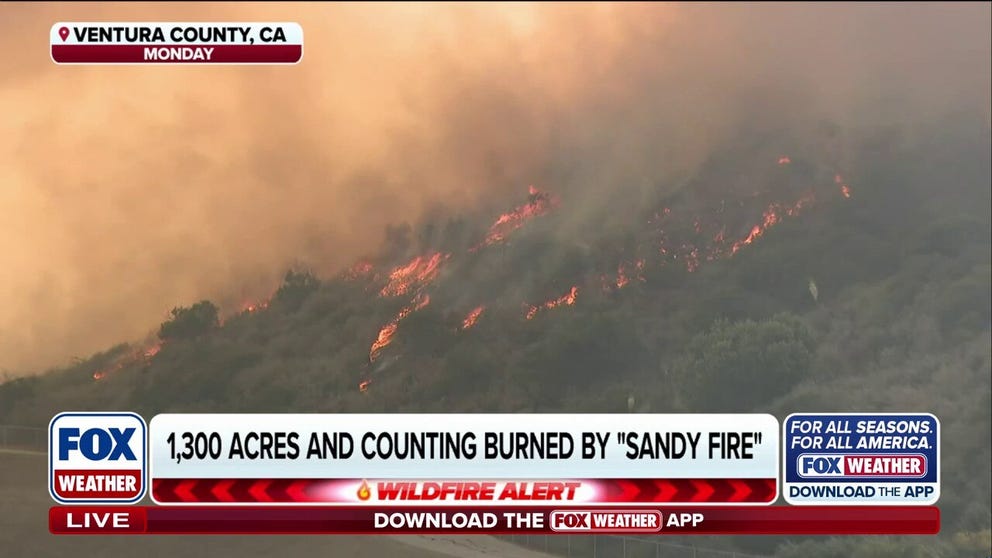
Wildfires have burned hundreds of thousands of acres across the Plains, with the Kansas complexes alone exceeding 100,000 acres and the California Sandy Fire forcing evacuations of more than 10,000 homes. Additional blazes in Texas, Colorado-Oklahoma, and Santa Rosa Island have destroyed buildings, prompted emergency declarations, and required National Guard, helicopter, and air tanker support. The article signals elevated regional disruption and near-term insurance, utilities, agriculture, and infrastructure risk.
The immediate market read is not “fire risk” in the abstract, but a short-lived shock to operational continuity across utilities, insurers, and regional industrial activity. The bigger second-order effect is on logistics and reconstruction: emergency response, debris removal, temporary housing, generators, HVAC, roofing, and electrical materials should see incremental demand over the next 4-12 weeks, while discretionary local spending gets displaced. In the Plains, the combination of drought and lightning-driven spread implies a higher probability of repeated incident clusters, which matters more for acreage burned than any single headline event. For public equities, the clearest beneficiary set is not wildfire-exposed asset owners but the picks-and-shovels tied to mitigation and rebuild. Utilities with hardening capex backlogs can also gain regulatory cover to accelerate rate-base growth, while insurers face a cleaner near-term narrative than a true earnings event unless losses start stacking across multiple states and policies. The bigger loser could be small/mid-cap regional homebuilders and property-heavy businesses in affected metros if evacuations become prolonged, because even brief displacement can disrupt labor availability and local demand just as peak-season activity should be improving. The contrarian view is that the market may overestimate direct earnings damage and underestimate the persistence of policy and capex follow-through. Fire events like this often create a one-time claims headline, but the real P&L impact usually shows up later through higher reinsurance costs, tighter underwriting in exposed geographies, and faster spend on grid hardening and emergency infrastructure. If weather normalizes in 1-2 weeks, the trade fades; if the pattern persists into summer, this becomes a broader inflation input via construction materials and labor rather than a narrow catastrophe-loss story.
AI-powered research, real-time alerts, and portfolio analytics for institutional investors.
Request DemoOverall Sentiment
moderately negative
Sentiment Score
-0.35
