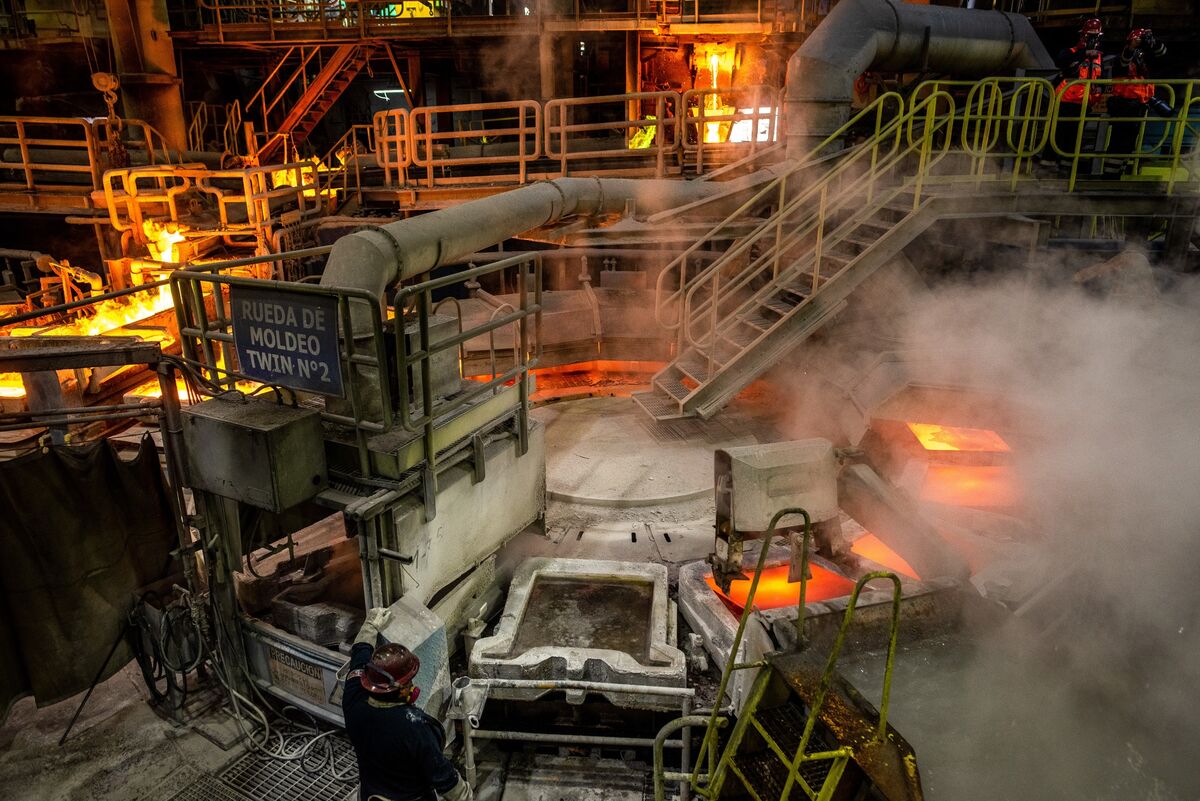
Chile, the world's largest copper supplier, reported its highest monthly production this year in May, reaching 486,574 metric tons. This 9.4% year-over-year increase provides a degree of relief to the currently tight global copper markets.
Chile, which accounts for approximately a quarter of the world's mined copper, reported its strongest monthly production for the year in May, delivering 486,574 metric tons. This represents a significant 9.4% year-over-year increase, providing a material supply-side boost to a tight global market. The data indicates a robust operational recovery and an ability to ramp up output, which is a key positive for copper mining companies. While the increased volume provides some relief from supply scarcity concerns, it may also temper the upward momentum in spot copper prices. The strongly positive sentiment associated with copper miners (like COPX) compared to the more moderate sentiment for the copper index (CPER) reflects this dynamic: higher production volumes directly benefit miners' revenues, but the corresponding increase in global supply could place a ceiling on the commodity's price in the near term.
AI-powered research, real-time alerts, and portfolio analytics for institutional investors.
Request DemoOverall Sentiment
strongly positive
Sentiment Score
0.75
Ticker Sentiment
